
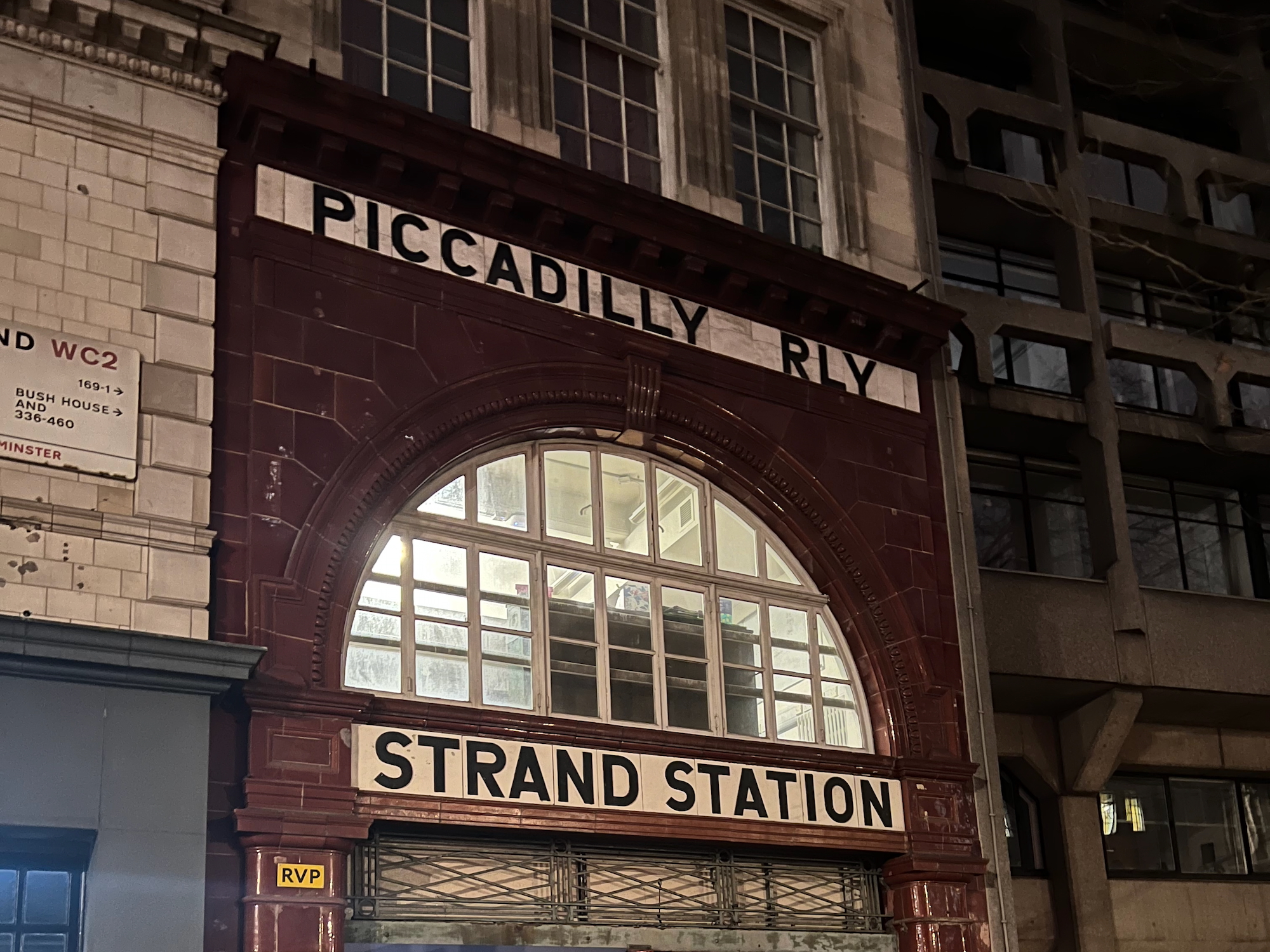
This one’s a bit different—it’s something I started writing as an exercise when I was at a writing group in Leith on Tuesday night, and finished for the blog. The task, in brief, was to describe an emotion through the lens of a childhood obsession.
Humanity hasn’t invented time travel yet, but if we do I think it will be powered by smell.
I say that as someone with a severe deficiency in that department. Seriously—half the reason I was anxious during the pandemic was that you can’t tell if you’ve lost your sense of smell when you never had one in the first place. People will tell me flowers smell nice, but the best I’ve ever managed when I sniff them is “Hmm, that’s sweet”. When museums put those scent boxes out, I still try them out… but I know before I lift the flap that my impression of the aroma of a putrid city street or of Marie Antoinette’s kitchen will not be improved by my doing so, no matter how desperately I inhale.
Even so, though, there are certain scents that I do pick up, and in an instant I’m transported to a time and place long gone. Like a certain acid, acrid, slightly floral odour that is the exact scent of the boys’ toilets of my primary school.1 Or the particular sweet-but-fusty fragrance of the hallways in my aunt and uncle’s block of flats, which, whenever I notice it, makes me momentarily excited for Santa’s impending visit.
But there’s one that wins the crown on this. It’s a rare one, and I can’t tell you exactly what it smells of. Except, of course, that it smells of adventure. Of excitement. Of something long-distant finally being within reach.
It’s the smell of the Tube.
I don’t have smell recall. I can’t bring it to mind like I can a picture or a song. But I’ll try and describe it for you anyway. It’s slightly sooty, certainly musty. It’s not strong, not overpowering, but it’s persistent. It’s warm. It’s soft. It’s probably also full of things that are bad for you to inhale, but what the hell.
Let me try and set the scene for you.2 You’re eight years old. The August sun is beating down on you and your family as you walk along a crowded pavement. You’ve not been out long, but you already feel sticky from a cocktail of sweat and sun cream. You feel your brand-new sandals are already starting to rub at your heels.
You’re in the big city, and you come from a big city, so that shouldn’t be so unfamiliar. But this is the big city. Simply, it’s bigger. And one of the signs of that is, well, a sign—a roundel, to be precise, with a blue bar over a red ring.
I should mention at this point that you’re maybe not a typical eight-year-old, if such a thing even exists. Even with your immature brain, you are aware on some level that your friends at school wouldn’t be excited right now, and certainly not by what you’re about to do. You’re aware that they probably didn’t, for their holidays, prepare a ring binder, with a section divider for each day of the holiday—really just a hole-punched sheet of A4 that you’ve written on in your scrawling handwriting, and coloured in with Derwent pencils to match the lines you’ll be taking that day. But you aren’t yet old enough to care all that much. Maybe the rest of the boys in your class like Pokémon, or football. But you like trains.
You like these trains specifically.
Actually, you don’t. The trains themselves don’t really hold any pull for you. On a train, you have to sit still, and wait for it to get where you’re going. If anything, the trains are probably a little disappointing. From your books, and from that board game you play where you move your little counter around Harry Beck’s map,3 travel on the Tube feels like it should be instantaneous, like teleportation—and nothing can live up to that. But what you like are the stations.
It’s not long before you get to this one, and step into its cool, dark interior. You pass through the ticket barrier, proudly inserting your ticket into the machine. (Years later, despite not having seen one since that trip, you will recall for a school project that Tube tickets are pink, nor orange.) You cross the hallway, and stare down an immense escalator, one even long than the two-storey one in the Headrow Centre in Leeds (and that one’s already exciting enough). You ride down it, holding your mum’s hand tightly so you don’t fall. But you’re not scared. Because you know where to go.
You left the ring binder in the hotel room. But you don’t need it. When, at the bottom of the stairs, you have to walk one way for the Central line and one way for the Jubilee, you turn right without hesitation, following the footsteps of the crowd of people much bigger than you, and almost literally dragging your family behind you. But they don’t need the ring binder either, because they know they can trust you.4
Everything is different down here. When you talk excitedly about the journey you’re making, you hear your high-pitched voice echoing back at you from the cylindrical walls. You can’t see any trains yet, but you know they’re close; you feel them vibrating the tunnel floor, and the sensation thrums through your feet and up your body. Signs appear with unfamiliar but thrilling words, like “northbound”.
And then there’s that smell. It gets more noticeable as you descend, wrapping you up in a warm hug.
On the platform, trains are going to exotic places like Ruislip Gardens and Ealing Broadway. You know they’re not really all that exotic, because you’ve seen pictures of them all in that book—the one with photos of all the termini of all the lines, which your aunt ordered for you from The Guardian. But you still imagine them as the Emerald City, the grime on the tunnel floor between the rails the only thing hiding that it’s lined with yellow brick. Decades later, you still will.
The train comes eventually, and eventually you arrive. You’re not sad the journey’s over. The train wasn’t the bit you liked, remember—you’re kind of done with the whole thing by the time you’ve sat on it for the few minutes that felt like several hours. At least sitting down for a while, swinging your legs under the seat, gave your heels a rest from the rubbing of your shoes; now your holiday can continue, with the excitement of Hamleys or the Science Museum waiting at the top of the stairs to capture your attention.
And, if you want, you can always be excited for next time.
- I promised I’d move on from toilet-based anecdotes. I lied. ↩︎
- What follows, I should clarify, is fictionalised—I don’t actually remember this, and it’s a synthesis of snippets I do remember and imagination. In particular, don’t try and work out what Tube station I’m describing. It doesn’t exist. ↩︎
- Hello, fellow Tube nerd! You’ve come to this footnote because you want to fact-check me, haven’t you? You’re going to tell me that, in the nineties, the Tube map was produced by a company called FWT Cartography, based on the 1964 map by Paul Garbutt. Yes, I know that. But it’s artistic licence. I couldn’t use the phrase “the Tube map” because the word “Tube” appears in the next clause so it would be repetitive, and I couldn’t say “FWT Cartography’s map” because nobody would know what the hell I was talking about. Beck is now famous enough that there’s a chance a reader might have heard of him. And, yes, I also know his real name was “Henry”, not “Harry”. ↩︎
- Seriously, if my family ever got asked for directions on the Underground when I was in London, they would refer the asker to me. ↩︎
Leave a Reply