
Last week I told you about High Wycombe, which was the first time when writing this that I wasn’t sure I was going to be able to finish a post, and had to resort to playing barely-noticeable word games with the text in order to make it fun to write. But I did tease that today I’d be writing about the more touristy place next door, and here I am. Hopefully this time I won’t run out of things to say.
Date of trip: Saturday 21st April 2018
Journey time: approx. 1hr20 (train, walk and bus, if timed well)
Fare: £12.90 (Off-Peak rail fare, with 16–25 Railcard, plus Carousel Zone A/B student day pass)
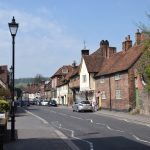
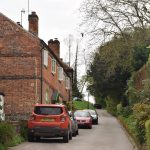
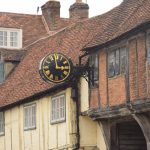
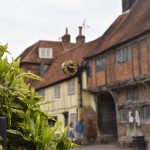
West Wycombe is a village just to the west of Wycombe, which is the sort of insight I know you come to this blog for. The village itself is quite small, but very pretty. There are also a couple of pubs. The George and Dragon offers fairly fancy pub food (can recommend the fish and chips, but then I usually can). The Swan Inn, meanwhile, is, well, a little strange. (It felt a bit like someone’s living room with a bar in it. There were a couple of cute dogs.)
There are a couple of shops too: a general store and Post Office for one, as you’d expect in a country village, even one that’s not very far into the country. There’s also a cute little sweet shop/tea room. I bought some clove sweets, which were mildly weird, and I think I’d have done better going for my travelling companion’s choice of aniseed balls. Also probably worth mentioning is West Wycombe Park, the Dashwoods’ ancestral home, now in the care of the National Trust (but we didn’t go in).
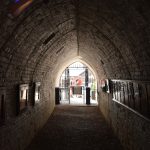
But the main attraction in West Wycombe is the Hellfire Caves. These are a series of man-made caves, built for Sir Francis Dashwood in the mid-18th Century. This was effectively a poor-relief programme, where he employed local labourers who’d been impoverished by failed harvests. The stone was used to build a road, so it wasn’t entirely useless, but the caves themselves were essentially a folly. Except, well, they did have a purpose…
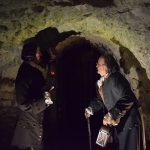
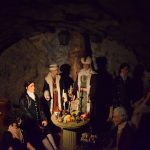
The caves were used for meetings of what’s since been called “the Hellfire Club”, a secret society of notable individuals of the time (Dashwood himself was Chancellor of the Exchequer; the Earl of Sandwich who invented the eponymous foodstuff was also a member). They didn’t call it the Hellfire Club themselves, instead using names like “The Brotherhood of St. Francis of Wycombe”. They gave themselves quasi-religious titles, and it was all a bit satanic, to be honest. They would hold meetings and parties in the caves, the latter of which were essentially (so it is rumoured) massive orgies; the club was all-male, but various women would be invited to these parties. All rather strange.
Anyway, the caves were opened to the public (£6 entry for students) in the 1950s by another Sir Francis Dashwood, the nine-times successor of the one who built them, and you can wander most of the way through—except you still can’t go into the Inner Temple, the private room reserved only for the “Twelve Apostles”, the most senior members of the club. It’s eerie how chilly they are, and how dark—particularly when you imagine that back in Dashwood’s day it would have been lit only by candlelight. Scattered throughout are various waxworks of historical features, which adds to the creep factor (if unintentionally).
Two particular parts stand out. One is the cavernous Banqueting Hall, which was used for the huge dinners held by the club (and can still be hired out for private parties). Slightly unnerving was reading before entering the hall the sign that explained why there was an additional tunnel bypassing it—essentially because at some point in the past the ceiling of the hall collapsed, and had in relatively modern times had to be stabilised. It was hard not to look up at the towering ceiling of rock with some trepidation after that, imagining quite how much more rock would be on top of me were gravity to get its way.
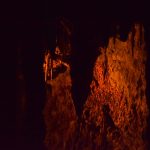
The other is the River Styx, a natural watercourse encountered in construction, which originally had to be crossed by boat (there’s now a bridge). There are many stalactites (is that the right one?), but unfortunately it’s hard to get a clear shot of them because of the mesh stopping people falling in. Given that the caves are unattended past the entrance, the presence of the mesh is probably for the best.
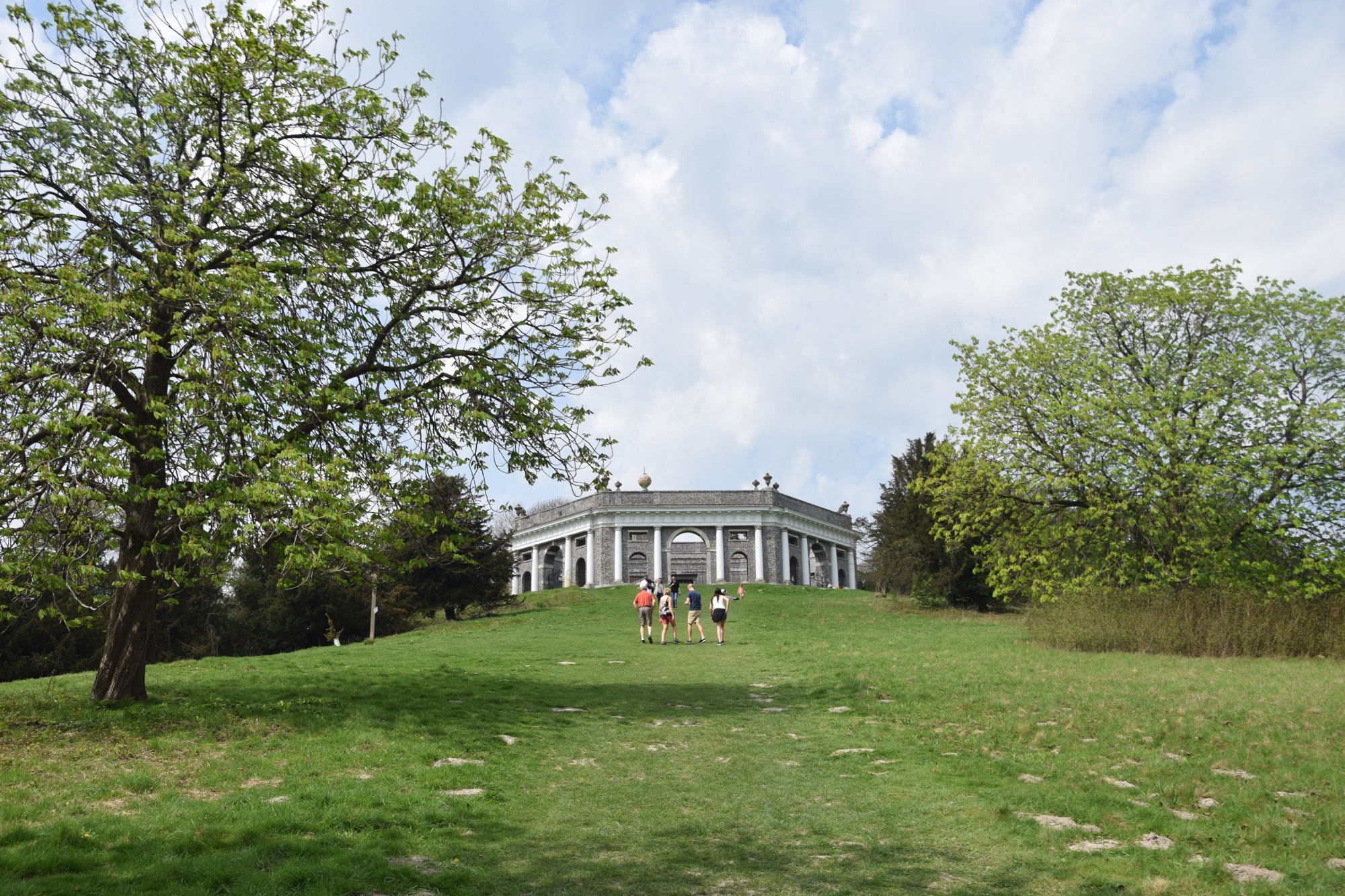
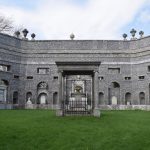
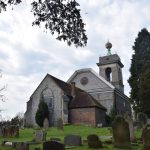
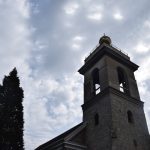
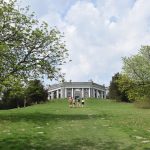
It was slightly surreal emerging from the cold caves into the warm air. But it had to be done—well, firstly because we didn’t actually want to spend eternity in the Hellfire Caves, but also because there was a hill to be climbed: the hill under which the caves are tunnelled, at the top of which is the Dashwood Mausoleum, where Sir Francis is buried. There’s also a church, whose tower apparently has spectacular views over the Chiltern hills, but unfortunately this was closed when we visited. Still, the outlook is pretty good even without it, and you can see the “new” road back to High Wycombe (identifiable because it’s in a dead straight line).
Overall, like I said, High Wycombe is a bit dull, but West Wycombe definitely makes it worth the trip. It’s rare to find somewhere that has such a village-y feel that’s so close to a town, and there’s plenty of opportunity to get out into proper countryside (including many walks we didn’t take). And if nothing else, it’s always fun to tell your friends you’ve been on a day trip to some sex caves.


Leave a Reply to Faringdon – Escaping Oxford Cancel reply