Last time: I found a cow. It was a nice cow. Also some more borough signs, I guess.
My goodness, I am tired. I’m writing this after a day with train journeys out-of-proportion in length to the sleep I got either side of them, and before yet another train journey later today (the day before publication). So please excuse me if this post is unusually short, or unusually nonsensical. But it has been three weeks since my last instalment of the series about the London borough signs, and that seems to be the interval on which I’m posting them, so it’s time for another.
After finding the Hackney sign, and after a morning-to-early-afternoon of traipsing around suburbs, I decided to do something interesting with the remainder of the day. Specifically, I was near Hoxton, whose Overground station is right next to the Museum of the Home,1 the last of the national museums in London that I’d never been to. It’s one I think of as one of the more obscure ones, along with the Horniman and Sir John Soane’s Museum; it’s been open under that name since 2021, so you might have heard of it as the “Geffrye Museum”, which was its name for most of its existence to date.
If I tell you that Sir Robert Geffrye was (among other things) a slave trader, you might be able to guess why it was renamed… but it seems you’d be wrong.2 The rename came in 2019 while the museum was closed for refurbishment, and was therefore a little before the wave of renamings that followed 2020’s George Floyd protests. There was already controversy about the name but, according to a story from the time, the change “does not seem to be linked to” it. Instead, it was more related to two other facts: that the old name didn’t make it clear what the museum was about; and that the museum didn’t, in fact, have anything to do with the man. He funded the construction, but as almshouses and not as a museum, and it is for that reason that his statue is on the outside of it. The museum’s position is that it would like to move the statue to a less prominent position, pending planning permission; the status quo is that it remains, with a ground-level plaque for contextualisation.3
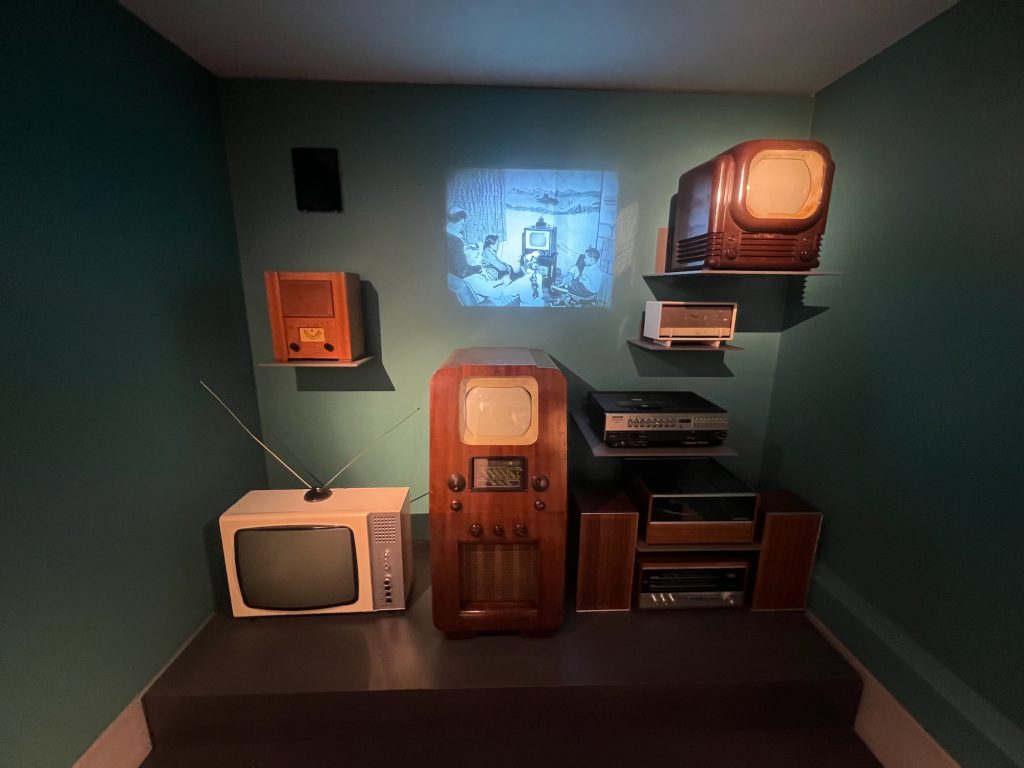
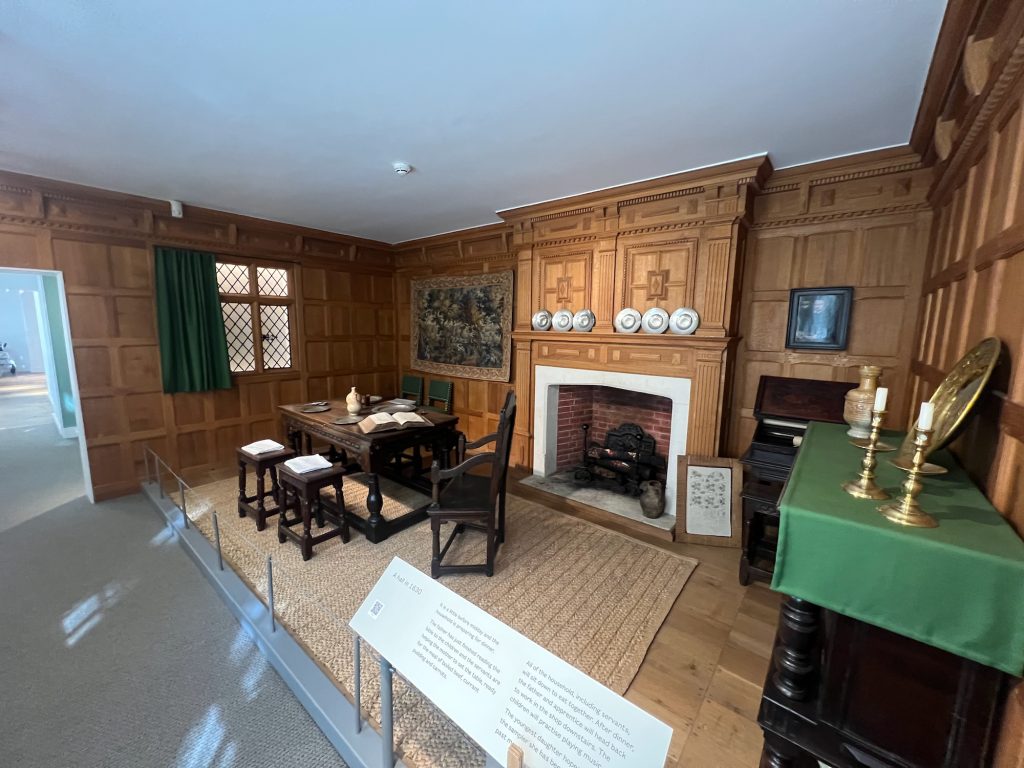
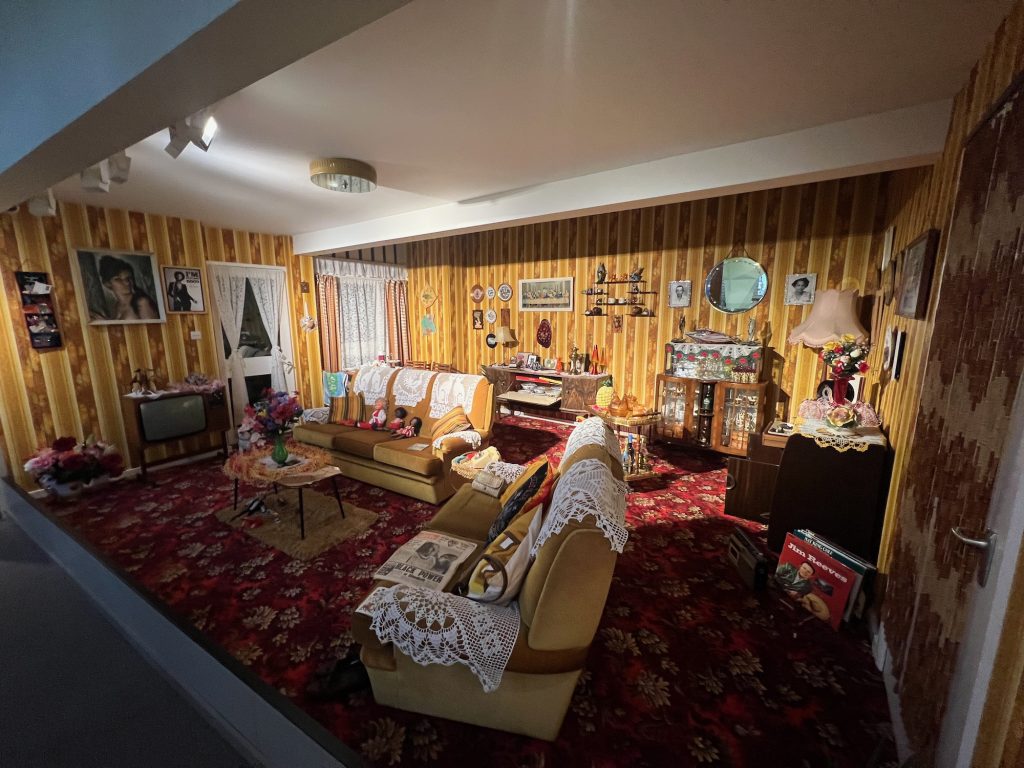
Anyway, the museum. I really wish I’d written this at the time, because as at previous points in this series I’m struggling to remember some of the details. What I do remember of the museum is that it’s in two parts, the first of which shows domestic items from ages past, grouped by theme (entertainment, say, or dining). Once you’ve passed through that, you move to the museum’s pièce de résistance, the Rooms Through Time. This, as the name suggests, shows rooms decorated, furnished and (for want of a better word) accessorised as if they were from different decades, presented in chronological order. The main comment I’d have on them would be that they reflected an overwhelmingly white and middle-class version of British life—perhaps defensible for some of the earlier rooms, where our evidence of typical home objects from other groups was more limited, but certainly not by the point the visitor reaches the twentieth century. For example, as far as I recall, their room representing 1976 was the only one where the notional residents were Black, and (as far as I recall) that was the only room where (implicitly or explicitly) a non-white perspective was being presented.
Did you notice my tense shift there? Another problem with writing this now is that, not long after I visited, the rooms representing later periods—which, as I understand it, had not been substantially changed when the museum was redeveloped—were substantially redisplayed, with a view to providing a more diverse range of examples. I’d love to comment on the success or otherwise of this, but I can’t because I haven’t been back since. Really this is all very unsatisfying, for which I apologise, but I did warn you at the start that this wouldn’t be one of my higher-quality posts.
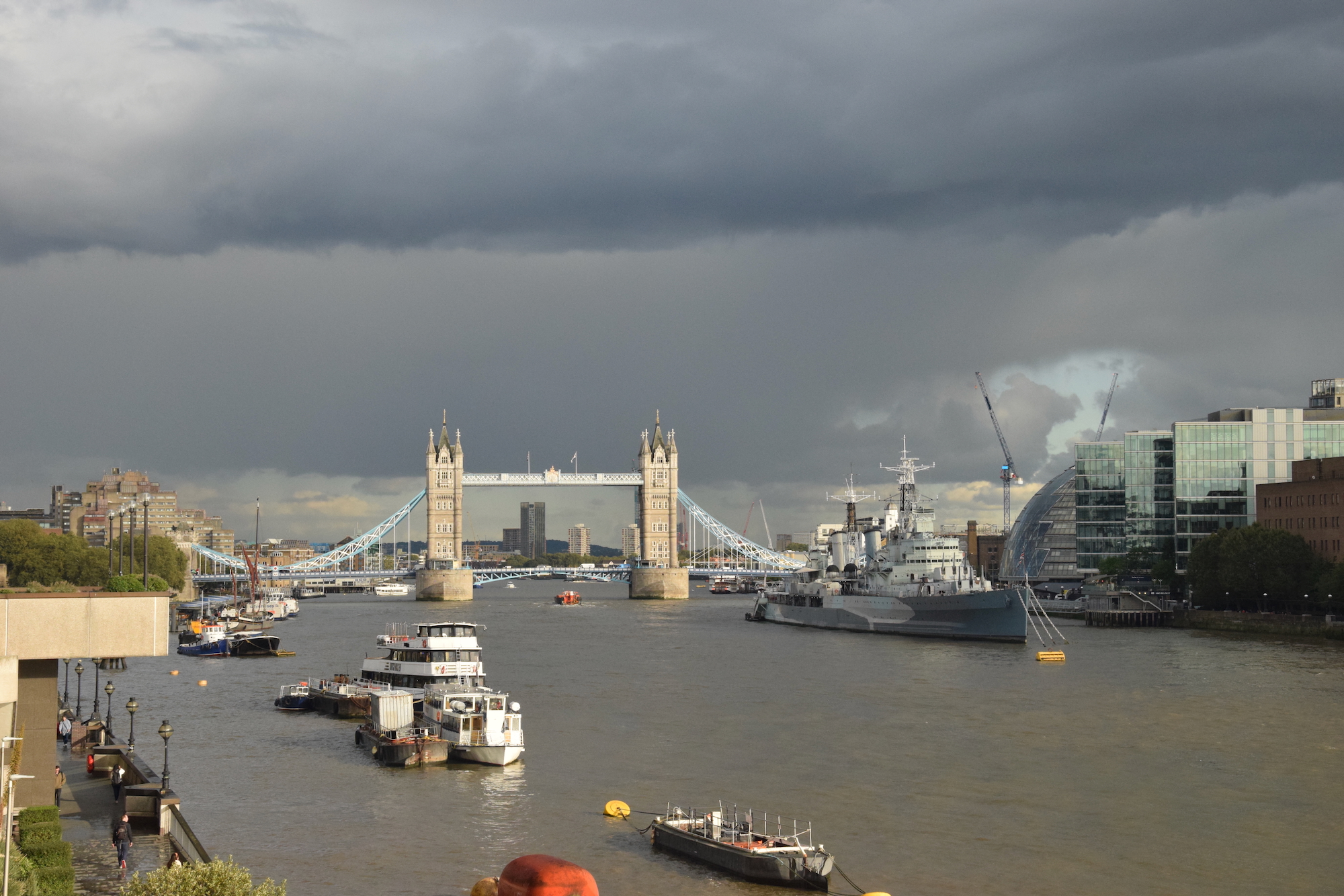
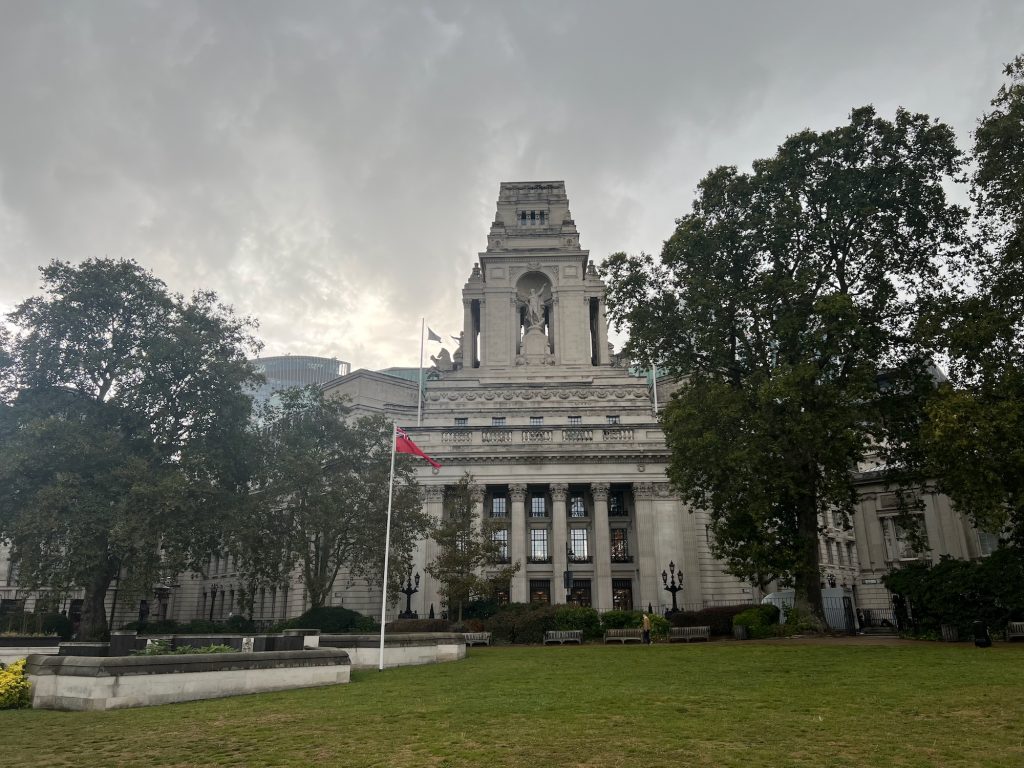
Let’s move swiftly on to the borough signs before I run completely out of steam, shall we? After the museum, I took the Overground to Shadwell, then the DLR to Tower Gateway. Now, you might remember that, early on in this series, I complained repeatedly about how hot it was. Well, I should have been careful what I wished for. Because I arrived at Tower Gateway station into a hideous downpour.4 I loitered in the foyer for a while, then donned a waterproof and braved the rain. Tower Hamlets, tick.
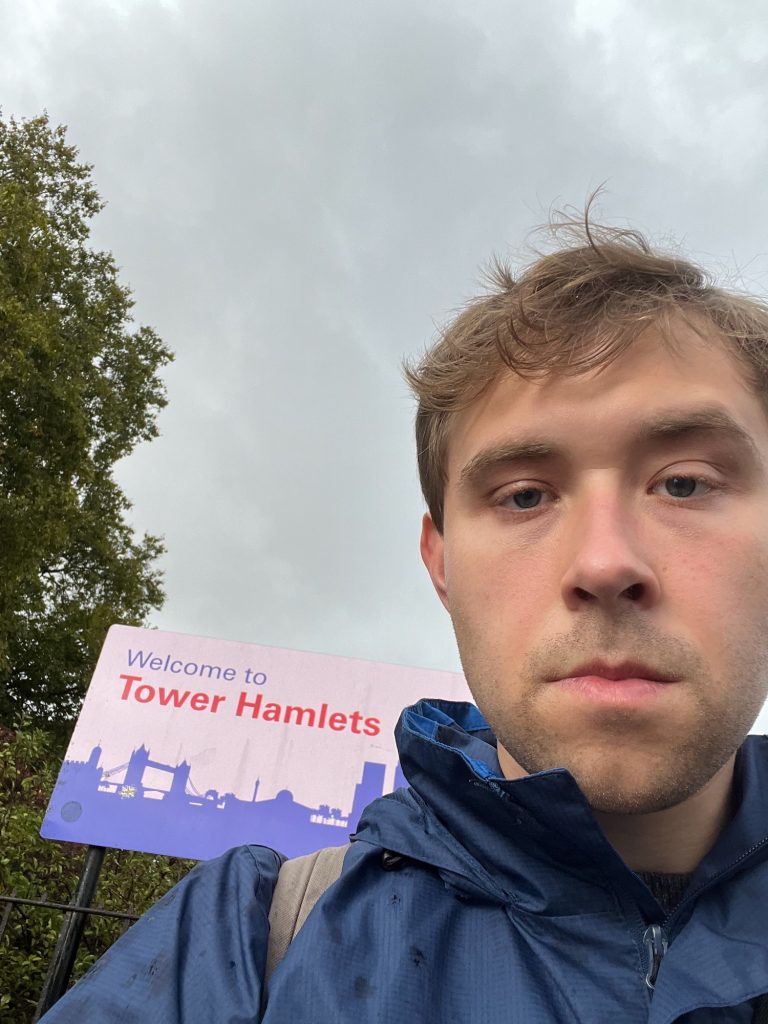
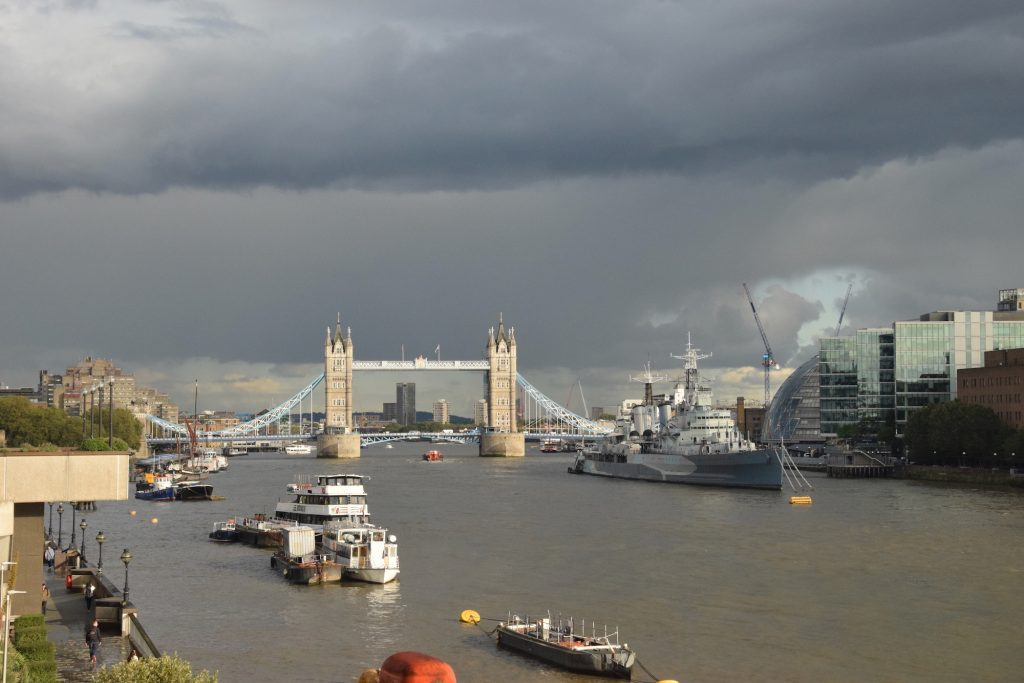
And then I walked to, and crossed, London Bridge. Southwark, tick.
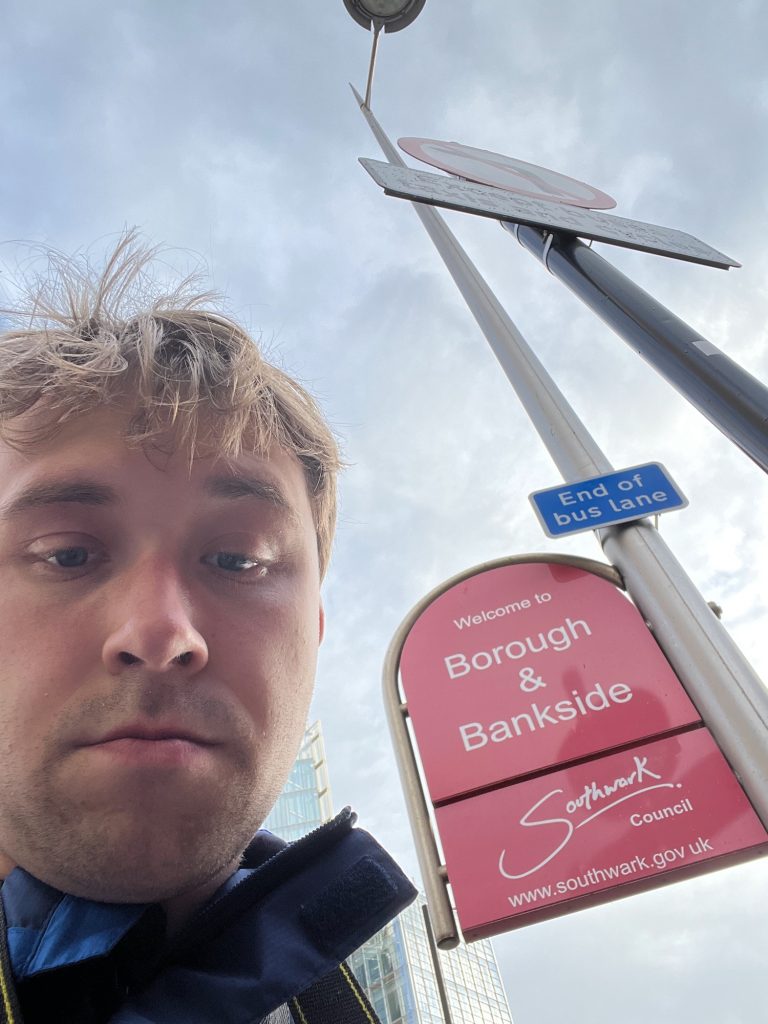
Then I went to meet my husband in the Rotherhithe area. I’d tell you about the rest of the weekend in London, but there were no un-bagged borough signs to be found. So I guess you’ll have to wait another three weeks for more London content, when the hunt continues. And when hopefully I’m less exhausted.
To be continued…
London borough count: 24/33
London borough count without cheating: 23/30
- I don’t think it’s ever abbreviated to “MotH”, but I wish it were. ↩︎
- As was I, until I looked it up for this post. As, indeed, was the Google “AI Overview”. ↩︎
- This status is curiously similar to that of a certain Oxford college with which I may have been previously associated. ↩︎
- I don’t really understand how I was unprepared for this, because Shadwell is one stop away from Tower Gateway. I assume the rainstorm came on very suddenly, but I also assume I was an idiot who didn’t notice the looming clouds. ↩︎
Leave a Reply