
This was meant to be a post about Banbury, Oxfordshire’s second town and a great moderately-quaint place to go from Oxford, that you can reach cheaply and quickly. But the trains weren’t playing ball, so I went to my usual fallback option instead. The problem with this is that I’ve been there a lot, I’ve seen most of what there is to see, and that was part of the reason I’d originally chosen Banbury instead. The main reason I go there, after all, is because it has more shops than Oxford, and that’s nothing to write home (or a blog post) about. As such, I turned to that resource for the traveller without a clue, TripAdvisor, and decided to go to as many of its “Things to Do in Reading” as I could in one afternoon.
My main takeaway from this exercise, I should confess in advance, is that I disagree with TripAdvisor’s definition of “Things to Do in Reading”.
Date of trip: Saturday 7th April 2018
Journey time: approx. 30 minutes
Fare: £6.45 (Off-Peak, with 16–25 Railcard)
So here goes, then:
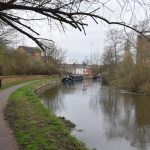
#6 Kennet & Avon Canal: Unreassuringly, four of the top five things to do were not actually in Reading, and the fifth you had to book. But I can confirm that there is a canal, that goes all the way to Bristol, and it’s pretty if you go to the right bit—I walked along it from The Oracle (the main shopping centre) to Berkeley Avenue. This, admittedly, isn’t far, but there were 91 other things to do!
#7 Reading Museum: Ah. Yeah, because I spent a bit too long in #13, I arrived at this just as it was closing. I have been before, but it was several years ago and I don’t really remember what was in it. Um, it’s nice from the outside, I guess?
#9 Caversham Court Gardens: Aha, something I can write about! This is a little bit outside the centre of Reading, and best accessed through Christchurch Meadows (not that one—that’s “Christ Church Meadow”, anyway), which is a pleasant riverside walk and I’m not sure why that’s not counted as one of the things to do in Reading. Cross Reading Bridge (you can see Caversham Lock on the Thames), walk down to the riverside, and keep going. And going. And up a hill a bit.
Caversham would have developed as a separate town, on the north side of the Thames as Reading was on the south (it wasn’t even in the same county until 1911). It still has its own town centre, but the place we’re going to here is a small park—the site of a Mediaeval house, expanded over the years and then, frustratingly, demolished in 1933. But the grounds are pretty, with a few (but not enough) information boards to tell you about it and about what used to be there. For instance, it has a crinkle crankle wall, but I needed Wikipedia to tell me what that was.
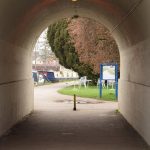


#12 Reading Station: Unsurprisingly, I went there. And to be honest I’m concerned by the fact that two of these so far have been ways get out of Reading. (The M4 does not appear on the list, sadly.)
#13 Museum of English Rural Life: Excellent, a proper niche museum. The MERL, as they’d like the kids to call it, is run by the University of Reading, and is free to enter. It’s also been recently refurbished, which is both a blessing and a curse: it’s well laid-out, and has attractive, accessible displays, but also not a huge amount to explain what the objects on display actually are—which would possibly be useful in a museum in a commuter town whose visitors may not know what all the bits of farm equipment on display are. The museum staff were, however, very friendly, from the welcome desk onwards, especially the woman running the stand where you could handle various objects from the museum’s collection. Some of the stores were also open for the public to view, which was cool.
But my favourite bit actually had very little to do with the countryside at all. The University of Reading holds the Ladybird archive, of the children’s books you’ve probably seen parodied even if you didn’t read them as a child. Most of them were from before my time, but I could get nostalgic about the samples from the Puddle Lane series that I learnt to read with, and the displays about the history were an insight into changing attitudes, as you’d expect (I enjoyed the depiction of the slick rocket the artist expected would land on the moon, replaced post-Apollo by the actual, more utilitarian construction).
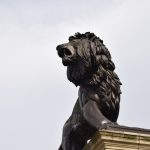
#14 Forbury Gardens: A small park, whose most impressive feature is a huge statue of a lion in the middle, a war memorial to the Battle of Maiwand in 1879–80. The lion is oddly muscular.
#17 Other Outdoor Activities: I walked around for about eight miles visiting all the other things on this list; does that count?
#27 The Hexagon: Another cheat: I only saw this from the outside yesterday, but I have been in before. Its a modern theatre that serves decent coffee. It’s got, as you’d expect, six sides.
#34 Minster Church of St Mary the Virgin: Like most churches in busy town and city centres, this didn’t seem to be open. A shame, as the picture on the information board made it look interesting.
#41 The Berkshire Yeomanry and Trooper Potts Memorial: Not huge, but a statue and display about the only man from Reading to receive the Victoria Cross (in no-man’s-land at Gallipoli, he could have escaped to safety along but waited with his comrade, eventually dragging him along using a shovel as a makeshift sledge).
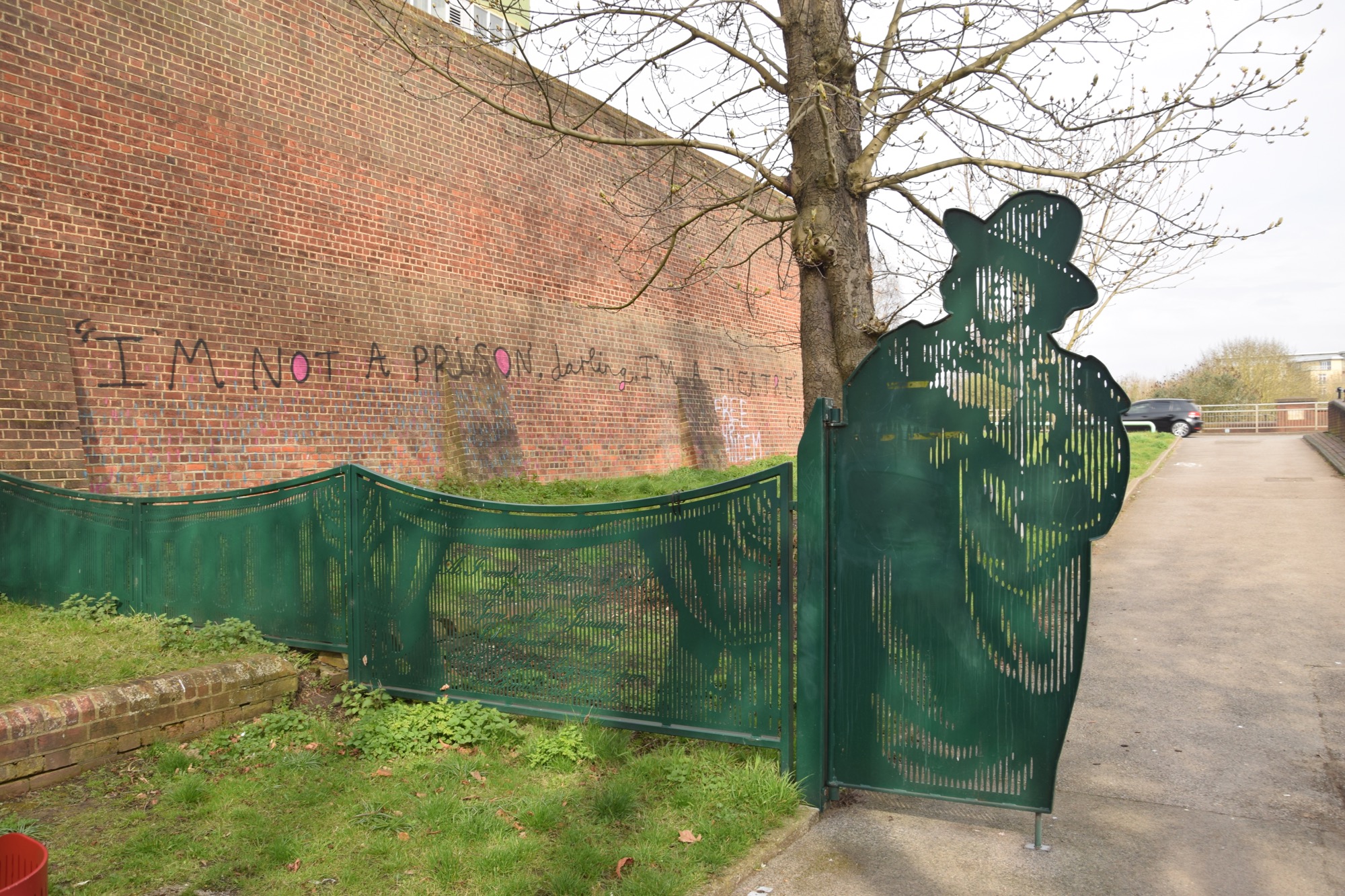
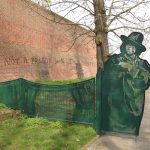
#42 Chestnut Walk: This is a walk by a backwater of the River Kennet, and runs along the outside of the old Reading Gaol, whose name you might recognise if you know a little about Oscar Wilde—he wrote his famous Ballad within its walls. There’s an installation commemorating him around the path.
#51 St James & St William of York Church: Not open to the public, as far as I could tell.
#52 Queen Victoria’s Statue: In what sense exactly, TripAdvisor, would you like me to “do” this? But yes, there is a statue. TripAdvisor highlights that the key words and phrases from reviews are “nice statue” and “statues”, which just about sums it up.
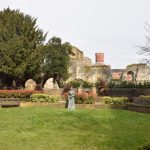
#56 Reading Abbey Ruins: You might well ask why the honest-to-God ruins of an abbey are ranked lower than a statue. The answer is that they’re gated off, because they’re unsafe to enter. Work seems to be underway to fix that so it can be opened in the summer.
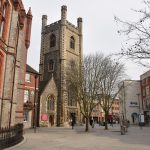
#60 St Laurence’s Church
#65 St Giles-in-Reading Church: See #51.
#69 Jubilee Fountain: Four people bothered to go on TripAdvisor to review this fountain. Most of them commented that it is no longer a fountain in that it contains no water, which I can confirm is accurate. (And I guess I should be careful criticising the reviewers when I’ve now written more words online about the fountain than some of them.)
#74 Reading: Indeed, visiting Reading is a thing you can do if you visit Reading. Unless they mean you should read something while you’re there? Either way, mission accomplished.
#84 Marks & Spencer: Yes, really.

![A yellow stone life-sized statue of queen Victoria on a plinth, in front of a three-storey brick shop building, the lower floor of which has signs reading “M&S FOODH[obscured]” and “COLLECT BY C[obscured]”.](https://escapingoxford.blog/wp-content/uploads/2018/04/dsc_0917-150x150.jpg)
So there you go, 19 out of 92 possible things now done in Reading: a hit rate of over 20%. And, to be honest, its main appeal is as somewhere with shops that we don’t have in central Oxford (off the top of my head: Wilko, Apple, House of Fraser, HMV…). If you end up there, though, hopefully I’ve given you a few ways to make your time there more interesting. And if you’re feeling really adventurous, you can tell me about the other 73.
Leave a Reply to Abingdon – Escaping Oxford Cancel reply