
The tour of Charing Cross Tube station only lasted about an hour and a quarter. With a few hours to kill in London after lunch, we had to find something else to do. You’ll be pleased to learn we succeeded. Here’s where we went.
Date of trip: Wednesday 30th January 2019
Journey time: approx. 1hr10 (via the Chiltern line)
Fare: £21.20 (Off-Peak, with 16–25 Railcard, including Zones 1–6 Travelcard)
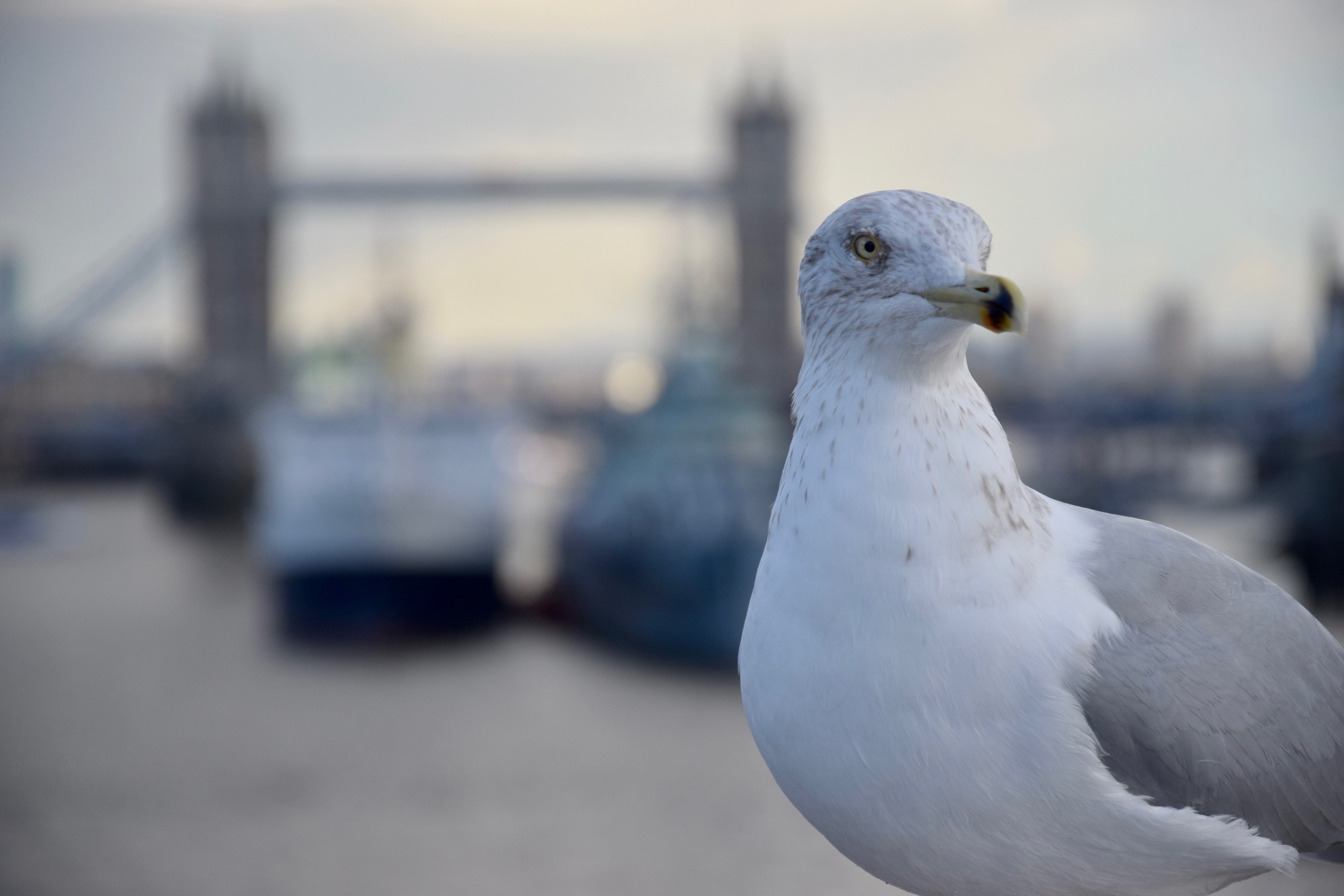
Bevis Marks Synagogue
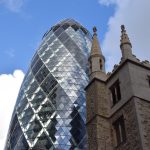
Bevis Marks is Britain’s oldest synagogue; there had been one about a decade older, but it was lost in the Blitz. It sits in the City of London, and so its congregation now mostly commutes in, the surrounding area being taken up with offices of banks, and trendy chain stores. (The Gherkin isn’t far away.)
The place looked closed when we arrived; the heavy iron gates were locked shut. But it seems that, sadly, this is what security dictates, for eventually someone let us in, took our money (£5 admission) and issued us with kippot (skullcaps). We were then ushered into the synagogue itself, a huge hall, simply decorated, but with low-hung chandeliers giving an impressive effect. (Photography wasn’t allowed inside, so I can’t show you.)
The tour was self-guided, with an accompanying book lent out. The problem was that that was more of a history than a book about what you were seeing. As my cultural background is Christian, and churches are classic European tourist attractions, I can work out what I’m seeing in those; on the other hand I don’t think I’d been to a synagogue before, and so, while everything was beautiful, I’d have loved to learn more about the significance of the various objects. They do offer guided tours; once I’ve been on one of those, I’ll be able to tell you more.
(Nearest Tube: Aldgate)



A walk through the City
My previous description of a walk through London didn’t spend much time in the City at all. It took you to the steps of St Paul’s,¹ but that was about it; my logic was that most of the other impressive buildings are skyscrapers, and are best appreciated from far away.
It is quite fun to wander around at their feet, however. You can spot a few things you can only see close up, like the fact that the edge of the Gherkin doesn’t quite touch the ground, and has strange descriptors of places next to it. You can see the escalators swooping up into the Cheesegrater, and the occasional strange tiled hall in an office building, like a swimming pool. You may also find a random Tracey Emin artwork hiding in an alleyway, or an ancient stone church nestled among walls of concrete and glass.
Other things to see that you can’t see from far away include the Lloyds of London building (like the Pompidou Centre in France, built “inside out” with the service pipes and so on on the outside. Or perhaps you could walk along Eastcheap, where cars got melted by the Walkie Talkie—who doesn’t love a death ray building, after all?
We exited the City by crossing London Bridge, which perhaps affords the best view of The Bridge Americans Think Is London Bridge. And this led us to our next attraction.
(Tube: many options, but Liverpool Street is a decent place to start)




Old Operating Theatre Museum and Herb Garret
This was my friend’s idea. In the loft of a former church lies an old operating theatre belonging to St Thomas’ Hospital, before it moved upriver to Lambeth, which was opened in 1822, closed in 1862 and then forgotten for nearly a century. The operating theatre is a theatre in the most literal sense; five horseshoe-shaped tiers of standing-room-only viewing galleries were provided, so that medical students could learn from the best surgeons.³ Entry is via steep spiral stairs in the tower, and costs £5 for students (£6.50 full price).
The theatre has been restored, and demonstrations are performed, though thankfully no longer with live patients. It also seems to be popular with school parties, and since the museum isn’t big (the entire floor area would probably fit in the Bod Quad) it was difficult to look around while they were there. But afterwards there were plenty of gruesome displays to gawk at, and you can see why it’s a good choice for children raised on Horrible Histories.
There are two main rooms: the theatre, and another room, which it’s believed was used as a herb garret (a place where medicinal and supposedly-medicinal herbs were sold). Also present is a book in which visitors can write their biggest medical fears. I wrote down my very specific one (which you can go and find out if you go, as long as you recognise my handwriting and find the right date); also present as fears were “running out of insulin”, “amputation”, “spiders and old stairs” (what hospital are you going to?) and, er, “Absolutely wonderful museum and presentations. Thank you 30.1.19”. Given that this was indeed such a museum, I’m sad they were scared—but then again, this is perhaps not a museum for the faint-hearted.
(Nearest Tube: London Bridge)

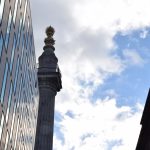
Southwark Cathedral
And finally, to another place of worship. We spent about ten minutes in here, which didn’t do it justice. But it is free to enter (or £1 if you want to take photographs). I can’t say much, except that there’s a memorial to Shakespeare, whose Globe Theatre was nearby (as is its reconstruction). I need to go back properly, but I’m including it so I can include alongside some pretty pictures.
(Nearest Tube: London Bridge)
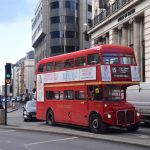
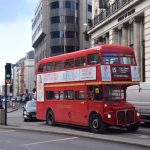
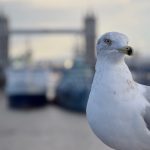
So there you go: four more things to see in London. I’m probably writing about London more than I intended when I started this blog a year ago. But when a man is tired of London, he is allegedly tired of life, so I hope you’ll forgive me. Next week will be more provincial, I promise.
¹ Sadly, visitors are now encouraged not to feed the birds.
² I can’t work out what these were.
³ Patients subjected themselves to this because they could received medical care they otherwise would have been unable to afford. Wealthier patients had operations at home.
Leave a Reply to Every English city, ranked: part I – Escaping Oxford Cancel reply