
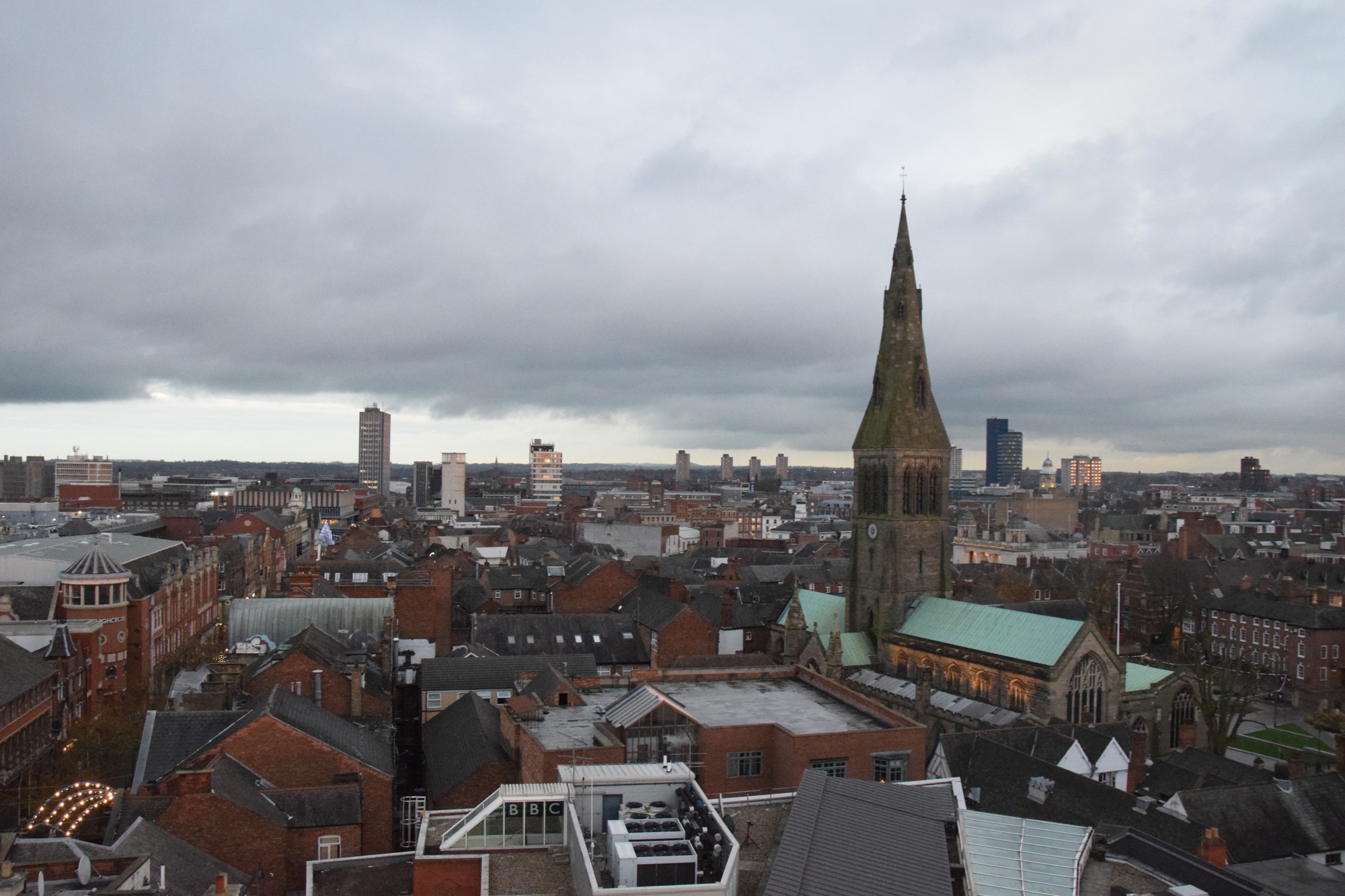
Back in December, a friend of mine—the same one who suggested the trip to the West Wycombe caves—suggested a trip to follow in the last footsteps of a king. (They have half the good ideas for this blog, and should probably be the one writing it at this point.) Specifically, they suggested a trip to Leicester, the final resting place of the much-maligned Richard III, which, since the discovery of his remains in 2012 in a council car park, has really started to capitalise on its Ricardian past. Here’s what we found.
Date of trip: Sunday 3rd December 2017
Journey time: approx. 2h30 (change at Birmingham New Street)
Fare: £27.45 (Off-Peak, with 16–25 Railcard; split at Banbury and Birmingham New Street)
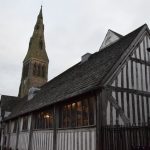
Let’s start with the Cathedral. The building started life as a parish church, and in fact didn’t become a cathedral until 1927, so it doesn’t feel like visiting, say, York Minister or Bath Abbey, and indeed barely had room to fit in all the bits you’re supposed to have in a cathedral—and that’s before they had to find room for the tomb of a king. Upon Richard’s arrival, the choir stalls had to be removed, and relocated to the rather strange position at the back of the church.
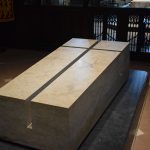
But the tomb is spectacular. The main portion of the tomb is a single piece of stone from Swaledale, with fossils visible in the rock, into which has been carved a deep cross. The tomb stands on a darker plinth, and inlaid into this is the coat of arms of the Plantaganets (Richard’s royal house). This is a mosaic made using traditional techniques, with stone sourced from Afghanistan and Tuscany, and you probably can’t afford one.

The symbolism of the tomb was explained to us by a very chatty guide, and indeed the cathedral definitely felt on the friendlier end—somewhere that’s still excited by the fact that tourists want to visit, rather than irritated by them but happy to take their money. They’ve put up displays linking various other artefacts (and points of theology) to their entombed king—but I still don’t understand why they had a sort of living room thing in one of the chapels sponsored by John Lewis.
Outside the Cathedral is a statue of Richard III dating from before his body was found, along with some sort of turny prism thing that neither I nor my fellow king-hunter could work out the point of. But this was on the way to the other main attraction, the King Richard III Visitor Centre, opened post-discovery. This is a museum (student entry £8), subtitled “Dynasty, Death and Discovery”, divided into two main parts. The downstairs tells the story of Richard III through various interactive displays, partly with an aim to rehabilitating his reputation by pointing out some of the good things he did (and pointing out that some of his famous misdeeds, such as killing his own nephews, may have been historical fabrications).
It’s the upstairs where things get a bit weird. After a brief display on portrayals of Richard in popular culture (most famously, Shakespeare’s play, from which most popular ideas of Richard are derived), the museum devotes approximately as much space to the story of his discovery as it did to the story of his life. The story itself is fascinating, but the trouble is that it’s not the sort of thing that has many artefacts such that you can display in a museum. So they’ve gone down the “tenuous connection” route—look, the digger bucket used to dig the trench that found Richard’s tomb! At its extremes, this starts to feel a bit cultish, especially when the Wellington boots being worn on the day of discovery by one of the archaeologists are on display almost as a modern-day relic.
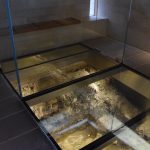
But the conclusion of the experience is worth passing through that. Most of the attraction is housed in (what I think is) the former council office block served by the car park in which Richard was found, but a short extension was built out into the car park itself, covering one specific former parking space, which we now know as the former final resting place of a monarch. The tomb itself is covered in glass, but that means you can stand over it—mildly macabre, perhaps, but also almost a moving experience, especially when his personal prayer book is displayed nearby.



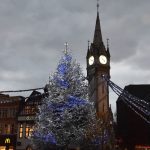
What of the rest of Leicester? The city centre is fairly ordinary, centred around a square with a clock tower in the middle (which seems to be a Midlands town thing to do). But again they’ve been trying to make it worthwhile for tourists to visit, so they’ve put displays around the city centre about different aspects of the history, themed around notable Leicester folk (for instance, Thomas Cook, founder of the eponymous chain of travel agencies).
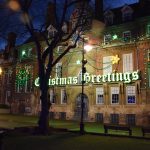
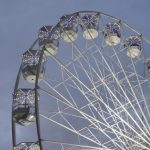
But December was a good time to visit, partly because they had a big wheel for aerial views of the city, but partly because they really go all out with the Christmas lights. One of the council buildings was covered in lights, with huge green letters spelling out “Season’s Greetings” across the middle, and in the square in front was an animated diorama of scenes from the Chronicles of Narnia. Quite spectacular.
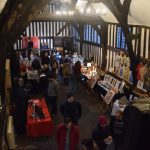
A couple more things are perhaps worth mentioning. The Guildhall is the historic meeting place of businessmen in the city, and now open as a museum telling the story of Leicester—worth popping your head in, especially as it’s free (unless you go, as we did, when there’s a craft fair on). Nearby are the Newarke Gate, through which Richard III may have made his final (or, I guess, penultimate) journey after his death at the Battle of Bosworth Field—but nobody really knows, so this one’s a bit tenuous—and the church of St Mary de Castro, formerly part of the castle.
The main problems with visiting Leicester are twofold, and are basically summarised in the table at the top. Firstly, it’s not cheap, even with the split-at-Banbury trick (oh, yeah, also don’t try this during the two weeks in July when Oxford station is almost entirely closed). Secondly, it takes a long time to get there, so it’s not the sort of trip you can do on a whim. But there’s certainly plenty to do there: forget the Windsors, and seek out the last Plantaganet.





Leave a Reply to Everywhere I’ve been – Escaping Oxford Cancel reply