
Long-time readers of this blog might remember a once-common running joke, in which every time I mentioned a bird I misnamed it.1 This all stemmed from a photo gallery I put on Facebook back before this blog was even a twinkle in its father’s eye, showing the trip to High Wycombe I later wrote up on here, in which I did genuinely misname two birds: a coot as a “moorhen”, and a heron as a “kingfisher”.2
It seemed to be the second of those that generated the most amusement. And, do you know what? I stand by what I said. What does a heron do? It waits to catch fish. How big is a heron? Big—king-size, you might say. You see? What I’m saying here is that it’s not me that’s wrong, it’s the entire etymo-ornithological community.3
Anyway, part of the reason I kept it up is that I genuinely am bad at identifying birds, and it was easier when writing about something involving one to name a bird it definitely wasn’t, rather than worrying about which one it was. I may struggle to tell whether the pigeon I’m looking at is a wood pigeon or a feral pigeon, but either way I do know it’s not any kind of penguin.4
It was therefore with some trepidation that, the other day, I entered the RSPB visitor centre at Loch Leven, in Kinross-shire. I knew I was in the wrong place when we were told on entry that there was a chance we might see some lapwing chicks; I knew this because I had no idea what a lapwing was. And I’ve played Wingspan; maybe I can’t identify birds, but in theory I know their names.5 (And how they can help you when you activate them. That’s a thing, right?) Fortunately, he also mentioned red squirrels, and I know what they look like.6
There was also a sign saying you could hire binoculars if you had forgotten yours. My husband had a camera with a long zoom lens, but I did not, so I decided that these might be useful. At the hire desk, I was told that binocular hire was indeed possible, which I could perhaps have deduced for myself. “The Avocet is £7 and the Harrier is £10,” the man said. I briefly wondered why he was offering me a choice of birds; surely I didn’t look that incompetent at spotting them? But then I realised they were models I could choose between. “They’re both 8-by-42s,” he continued.
I blinked, and tried to push back my impostor syndrome. “Sorry, I’m new to this,” I said. “What’s the difference?” I forget what exactly he said, but the point was that the Harrier pair would have a clearer and/or brighter image. I decided to trust him on that, really because I had no other option, and so I went for the £10 pair. After all, YOLO.7 I also bought a book called What’s That Bird?, which, given previous experience, I felt was necessary.8
There were several waymarked trails you could go on to explore the reserve, each with its own colour. Now we were talking, because, as long-time readers may remember, I love a colour-coded path. (It’s all the thrill of orienteering, without any of that annoying “reading a map” bit.) I was therefore glad to take the Wetland Trail (blue, of course)—when you’re on the shore of a loch, a dry-land trail doesn’t really cut the mustard. And maybe this way I’d find out what a lapwing was.
What I found out very quickly was what a “lifer” is, from a handwritten message on a little chalkboard:
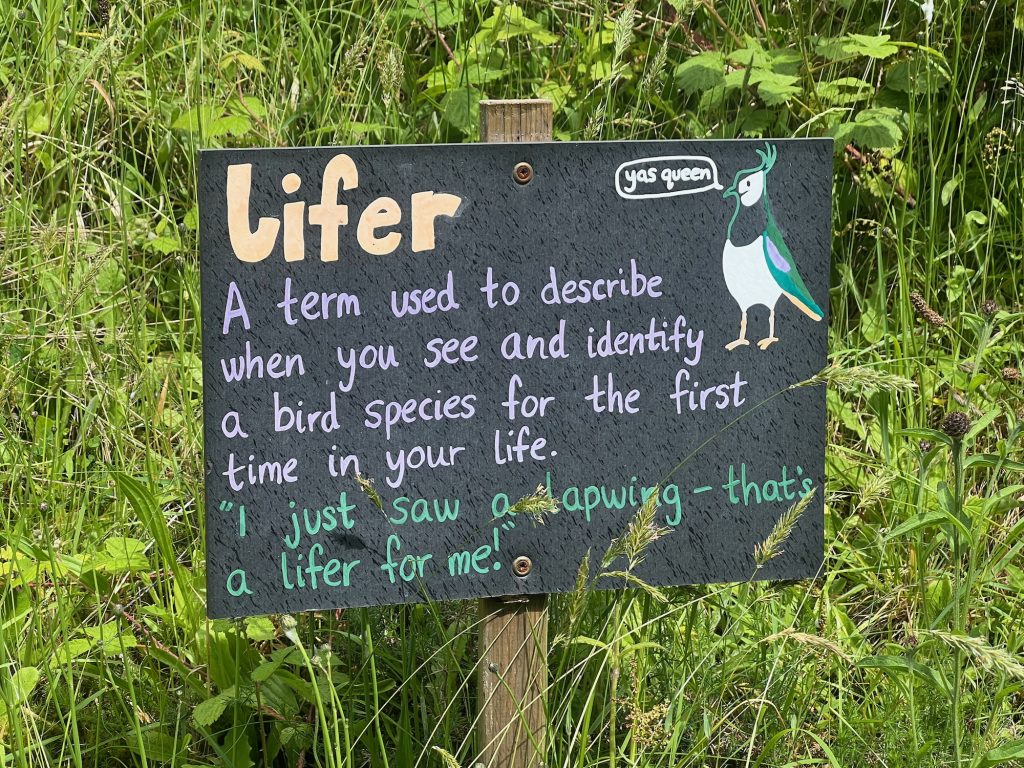
This only really makes sense as a term to use if you are someone who keeps track of all the species of bird you have seen, as otherwise you would not know whether a bird was a lifer. Fortunately, that is something birders are known to do: it’s called a “life list”. (Neither term has crossed over into train- or planespotting, as far as I know, which intrigues me as those hobbies are functionally the same thing.) Anyway, I was hoping for more of these signs explaining other bits of birder lingo—things like “life list”—but either there weren’t any, or my inauguration of the hobby of definitionspotting was a resounding failure. I suppose that there are some terms you don’t want to put on a little blackboard.
I hadn’t yet had my first time spotting any birds for the first time in my life, but I was about to have my first time entering a bird hide. Two serious birders were already there when they entered, so we whispered to each other so as not to disturb them. I don’t know whether their greeting us at a perfectly normal volume was a subtle way of pointing out that we didn’t need to do that, but I appreciated it nonetheless. We sat down at the bench at the front of the hide, and looked for birds.
It was around at this point that I understood the point of binoculars. Alright, now hear me out. I know what the point is supposed to be. But whenever I’ve looked through them in the past I’ve never found the increase in visibility of whatever I’m looking at to outweigh the inconvenience of having to jam two plastic tubes into my eyes. So I’ve never understood why you’d bother.
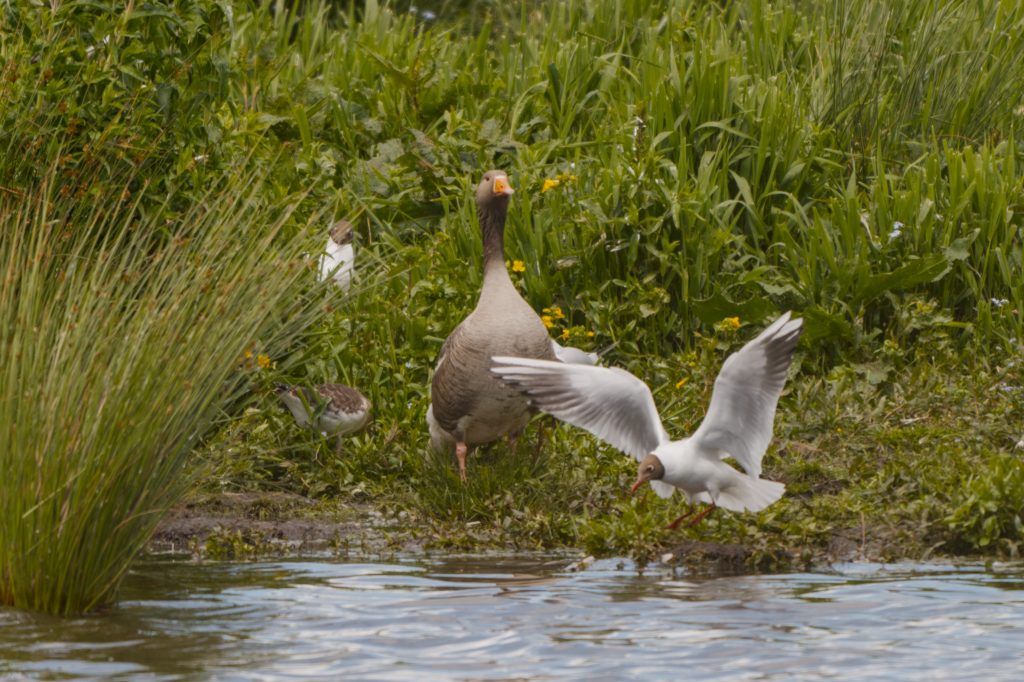
It turns out that this is the result of a phenomenon called “poor binoculars”. If you have good ones—and I’m reliably informed that these were worth £10 an hour to hire—then things look much bigger. I could make out geese like I’d never made out geese before.9 But still, they were greylag geese—your ordinary, regular, some-might-unfairly-say-“boring” geese—so this didn’t capture my attention for too long. Eventually we moved on to hide number two. And I was lost for words. Genuinely. Fortunately, a little chalkboard has already said it for me:

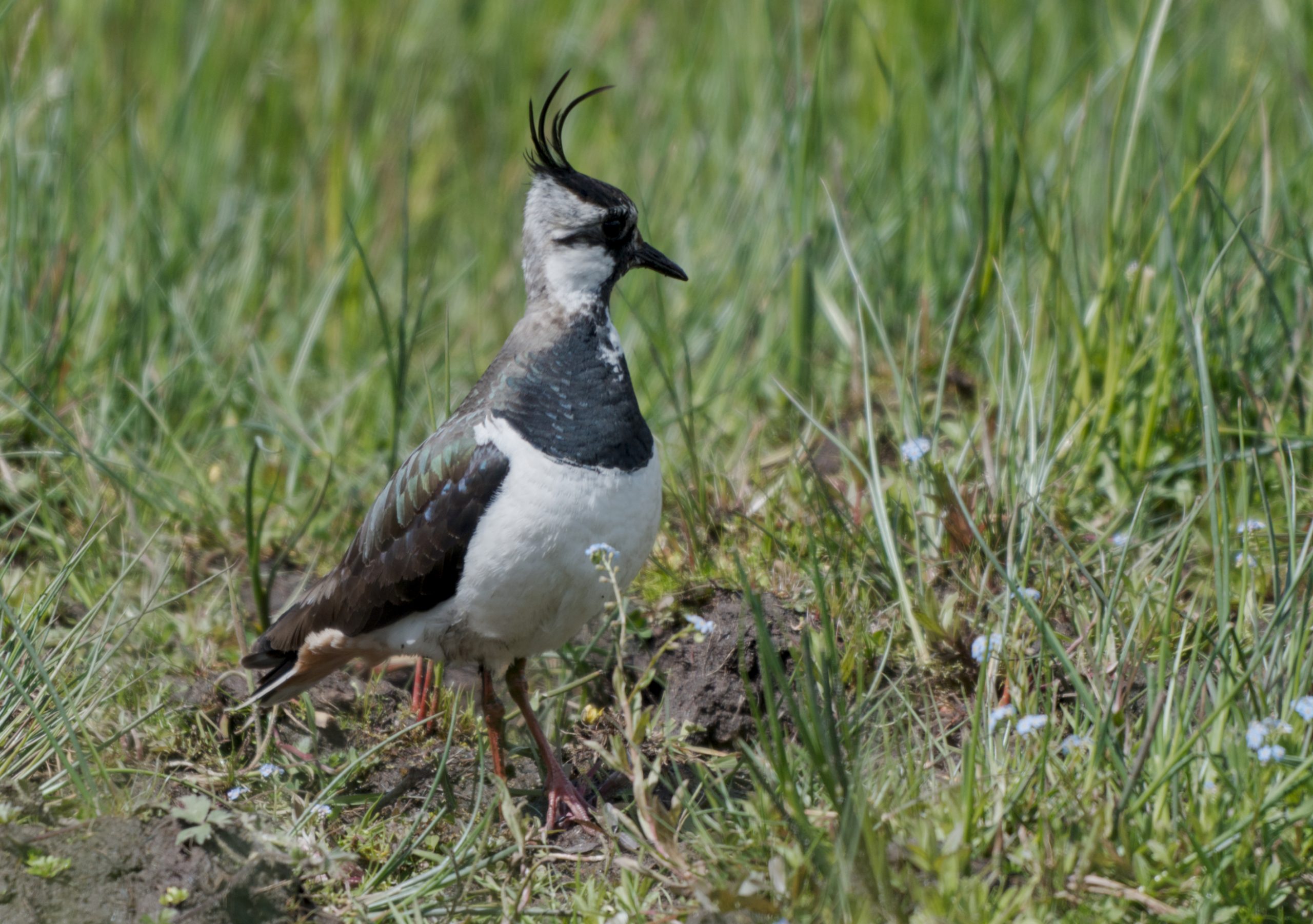
Of course, I didn’t know it was a lapwing at first, precisely because it was a lifer. I guessed it was, from the information we’d been given, but it took page 78 of What’s That Bird? to confirm it for me. There were a couple of lapwings, in fact, roaming the wetland, calling at the flocking gulls and pecking at what I presume was food. And I was entranced.
No, seriously. I know, given the tone of the rest of this blog post, that you might have read that as sarcastic or something. But it wasn’t. I think there, in the Waterston Hide on the shores of Loch Leven, I finally understood why people like birdwatching. I wish I could describe to you what it was that captivated me so, because they were just two birds doing their normal birdly things.10 Nonetheless, it held my attention, and that’s remarkable, because very little that isn’t flashing maniacally can hold my attention.
And that was before I saw the chicks.
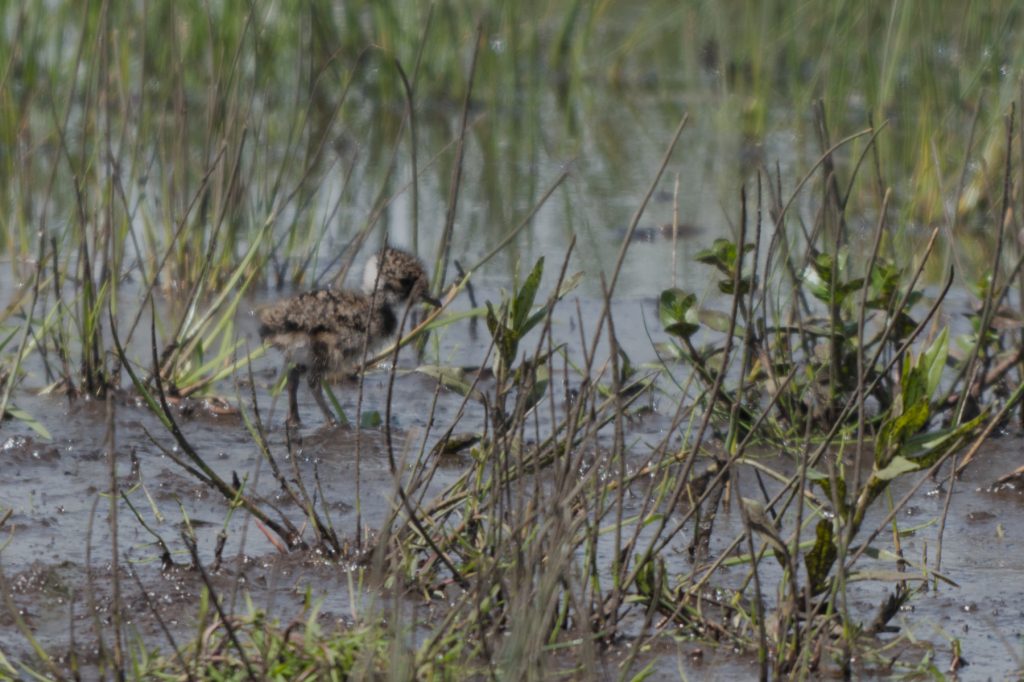
Likewise, I didn’t know they were lapwing chicks at first. What’s That Bird? didn’t help me, because it only provides pictures of adult birds (blatant ageism, if you ask me). But they seemed to be hanging around the lapwings, so I assumed so. And I was proven correct when one of the adults made a peep that sounded, to my untrained ears, like all the others it had made. But the chicks must have heard something in it—at once, they both starting making their way across the ground to the adult, who lifted its wings one at a time and let them tuck inside. It was some disappearing act, let me tell you.
We left the lapwings there. And, you know what, it didn’t matter that we walked around the woodland bit and didn’t see a red squirrel.11 It didn’t matter that, while we were in the café afterwards, it started absolutely tipping it down, which would go on, on-and-off, for the rest of the day. Because a sort of contentment had peeped at me, and I’d gladly tucked myself under its wing.
Is that weird? It’s probably weird.
But then so, I suppose, is insisting that a heron would be much better named a “kingfisher”.
All photos of birds accompanying this post are by my husband, and I can take absolutely no credit for them. I took the blackboard one myself, and I’m very proud of it, thank you.
- I think this may be the first time I’ve actually acknowledged it explicitly on the blog itself. When I used to link to these posts on Facebook, I would occasionally get the odd well-intentioned comment gently pointing out my “mistake”, and then I would have to explain. ↩︎
- What’s worse, it wasn’t even a real heron; it was a plastic garden ornament. I did, to my credit, realise that bit shortly after taking the picture. ↩︎
- Or, as I like to call them, Big Bird. ↩︎
- That would be ludicrous: penguins don’t live in this hemisphere. ↩︎
- I’ve just checked, and there are three different kinds of lapwing included in the game. But they’re all in the expansions, so it’s 100% not embarrassing that I didn’t remember that. ↩︎
- It’s actually really easy to spot red squirrels in this country; all you need is some paint and a bribe for the RSPCA. ↩︎
- You only lapwing once. ↩︎
- Thanks to the book, I now know there is an easy way to tell the difference between these two bird species. Kingfishers have a “Large, thick, dagger-like beak” and are “Often heard calling a loud, sharp keee”; herons, meanwhile, are effing massive. ↩︎
- A sentence that I wish to assure readers is not missing any uses of the word “with”. ↩︎
- Presumably, what I was getting a taste of was just the birds’ “physical and behavioural characteristics […] that enable [them] to be immediately recognised”. ↩︎
- In hindsight, I think they may have been spotted on the Leafy Loop (magenta) rather than the Woodland Trail (green), so we were barking up the wrong tree. All that barking we were doing can’t have helped, either. ↩︎
Leave a Reply