CN: Capital punishment (yes, really)
Recently, I managed to track down a review of another product by Octogo Games Ltd. The game was called Where on Earth, and the review was in the December 1989 issue of Geographical, the official magazine of the Royal Geographical Society. The review was fairly positive, somewhat to my surprise after reading the Spielbox review of Octogo, but I guess it played into their hands—this was a quiz game themed around geography, so it’s the sort of thing they’d go for.1 Although I did detect some potential sarcasm when the review concluded by saying “the game provides hours… and hours… of fun” (Geographical 1989).
Anyway, I showed this review to some friends and remarked that this review was broadly complimentary. To this, one of them replied: “I do feel like it’s pretty difficult to [mess2] up a trivia game to be fair.”
This week’s game tells them to hold its beer.
Brain Strain: The Lateral Thinking Game
Alright, I’m being hyperbolic. Brain Strain (Lagoon Games 1995) is a fun time: it’s a quiz game, but all the questions are puzzles rather than trivia. There are some rules, but we didn’t bother with them. Instead, we just asked each other the questions. And those are what this week’s post is about.
The ones I want to talk about are of the “lateral thinking” variety. If you’re not familiar, this was a term coined by the psychologist and writer Edward de Bono.3 He actually gives an example of this kind of puzzle at the start of his 1967 book, The Use of Lateral Thinking; I would reproduce it here, but I have never seen an author reference their own copyright so many times within their text itself (in one of his later works, at least), so I won’t reproduce the puzzle because I don’t especially want to get sued.4
In general terms, though, you are asked to consider a situation in which your adversary, to settle a dispute, says that he will pick up two pebbles from the pebbly ground, one dark and one light; the result will be determined when you draw one of the pebbles from a bag. You agree to this, but notice that when he bends down to pick up two pebbles he actually draws two dark ones, to guarantee his preferred outcome. What do you do?
The solution offered by the book is to draw a pebble, fumble, and “accidentally” drop it on the ground so it isn’t identifiable; you then point out that, based on the rules of the game as agreed, it must be possible to work out what stone you drew from what is left in the bag. It’s a neat little riddle.
This puzzle is superficially similar to the problems we’re going to discuss. But there are two things that distinguish it from the others: the solution involves identifying a creative approach to the situation you’re given, and (relatedly, and if my understanding is correct), if you could think of another example that led to the same outcome, your solution would be considered equally valid.5
Here, then, is an example of one of the questions in Brain Strain.
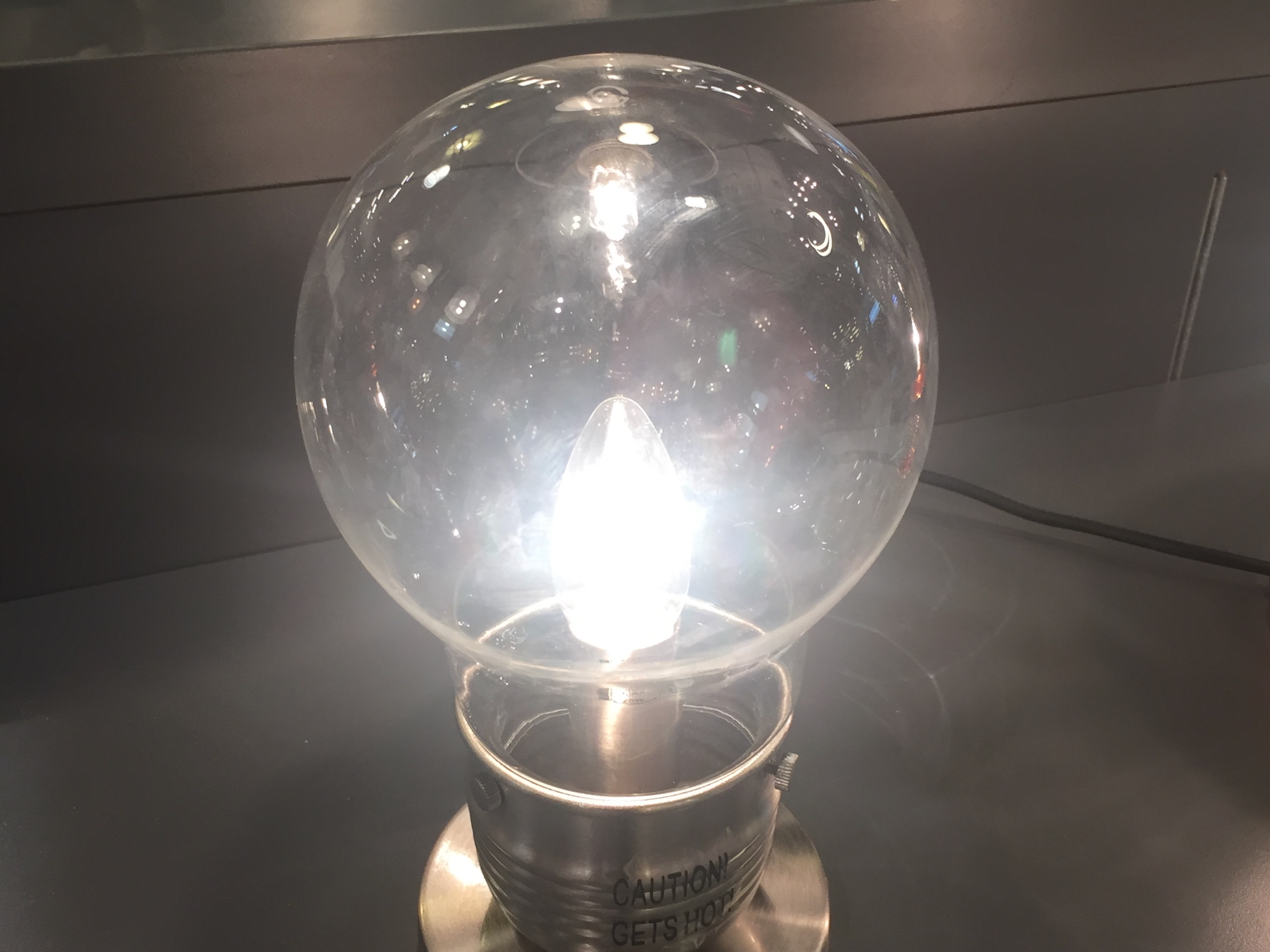
A man walks into a well-lit room and flicks the switch. The lights flicker, and the man leaves, contented. Why?
The tone of the question is subtly different, you might notice. This time, the implication is that there is one right answer, which you should be able to deduce from the information you’ve been given—or, at the very least, that there’s one answer that best fits the information as presented. In that respect, it’s more like what you might try to do as you read a good detective novel: piece together the clues to work out who committed the crime.6
The problem, I would argue, is that there isn’t only one answer to the light-flickering question. Here are some potential explanations I just thought of. I actually used a de Bono method for this (de Bono 1992): I picked random words, and used them to inspire answers to the question.7
- It’s Christmas, and the man is changing the fairy lights from static to twinkly.
- The man is an electrician: he suspected something was wrong with the wiring, and his theory is now confirmed.
- The room is too hot, and the man is turning on a ceiling fan, which intermittently obscures the lights.
I’m sure you can come up with your own, but here’s the “correct” answer the game would like you to give.
He is an executioner, and came in to test the electric chair, which always makes the lights flicker.
This is our first encounter with the tendency of these puzzles towards the morbid.8 And I’m not even sure it’s the most plausible answer for this one—this game was published in the UK, where the electrocution has never been a method of capital punishment. Likewise, while I can’t find a conclusive source on this, I have my doubts that (by 1995, when the game was published) the flickering described when an electric chair is activated wasn’t more common in films than in real life.
Talking of execution, here’s another question from Brain Strain.
Correct or incorrect? The last woman to be hung in the UK was Ruth Ellis, who shot her lover.
This is a fact: Ellis was indeed put to death by hanging at HMP Holloway, London, in 1955, and no woman has been executed in this country since then (Jessop 2025). Her life story was deeply tragic in many respects, which is (I would argue) trivialised by its included on a question in a light-hearted quiz game. I would especially argue it when this is the answer:
Incorrect. People are hanged, not hung.
Sigh.
Broadly speaking, I think the majority of “lateral thinking” puzzles fall into one of the two categories represented by these cards.
- Questions presented as if there is only one correct answer, when in fact there are several—as a friend of the blog put it, “Write a short story based on this, but make it the same as mine.”
- Questions that rely on some form of grammatical pedantry.
Sometimes, excitingly, it’s both at the same time. This next one comes from a book called The Puzzle Challenge (Mensa et al. 2005), and it’s about a fictitious orchestra from Wigan that was touring the US. I’ve edited the question for length, to cut it down from the original 137 words; I consider this a public service.
Albert Winterbottom, the conductor, had come in for some sharp criticism. One evening […] a man in the audience stood up and yelled [abuse]. Albert […] pulled a gun and shot the man dead […] before long Albert Winterbottom faced the electric chair. However, no matter how many times they tried to execute him nothing happened. The equipment was dismantled, checked, put together again and still didn’t work. Why?
This one ticks both category boxes, along with the one for gratuitous references to death. (Why do these things have an obsession with judicial electrocution?) Again, let’s try and come up with some answers:
- They’d checked the equipment, but hadn’t actually checked the electricity supply to it, which Albert’s accomplice had turned off.9
- He was facing the electric chair; he wasn’t actually in it.
- Albert was a lifelike marionette puppet, which also explains why he wasn’t very good at his job leading the orchestra.
Admittedly, those efforts are less good than the ones I came up with before, and they don’t necessarily relate to the musical stuff or the method of execution in a satisfying way. But I put it to you, dear reader, that all those answers are more reasonable than the one the book gives—which does cover the elements of the riddle, but has little else to recommend it:
Albert was a lousy conductor!
Deeper sigh.
I have spent too long looking into these, and I have more thoughts. But at this point this post is going to end up longer even than the one on Octogo, and that simply wouldn’t do. So it’ll have to wait for next week. In the meantime, here’s one from The Amazing 1000 Puzzle Challenge (Allen 2004) to muse on.
A family of four were going on a mountaineering holiday. The second morning they were all found dead in their cabin. The coroner declared that they had all died from drowning. The faucets in the cabin had not been left on and the boiler and water storage units were undamaged. There was no sign of any foul play. What caused them to drown?
If you have any thoughts on their grisly demise, you can put them down below. Otherwise, on that watery note, I’ll see you next week.
References
Allen, Robert, ed. (2004), The Amazing 1000 Puzzle Challenge (Kettering: Index Books).
de Bono, Edward (1967), The Use of Lateral Thinking (London: Jonathan Cape).
de Bono, Edward (1992), Serious Creativity: Using the Power of Lateral Thinking to Create New Ideas (New York: HarperBusiness).
de Bono, Edward (2001), The De Bono Code Book (London: Penguin Books).
Geographical (1989), ‘Books: Where on Earth’, 61/12 (December), 49.
Jessop, Ruth (2025), ‘Ruth Ellis: the tragic story of the last woman to be hanged for murder in the UK’, The Standard, 3rd March.
Lagoon Games (1995) Brain Strain: The Lateral Thinking Game (cards) (London: Lagoon Games).
Mensa, Robert Allen, Dave Chatten and Carolyn Skitt (2005), The Puzzle Challenge (London: Carlton Books).
Ross, Stewart (2018), Solve It Like Sherlock (London: Michael O’Mara Books).
- Indeed, they (unsurprisingly) didn’t regularly review board games; I almost couldn’t find the review in the library copy of the magazine because I hadn’t thought to look at the “Books” page. ↩︎
- Forgive me for failing, (frankly) faintedheartedly, to feature the faithful fragment. ↩︎
- Disclosure: I am somewhat sceptical of the usefulness of some of de Bono’s ideas, including those relating to lateral thinking. I am also aware that he had some ideas on some controversial topics that were—shall we say—offbeat. I want to make it clear that I don’t endorse this sort of thing, but nor am I remotely qualified to explain why I disendorse it. I mention him primarily in the context of the puzzles. ↩︎
- This later book was called The De Bono Code Book (de Bono 2001), and is, according to Amazon, “A fascinating introduction to a comprehensive coding system which enables us to communicate in a higher order language”. To me its chief utility seems to be that it actually assigns a meeting to “6/7”. ↩︎
- I would provide an example of such a solution, but my thinking is at best diagonal. ↩︎
- Indeed, in my library visit while looking into this, I found a book of this sort of puzzle called Solve It Like Sherlock (Ross 2018). The author presents long versions of them in the form of newly-written Sherlock Holmes stories; these are a few pages long each, and each stops just before he solves the crime, with the answer at the back incorporating the conclusion of the story. The puzzles are better-constructed than most of the ones we’re talking about here, but it shares some of the same thematic issues as the more “traditional” books we’re discussing. ↩︎
- Except I don’t think I got this technique from de Bono, because—weeks before I’d considered writing this post—I came up with it myself to help me invent “crazy business ideas” for the one where I responded to WordPress.com prompts. Indeed, I’ve been doing blog posts inspired by random stimuli almost as long as I’ve been doing this blog; if anything, it’s yet another thing I nicked from Diamond Geezer. ↩︎
- I’m far from being the first person to notice this: for example, back in 2018 the YouTuber Jarvis Johnson did a video about another YouTube channel called “Bright Side”, which specialises in this sort of content. ↩︎
- They didn’t notice because the supply to the chair was separate from the supply to the rest of the prison, thus thwarting the man in the first question. ↩︎


Leave a Reply to Tom Cancel reply