
Another week, another commuter town—which I went to a year ago today, so this is going to be a challenge to see how much I can remember. This one does actually have a genuinely touristy bit, which I’ll tell you about next week. But, for now, here’s what you can do in High Wycombe.
Date of trip: Saturday 6th May 2017
Journey time: approx. 40 minutes
Fare: £9.10 (Off-Peak, with 16–25 Railcard)
Let’s start with the town centre, which, to be honest, isn’t the best. It’s another one of those towns where a huge shopping centre expansion (the Eden Centre) means that the demand for shop units is far exceeded by the supply; Wycombe’s other centre, the Chilterns, suffers from it, as the around that centre. Wandering through streets with mostly-empty shop units is pretty grim, to be honest.
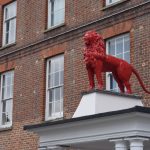
The rest has a pretty good selection of shops—again, better than Oxford’s for “ordinary” stuff, but if you’re going for that you might as well go to Reading. Probably the most notable thing in the town centre, though, is the Red Lion on the High Street, which stands above the entrance to the Iceland store, formerly a hotel; Winston Churchill and Benjamin Disraeli both addressed crowds standing on the lion’s platform.
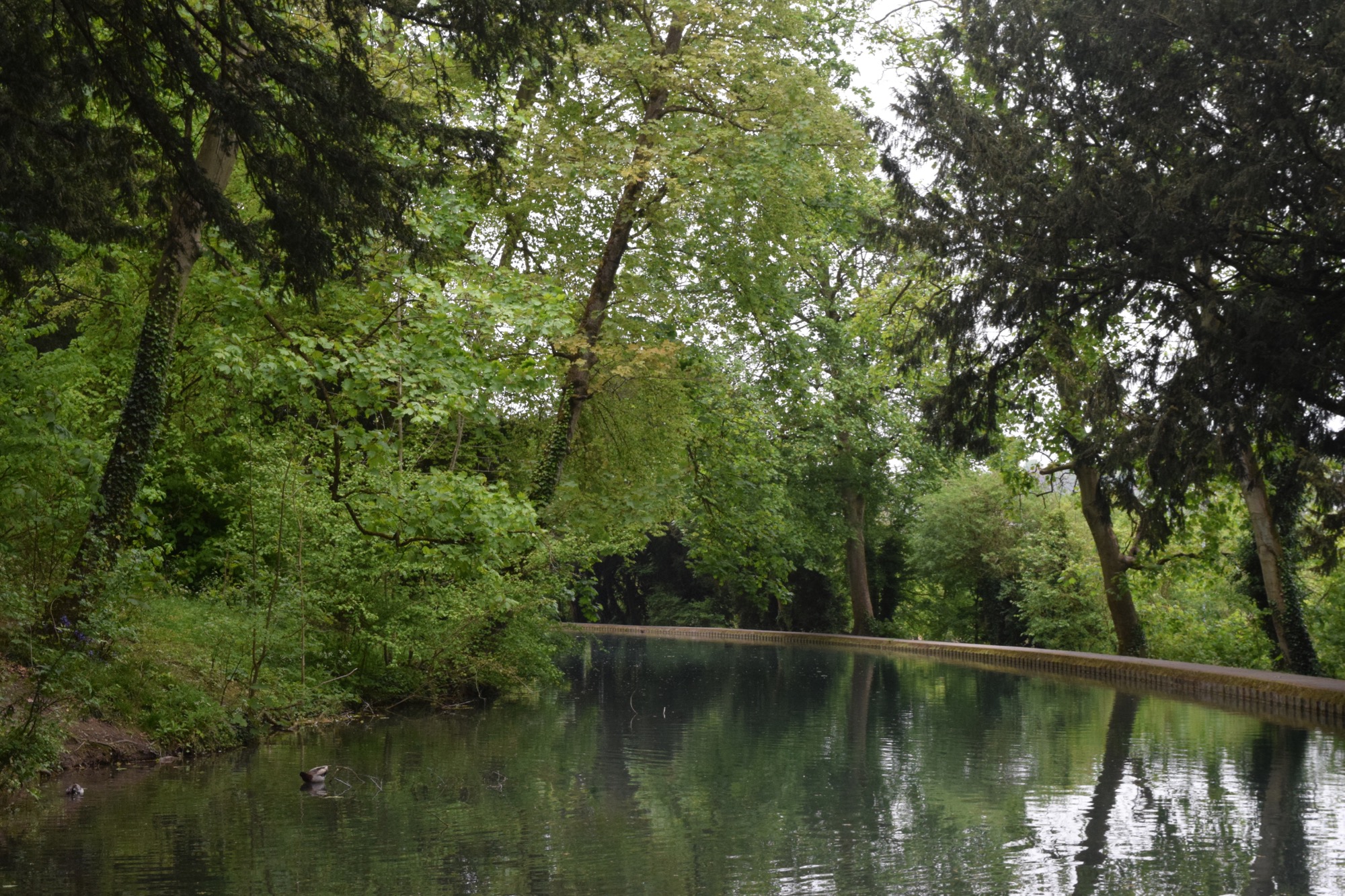
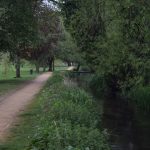
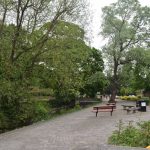
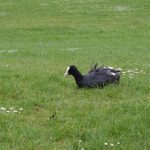
Alright, so if not the town centre, what else? Well, what I really liked was the Rye, Wycombe town centre’s main public park. It’s mostly just open green space (just in case you weren’t sure what a park was), but there’s a pleasant walk along the Dyke at the top. The Dyke is an artificial channel, which runs along the south side of the park; apparently it was built in the 18th Century, and drains into the Wye, Wycombe’s river (which also flows through the park, on the north side). The Dyke is quite good for spotting waterfowl; photos of a kingfisher and a moorhen are in the album.



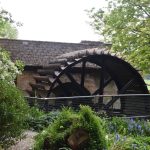
There’s a boating lake as well in the park, but it looked pretty desolate (but, again, this was a year ago); there’s also a lido, for if you’re one of those mad people who likes swimming in cold water outdoors. More interesting is the water mill on the other side, by the river, which is cool to wander around the outside of, and occasionally opens for tours—but only around three times a year, and in particular not when I went. (I guess I could have planned my trip to coincide, but that would imply Wycombe was a place I’d planned to visit, rather than my usual semi-random pattern of turning up at the station and getting on a train.)
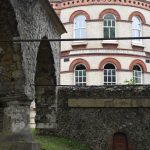
Also near the park is the ruin of the Hospital of St John the Baptist, which was founded in 1180 and closed in 1548 after the Dissolution of the Monasteries. It wasn’t really a hospital in the modern sense; more like an almshouse, with a community of clergyfolk who gave residence and care for paupers both in the town and passing through, and for the old and infirm. There are some 12th Century buildings remaining; not much to see, but a little information panel about it.
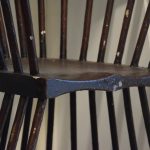
On my trip a year ago, at this point I said, “Bye, Wycombe”, but when I went back more recently I went to one more place, the nearby Wycombe Museum. This, as signs throughout the town advertise, has a “nationally significant chair collection”, and they’re not wrong. The town was historically a centre for chair production, specifically of Windsor Chairs—chairs that are essentially a stool with a back added, as indeed I learnt at the museum. I also learnt that there is a town tradition to build chair arches (literally, arches of chairs) for significant events, and that someone once made a chair that can be turned upside down and is still a chair, for use in gardens. Indeed, I now know more about chairs than I think I ever needed to.
That said, I wish I could tell you more about the chairs (as you can probably tell, I’m somewhat regretting having started this one, given that I’m running out of things to say—but I wrote about Milton Keynes and I can write about here too); the trouble is most of the ones in the collection had scant labels, so even if they were nationally significant it wasn’t entirely obvious why. This was a problem throughout the museum. There were ten key objects with detailed labelsL the ceremonial mace of the town, for instance, with a panel about why Wycombe’s mayor is weighed at the start and end of their tenure (there’s a weighing ceremony, at which the crowd boos them if they’ve put on weight as this implies they’ve been getting fat on the profits of the town). Many of the cases, however, just didn’t have anything to say what was in them (unless I missed it), which was a shame. Even the ten key objects had a note that more information would be added “during 2016”, which wasn’t encouraging.
So I can’t lie, Wycombe itself is nice for a wander around, but I’m not going to encourage a special trip. I would encourage a special trip to the nearby place I’m writing about next week, however, and (as I’ll describe) there’s probably not enough there to spend a whole day there. So if you’re passing through, why not try Wycombe?




Leave a Reply to West Wycombe – Escaping Oxford Cancel reply