
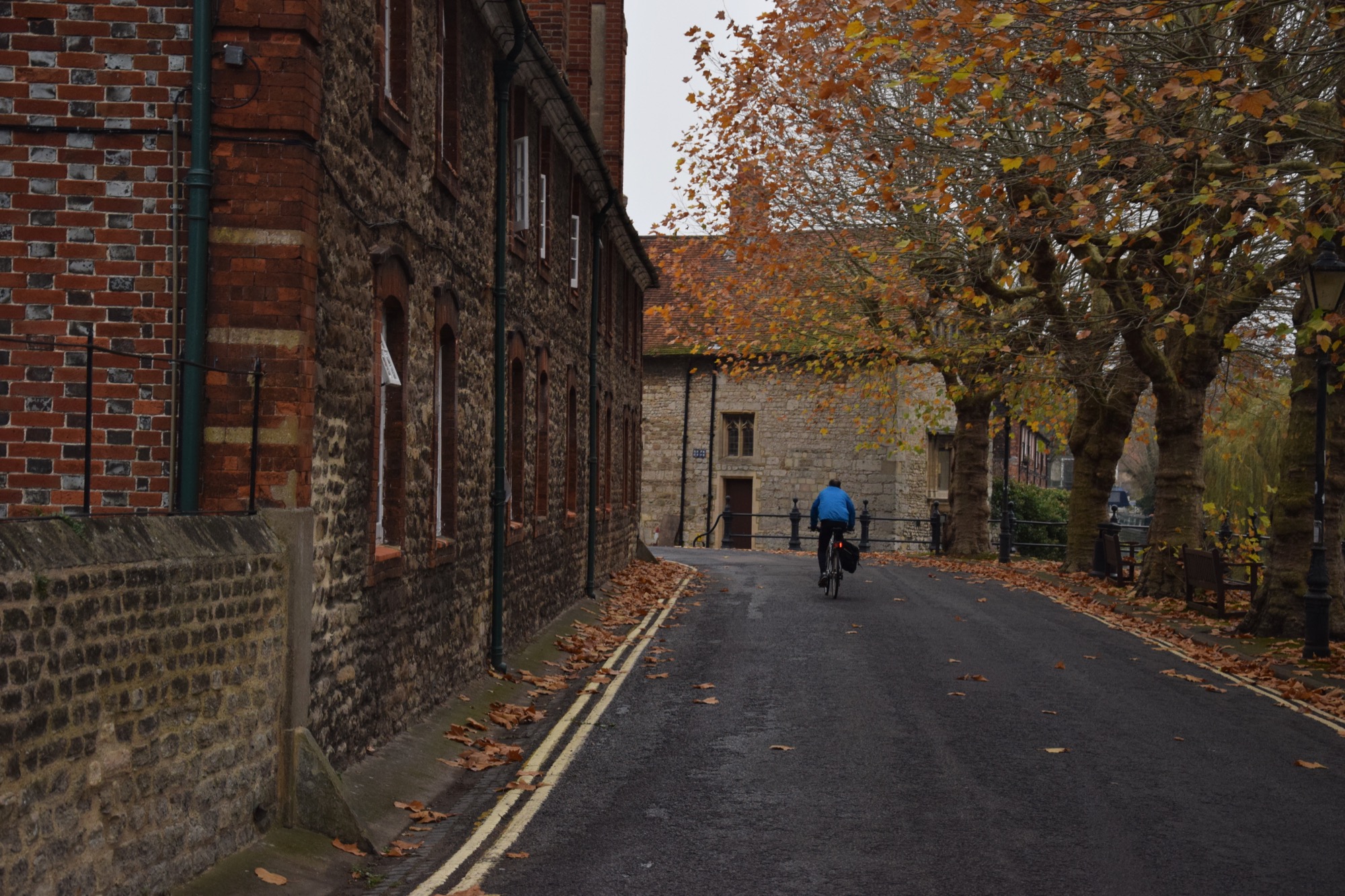
This week I thought I’d do a post on my travel blog about somewhere you might actually be tempted to go to. Wild, I know. (Although I do genuinely recommend taking a random Tube journey; that was surprisingly fun. But I digress.) Abingdon (or Abingdon-on-Thames, in full) is not far away, you see: there are buses every ten minutes from St. Aldate’s, and it’s pretty quick to get there. Plus it has a Waitrose—what more could you want?
Date of trip: Friday 16th November 2018
Journey time: approx. 25 mins on the X3 bus
Fare: £5 return
Let’s give you a flavour of the place, then. Abingdon claims to be Britain’s oldest town. As you might expect with a claim as nebulous as that, there are several other towns that also claim that title; Abingdon’s is based on continuous settlement, with an apparent record back to the Stone Age. The town itself is pretty, architecturally dominated by Cotswold stone, with the River Thames passing along its edge.
The Thames limited development because the other side is (mostly) a flood plain, which you see in Oxford too. But it’s fitting that it did, because the Thames was also the boundary between two counties. These days Abingdon is in Oxfordshire, but historically it was the county town of Berkshire, with Oxfordshire across the river. Eventually the town of Reading, with much better railway links to London and everywhere else,¹ took over, but the seventeenth-century County Hall remained, towering over Abingdon’s town square.
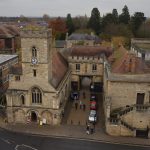


It’s now a museum, and probably the main tourist attraction in the town. It’s free, and its two main storeys tell the history of the town and exhibit some of its treasures. (Unfortunately, though, they’re not accessible, due to the constraints of the historic building.) This is like any town museum, so I guess I should mention a couple of its highlights: I particularly liked the tapestry that showed all the occasions (up to its creation) on which buns had been thrown from the County Hall up to its creation. My friend liked the little model of the Iron Age farm.

Oh, yes, I should probably explain the bun-throwing thing. See, for important occasions (mostly royal births, weddings, accessions and jubilees), the tradition in the town is to throw buns from the roof of the County Hall. They do it in full council regalia, and people take home and treasure the freshly-baked buns. This is all a bit weird.


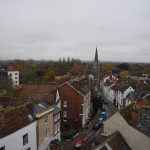
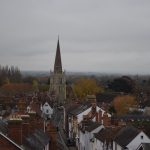
If you want to go up to the roof yourself, you can, for a fee of £2. (But don’t try and throw any buns, as that’s only allowed when the council votes for it.) This is strongly recommended, as your £2 includes a guide to show you the sights. Our guide was very knowledgeable, and very chatty, and we learnt as much about his interesting life as about the town. I’m not going to repost his personal anecdotes because I’m assuming he didn’t expect his life story to be posted on some guy’s blog, but I will tell you that he pointed out the pub where Baroness Thatcher, as a grad student, reputedly used to take people on dates.

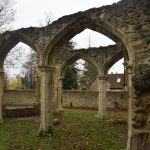
A couple of sights from the roof: the prison, which was once the county jail until, again, the county town moved.² Predictably, it’s now flats, though the bars have been retained on the windows, perhaps now to keep the riff-raff out. Also visible is the gatehouse to the old monastery, of which Henry VIII made sure no traces remained, though a monastery-like folly was later built in the gardens that replaced it. (Those gardens are themselves quite pretty, and lead to the Cosener’s House—a cosener being a provider of food for the abbey. That building survived, according to our rooftop guide, because it was not specifically for the monks; it is now a conferencing facility for the Science and Technology Facilities Council.)
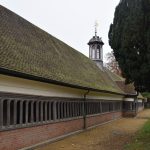
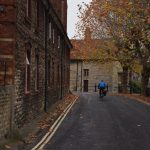
One last thing: we walked down East St Helen’s Street, which I’m not going to write about because the Town Council have done it, but apparently Betjeman wrote poems about it.³ I can’t find any of these poems to pretentiously quote, but I guess take our guide’s word for it. That leads to the church, which upon Googling I discovered was called St Helen’s, and realised then that I could, perhaps, have guessed that. The grounds of the church are home to three buildings of almshouses, one of which 1446–7. Old.
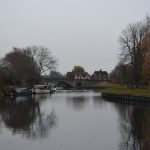
And then you can see the Thames. Pretty. Lots of ptarmigans.
So why Abingdon? It’s old. It’s pretty. There’s stuff to do there. There are things to see. And, perhaps most importantly, it’s an easy place to get on a bus to and go when you just want a bit of time out of Oxford. Plus, there’s a Waitrose.
Image descriptions and captions will appear later, with, as usual, my apologies.

¹ Abingdon used to have a railway station, but it closed under Beeching. Because what would this blog be without railway trivia?
² “The Ballad of Abingdon Gaol” wouldn’t have had quite the same ring to it.
³ William of Orange also apparently found out he was king on that street, and hot-footed it to London instead of proceeding to Oxford, according to our guide. Probably for the best, for his own sake.
Leave a Reply to Bicester – Escaping Oxford Cancel reply