Last time: I ticked off six more boroughs, stroked a cat, visited a bathroom, and left my quest there for the day.
Twenty-seven weeks ago, I started telling you about my quest to find all the London borough signs. Today, that journey ends.
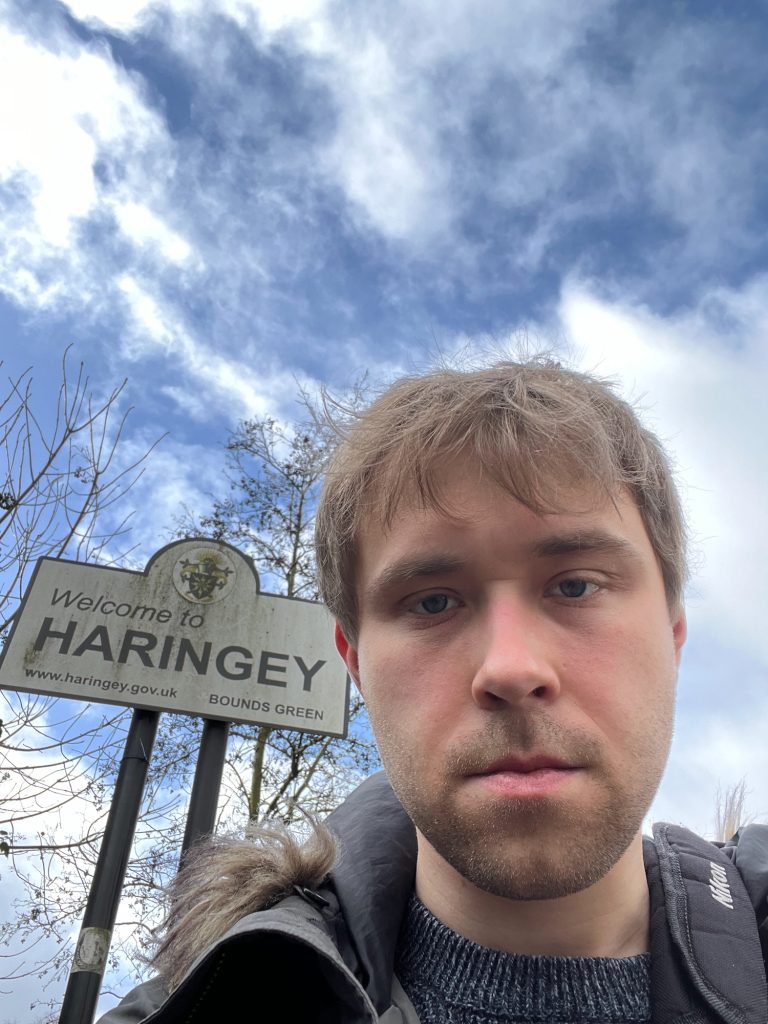
Or rather, in early 2024, that journey ends. I had three boroughs left to do on this visit to London; two of them were easy, because there was a signposted boundary between them, not far from a Tube station. So I hopped on the Piccadilly line to Bounds Green, and bagged Haringey…
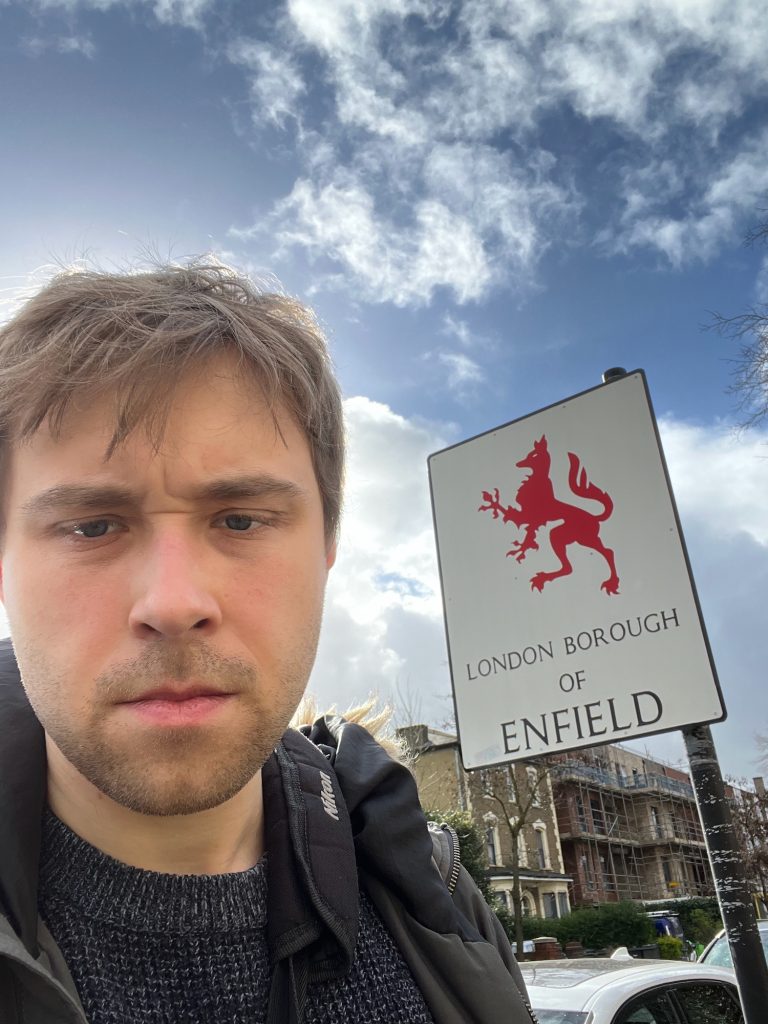
… and Enfield.
That left Islington. Like Southwark, way back in part II, Islington is one where I have (what I presume is) a false memory of a sign: in my head, there’s one on Pentonville Road, near where the boundary between Islington and Camden runs along the side of King’s Cross station. If there ever was a sign there, there certainly isn’t now; indeed, Islington is the last of the three boroughs that doesn’t appear to have any signs at all. For Hammersmith and Fulham, you may remember, I’d solved that problem by going to the council’s HQ; for Camden, I’d resorted to a pun (often my approach in times of crisis). What would I do for Islington?
The second option wouldn’t work, because as far as I know nothing to do with Henry Wellcome has an obvious enough sign in that borough.1 So I tried a repeat of the first, taking the Tube back to Highbury and Islington and proceeding to the Islington Council offices on Upper Street. Alas, I found nothing usable.
I trudged around the neighbourhood for a while, looking for inspiration. I don’t know what I was expecting would hit me, after nine months of trying to think of something, and indeed those additional minutes achieved nothing further. In the end, I decided the best I could do was to find any photo with the words “Welcome” and “Islington” somewhere in it. And, fortunately for me, the fates showed me a sign. I wish they’d shown me it earlier, because this was right opposite the Tube station where I’d started. But it was something.
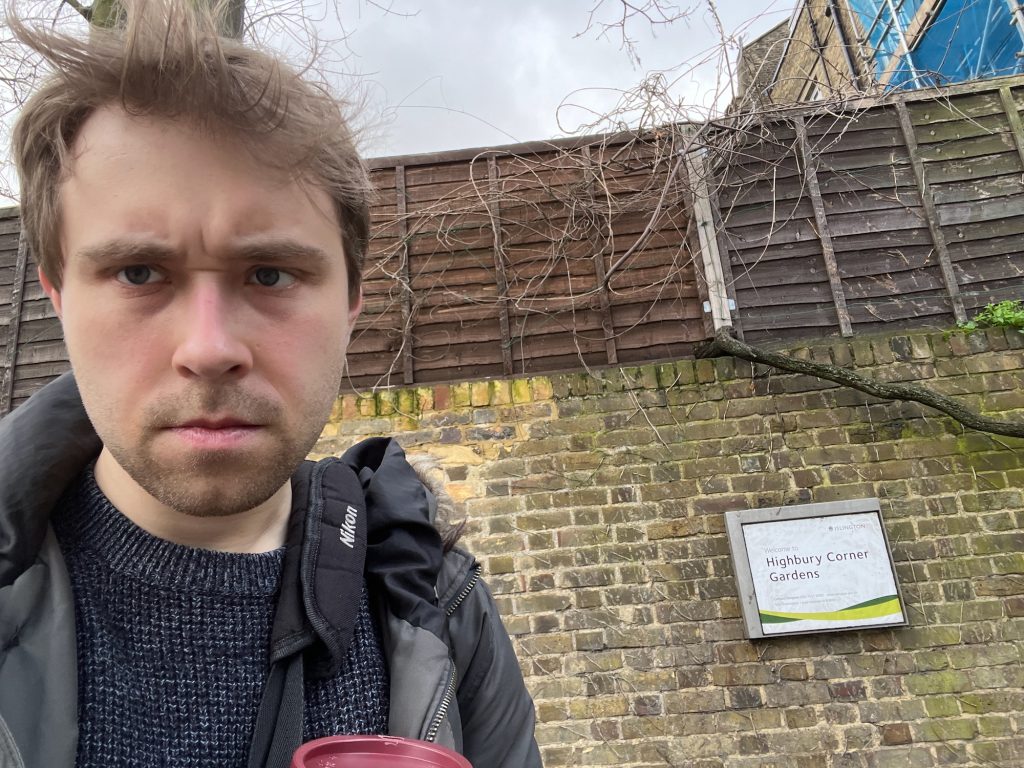
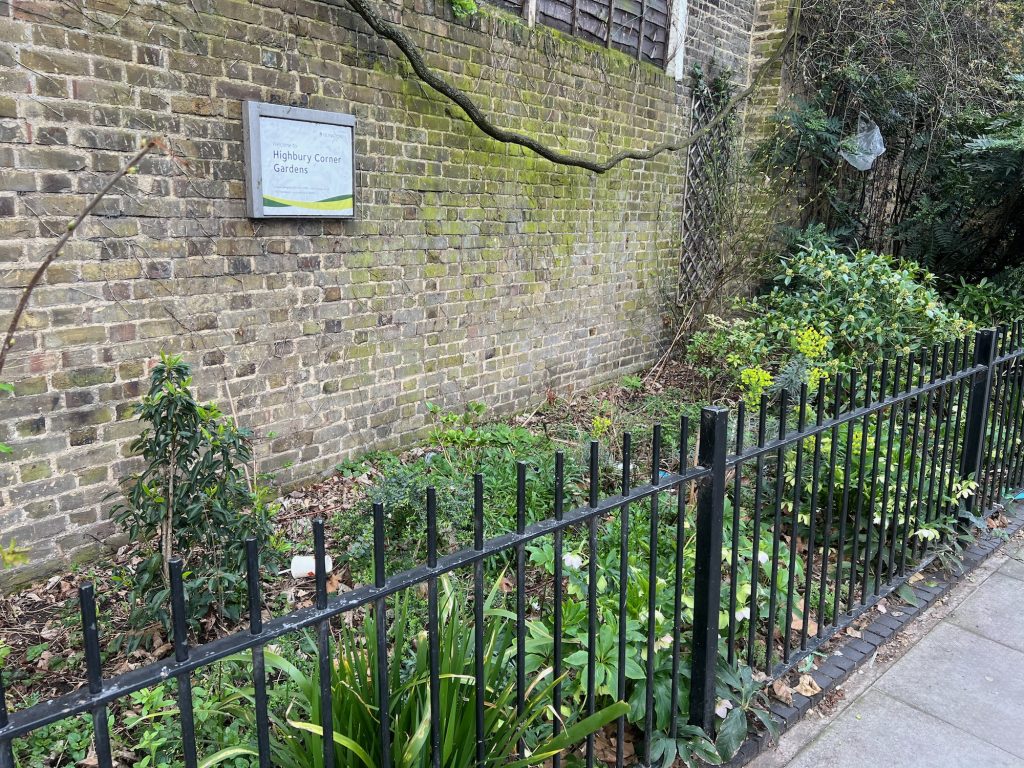
I thought I’d better bank this one, but I really wasn’t satisfied with it. Partly this was because it was the weakest of the three cheats, but not entirely. The remaining reason becomes clear from a wider view of Highbury Corner Gardens:
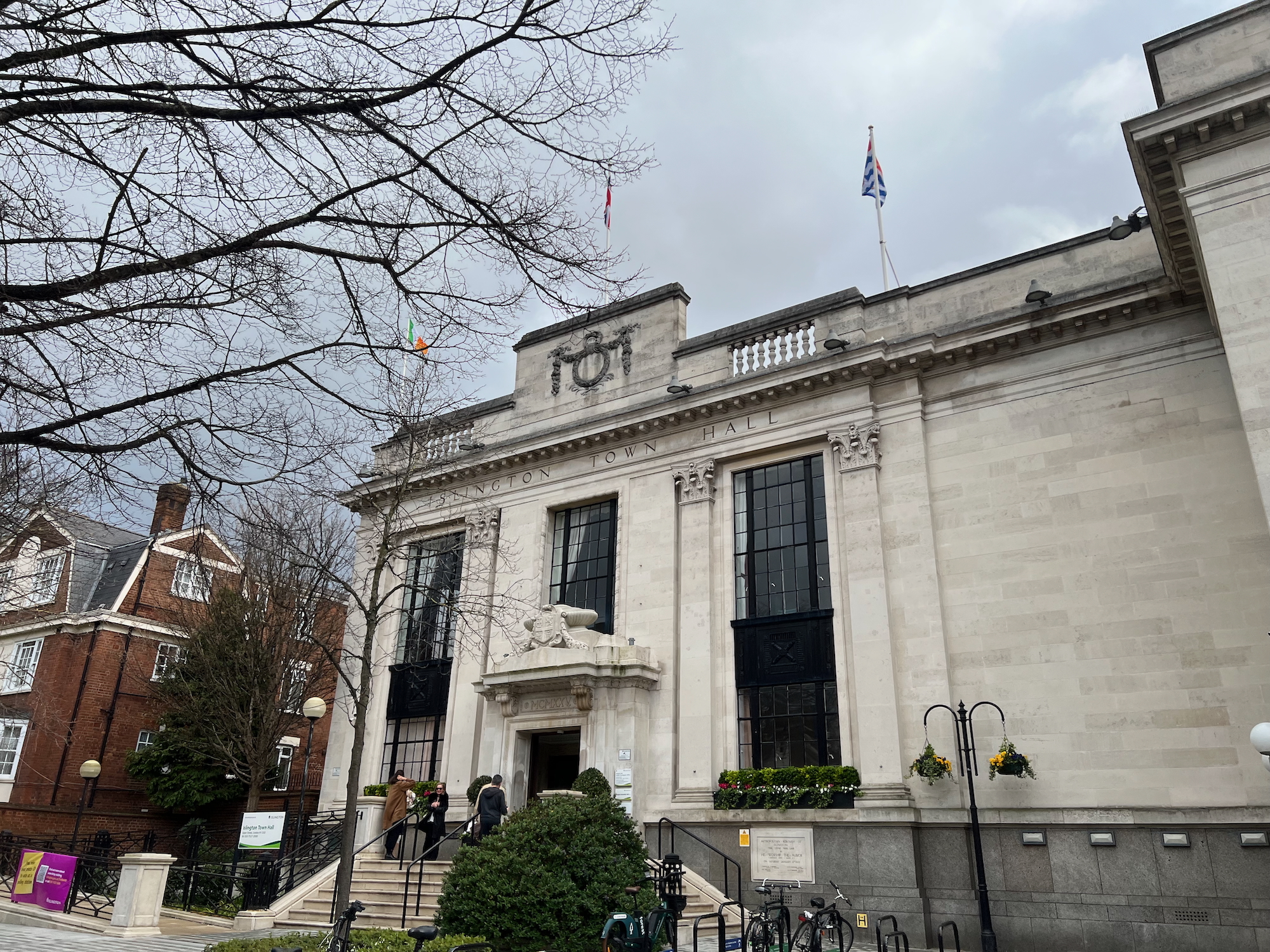
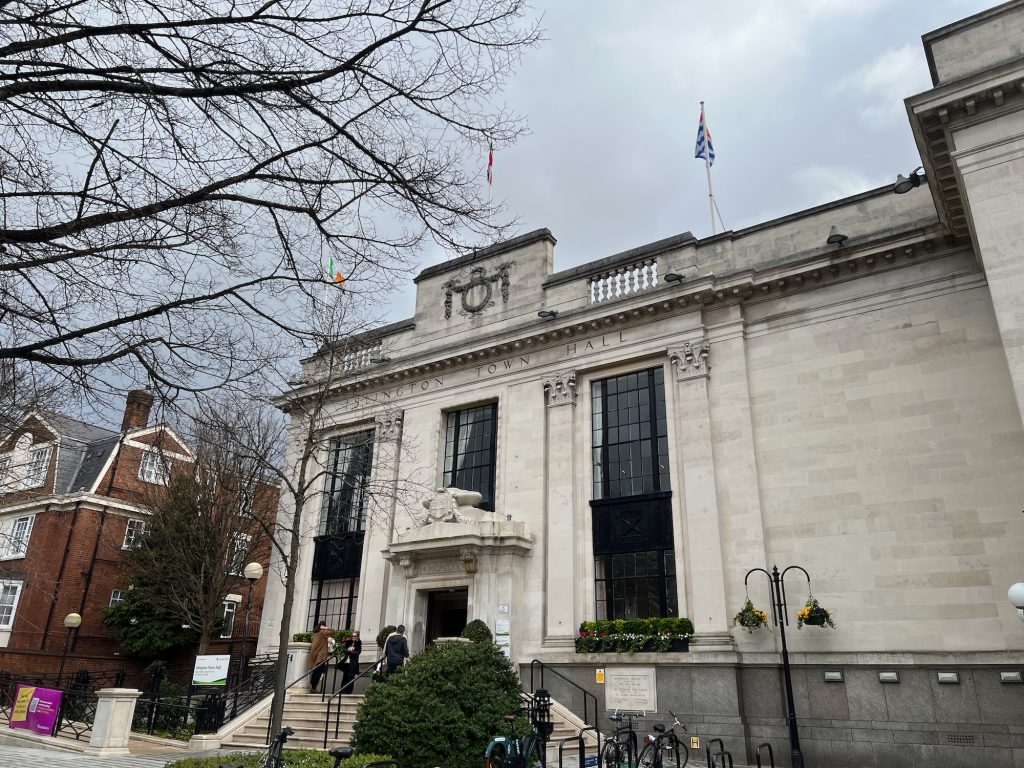
I think my next approach must have been to try the old Islington Town Hall, which took me along Upper Street for the third time.2 This building was, at least, interesting enough to photograph. Unfortunately, while it had several signs to tell me about its current and previous uses, none of them (in a very literal sense) was particularly welcoming.
I was now walking in the right direction to give up and go back into central London. Which I fully intended to do, until I realised that the walk would take far longer than I had thought, and the best thing to do would be to go to the nearest Tube station. This was still Highbury and Islington, and so it was with a growl of frustration3 that I turned around, to once more tread the pavement of Upper Street. And this time, freed from the hunt for a better sign, I started actually taking in my surroundings.
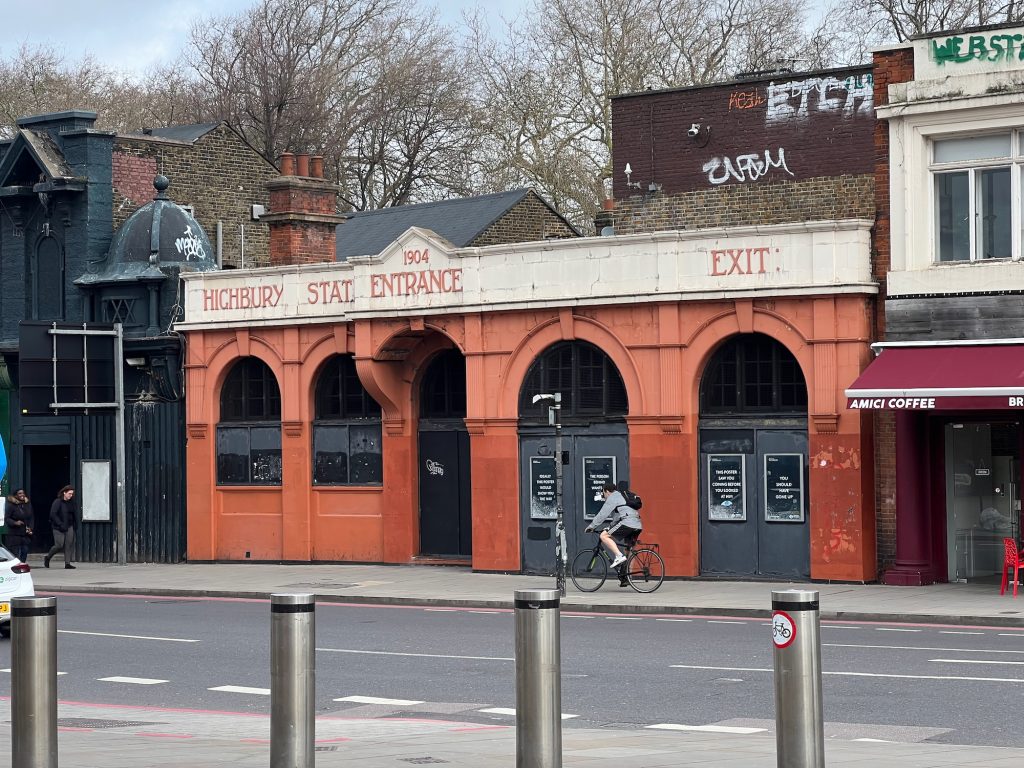
I found a few things (presented in reverse chronological order, for reasons that will become clear):
- The old entrance to Highbury station on what is now called the Northern City Line, before it was replaced with the monstrosity across the road.
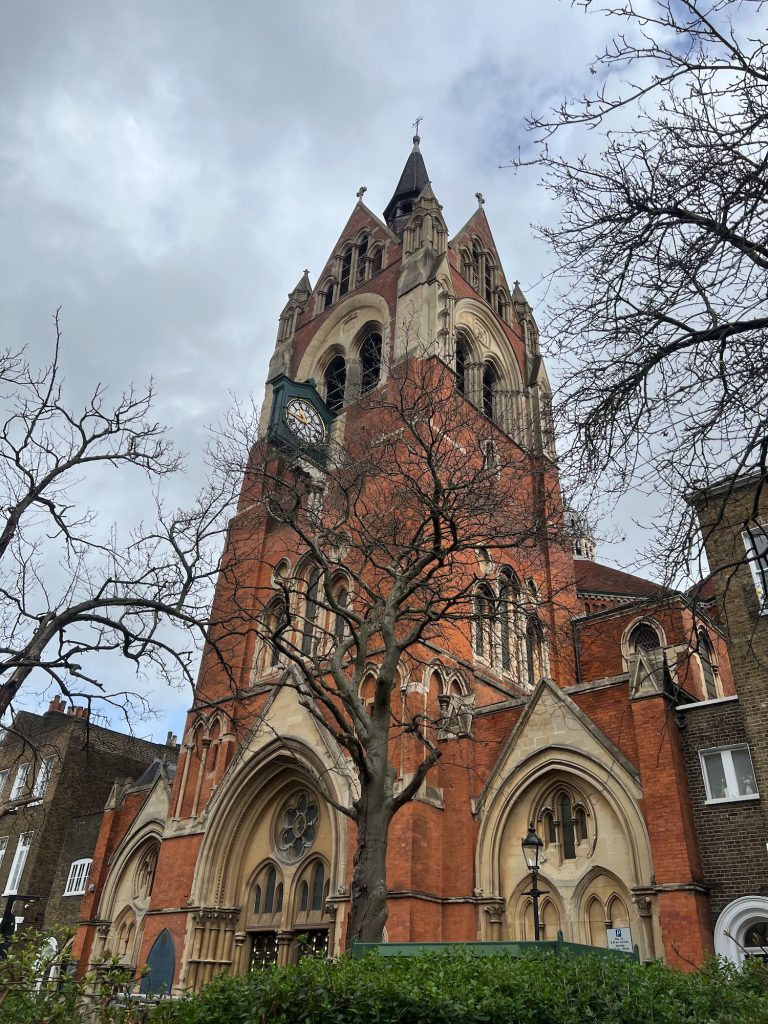
- Union Chapel, a rather beautiful Congregational church and music venue that was attended by two Prime Ministers.4
- A non-negligibly-sized park, complete with its own welcome sign.
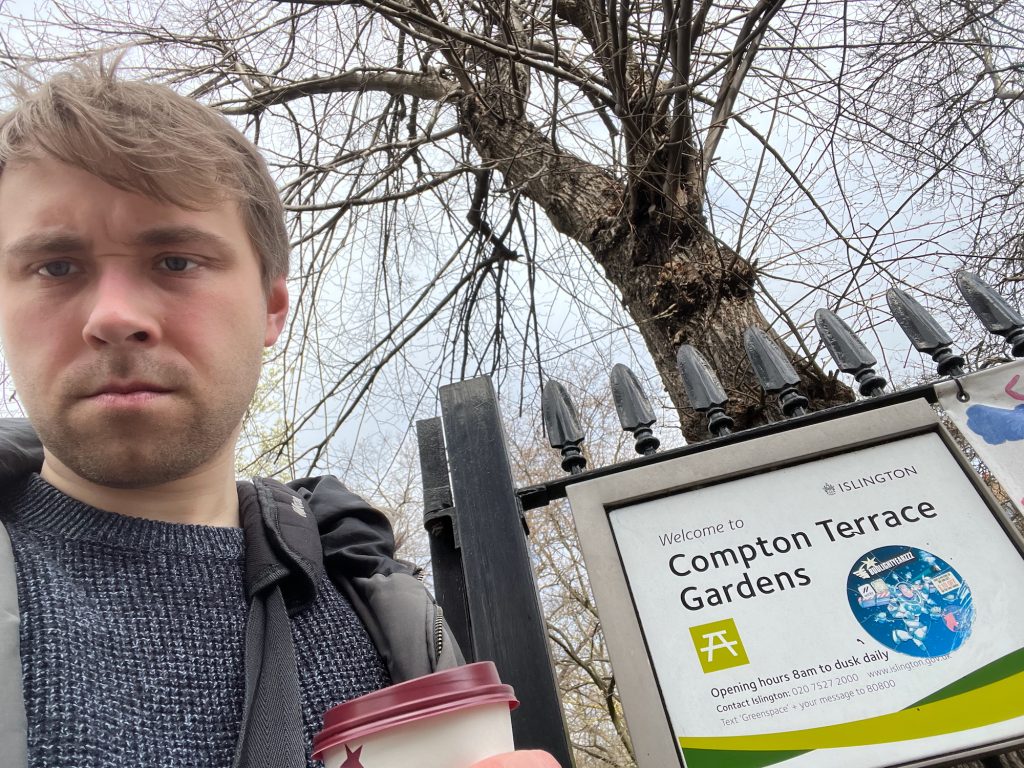
I was able to get much closer to this sign, so hopefully you can actually see it now. But it’s still, I think, the weakest of the three cheats, having neither the actual wording “Welcome to Islington” nor a mildly amusing justification behind it.
Or at least, I thought. Because, as I’ve written this post, I’ve decided that in fact it has both.
There’s a concept in film marketing called ‘diagonal billing’. This is sometimes used when there are two actors who both want to claim top billing, and the dispute can’t be settled in favour of one or the other. The idea is to place one of their names below and to the left of the other; this means that if you read top-to-bottom one of them appears first, but if you read left-to-right the other does.
If you read the first two lines of this sign top-to-bottom, as I think was intended, you are welcomed to the gardens. But if I were the agent of the words “Welcome to…”—and after ten blog posts and thousands of words about them, I’m going to claim that position for myself—I’d say that they deserve top billing. Read the sign left-to-right, and it says “Welcome to Islington”.
And with that, my quest was complete. After at least 30 welcomes—and arguably 33—it was now time for a singular goodbye.
London borough count: 33/33
London borough count without cheating: 30/30
If you missed any instalments of this series, you can find them all linked from the “tag” page. And if, for some reason, you want to see 33 pictures of me scowling in front of signs in London, I’ve collated them all into a single page for your delight.
- Nor, sadly, does anything once owned by his cousin, Mary Yuarnowentring. ↩︎
- I don’t remember this rationale, but I definitely went there, and it’s the only explanation I can think of for the route I took. ↩︎
- This is dramatic licence. I don’t remember what sound I made, if any, this being one of the pitfalls of writing from memory and a few photos about something that happened over two years ago. Imagine me yowling like a cat, if you prefer. ↩︎
- At least, according to a sign I took a photo of that doesn’t cite a source, and according to Wikipedia but with “[citation needed]” next to it. When I was looking this up, I found a blog post that seems authoritative so I suspect it’s true, although neither of the two men in question—H. H. Asquith and William Ewart Gladstone—was PM at the time of their attendance. ↩︎
Leave a Reply