
These museums don’t have very much to do with each other. But they’re both in London, and they’re both free, and they’re both slightly more obscure than your average museum. I didn’t even visit them on the same day this time. But anyway, here’s why you should give them a go.
Date of trip: Sunday 19th and Sunday 26th August 2018
Journey time: approx. 1h10 to London Marylebone
Fare: £20.65 (Off-Peak, with 16–25 Railcard, including Zones 1–6 Travelcard)
Wallace Collection
Alright, bit of history for you to start with. The collection housed here was mostly built up by the 4th Marquess of Hertford; he left his entire collection to his illegitimate son, Sir Richard Wallace, whose widow in turn bequeathed it, plus her husband’s additions, to the nation. It was opened in the house of the Marquesses of Hertford, named (unimaginatively) Hertford House, which had also been bequeathed to Wallace. Much of its collection is of French decorative arts, purchased in sales post-revolution.
Again, I don’t pretend to know much about art, but it’s interesting to wander around an art gallery which fairly clearly used to be someone’s house (although with a conspicuous absence of bedrooms, kitchens, and other things you’d actually need to live in it). It also has large amounts of armour, presumably because Wallace also collected that.
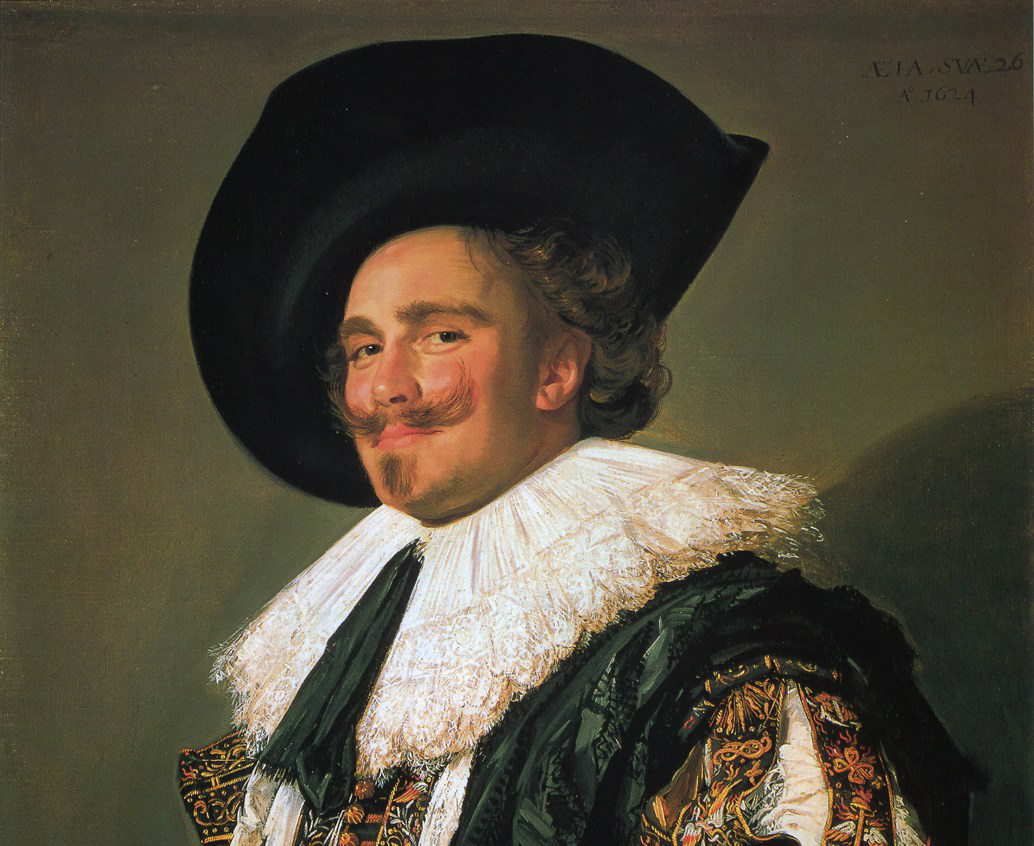
The highlight is probably the Great Gallery, which is huge, and contains arguably the Collection’s most famous picture, which I say because it was the only one I knew to look out for (and still missed it, and had to go back). That would be the Laughing Cavalier by Frans Hals, notable for the fact that its subject is, uncharacteristically for the era, smiling (he is neither laughing, nor a Cavalier). Supposedly its eyes follow you around, which I was inclined to disbelieve until I sat here writing this, two weeks later and two hundred miles away, and I can still feel its eyes piercing into me.
The courtyard contains the obligatory café, and downstairs is currently a temporary exhibition about the life of Wallace. The smaller room actually contains more information, with the display about his life, whereas the larger room contains items that illustrate his collecting style and were not normally on public display. It’s quite small overall, but that does mean it’s not overwhelming.
I don’t know what more to say, other than that it’s free, and interesting, and not far from Oxford Street if you get bored.
(Nearest station: Bond Street or Baker Street)
London Mithraeum
Time for some more history, as we move from the West End to the City of London, home to the original Roman settlement of Londinium. Here was, as in many Roman settlements, a Mithraeum, which was a temple to the god Mithras, with an all-male order of worshippers. Very little is known about what they did; it is known that there was always a statue or relief of Mithras wrestling a bull in the temples, but that’s not hugely illuminating.
London’s Mithraeum was discovered in 1954, during excavation work for an office block, Bucklersbury House. It was agreed that the ruins would be dismantled and moved to the roof of an underground car park, where they were on public display for the next 58 years. But tastes in architecture changed, and the actually-not-hideous Bucklersbury House was demolished, to be replaced by Bloomberg’s new European headquarters. As part of this development, they moved the Mithraeum underground again, where it is now on public display alongside a free exhibition (although you should book in advance, for reasons that will become clear).
Let’s start with the exhibition, because that won’t take us long. The ground floor component is mostly a huge cabinet of Roman artefacts, with few labels. Adjacent, instead, is a rack of tablets, with a virtual representation of the cabinet, so you can click on each object and find out more about it. It’s very clever, but I think I prefer labels.
You descend from here, firstly down a staircase that illustrates how and why the ground level has raised since the temple was built (essentially, because detritus over the years was repeatedly not cleared away). At the bottom is a small display with some more tablets, and an audio piece narrated by Joanna Lumley. But this is the main holding area for the main attraction, which is the temple itself.
You go down another staircase for that, and can only be let in at timed intervals, which is why you have to book. This is because there’s a whole light-and-sound show, with lights representing the walls, and sounds representing, erm, some form of chanting. It’s a bit bemusing, to be honest.
Given how sparse this is, it’s definitely an “attraction” rather than a museum, and I’d be inclined to say it’s not worth the money. Except I can’t, because it’s free. So if you’re in the City, pop in and have a look.
(Nearest station: Bank or Cannon Street—the latter is closer than Monument, if you’re approaching on the Circle or District lines)
Yeah, so I know I normally put pictures on and I haven’t this week. My excuse is (a) we were mostly inside museums, so my photos aren’t very good, and (b) I’ve had a long day and I wasn’t really feeling it this week, because doing the photos adds another couple of hours onto making a post. The featured image at the top is at least relevant; it’s the Laughing Cavalier, as featured in the Wallace Collection.
Leave a Reply