
So this week’s post is a bit weird, because it’s a fairly literal description of a walk. This was a walk I took when introducing a friend to London who’d never been before, and I tried to get in as many sites as I could. I’m hoping this description might be useful if you want to do something similar. For the rest of you, there are pictures.
Date of trip: Tuesday 28th August 2018
Journey time: approx. 1h10 to London Marylebone
Fare: £20.65 (Off-Peak, with 16–25 Railcard, including Zones 1–6 Travelcard)
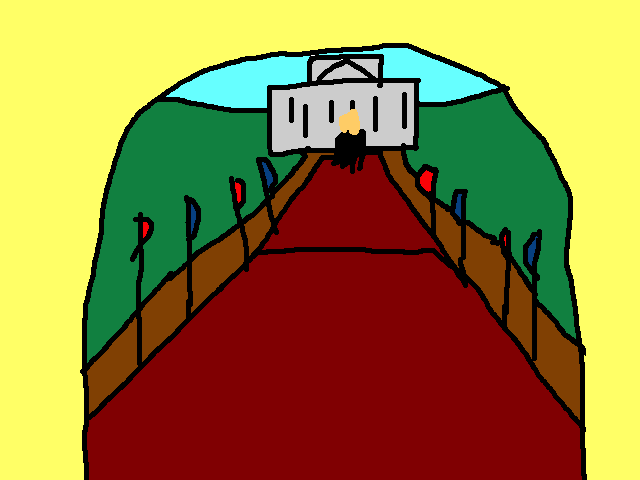
So I suggested to a friend of mine that I didn’t really know what spin to put on this post, because, as I said, it’s fairly literal. He suggested that, instead of my usual photographs (many of places you’ve seen before), I should instead provide drawings, so people could laugh at them appreciate them, and see what bits I’ve picked out as most important. Unfortunately, I don’t have any drawing materials. So I have used Paint instead. I gave myself five minutes to do each of the images below, and I think it shows.

Start by going to Blackfriars mainline station. Probably the easiest way is to get a Thameslink train from either St Pancras or Farringdon. The reason for this is that Blackfriars is built on a bridge, and so you get a great view of the sights of the City from the platforms.
Exit by the south entrance, which brings you out by Tate Modern. Here you can go up to the free gallery, which again shows you the City and beyond, as well as a great view into the apartments next door.

Leaving Tate Modern, cross onto the Millennium Bridge; looking back you can see Shakespeare’s Globe Theatre. Downriver you can see Tower Bridge and Canary Wharf, and upstream BT Tower is visible.

Walk up towards St Paul’s, from which you should get a bus (buses 11 or 15, from stop SJ) towards Trafalgar Square. The bus takes you along Fleet Street and the Strand, passing the Royal Courts of Justice on the right, and Charing Cross station (and the Cross itself, the nominal centre of London) on the left. Facing Trafalgar Square from the top is the National Gallery, and to its right, across the road, is the Church of St Martin-in-the-Fields, which has a café downstairs with toilets (free, but a donation is requested).

Crossing the square you see Admiralty Arch, and if you pass under that you get to the Mall. You can glimpse Buckingham Palace at the end, but we’ll be closer later. Instead, turn left and go down Horse Guards Road, which leads to an open parade ground, Horse Guards Parade. This is where the Trooping the Colour happens on the Queen’s Official Birthday, and was also home to the beach volleyball at the 2012 Olympics.
Pass through the guard house: that’s Horse Guards, and going through it takes you onto Whitehall. Opposite is the Banqueting House, once part of Whitehall Palace, most of which was destroyed by fire; Charles I, when he was executed, was led out onto the scaffold from this building. Turn right, and walk down Whitehall; you’ll pass Downing Street on the right, and the Cenotaph on the left, as Whitehall becomes Parliament Street. You can then turn left onto Westminster Bridge, from which you get the classic riverside view of the Houses of Parliament, and across the river you can see the former County Hall and the London Eye.

Turn back and walk into Parliament Square, which contains many statues of individuals we feel worthy of national commemoration. In front of you is the Middlesex Guildhall, now home to the Supreme Court, and on the left is Westminster Abbey. Pass between these and you reach the Methodist Central Hall, at which you can turn right onto Storey’s Gate, and cross into St James’s Park. On the right, just outside the park, you might spot the entrance to the Cabinet War Rooms, used for the Cabinet during the Second World War.

Walk through St James’s Park, following the lake and keeping it to your right; you might catch a glimpse of the pelicans. Eventually, and obviously, you’ll reach Buckingham Palace; you can tell if the Queen’s home by the flag on the roof (if it’s the Union Jack she’s not, but if it’s the Royal Standard she is). The Victoria Memorial is in front of the gates. Pass between the palace and the memorial and walk into Green Park; walk through it to get to Piccadilly, and you can turn right and walk under the colonnade of the Ritz.

Keep an eye out for St James’s Street on the right and look down it; you’ll see the main gatehouse of St James’s Palace, still the primary palace of the British monarchy. Continuing along Piccadilly, you’ll pass a couple of famous shops; Fortnum and Mason, a tea merchant and food shop, and then Hatchard’s, a bookshop, both holders of royal warrants. Another bookshop is the flagship Waterstones, which I’m told is the largest bookshop in Europe, with a dizzying eight-storey staircase.
Keep walking along Piccadilly and you’ll get to Piccadilly Circus; take a sharp left to go up Regent Street, London’s second-most-important shopping street, with the large toy shop Hamley’s on the right, as well as Liberty, a department store, just off to the right down Great Marlborough Street.
At Oxford Circus, turn left onto Oxford Street, and keep walking. You’ll pass several flagship department stores on the right; in order, John Lewis, House of Fraser, Debenhams, Selfridges and Marks and Spencer. Eventually you’ll reach Marble Arch, with Hyde Park opposite.
We actually stopped at John Lewis, but with more time (and more energy) you can chain on a few more sights; walk through Hyde Park and you can pass into Kensington Gardens to see Kensington Palace. Then aim towards Brompton Road for Harrods, and walk down there to get to the South Kensington Museums. But I’ll stop there. I hope this was useful if you want to take someone on a London tour, and otherwise I hope you at least enjoyed the pictures.
Leave a Reply