
It’s been a while since last I chose
To write a post a different way,
So gone, this week, is turgid prose:
’Tis poetry you’ll read today.
Date of trip: Saturday 6th July 2018
Journey time (from Leeds): about 1h30, but depends on your connection time in Keighley
Fare (from Leeds): £12.50 (Off-Peak return with 16–25 Railcard, including Day Rover for the Keighley and Worth Valley Railway)
The poem’s metre is, of course,
Well-chosen for our choice of town:
The parsonage there was the source
Of poems and books of great renown.
They flowed from fevered hand to page,
Signed “Currer”, “Ellis”, “Acton Bell”.
Three men’s names for a different age
With women not to hear, but quell.
The brothers Bell had names that proved
To be forgotten. But, rejoice!
The Brontë sisters’ veils removed
They speak instead with their own voice.
The poem which here your blogger writes,
Is not like Charlotte’s, Anne’s, I rue.
But Em’ly, who wrote Wuth’ring Heights:
Well, she wrote in this metre too.
My friend and I arrived by train
In Haworth on a morning fair.
“Romance of steam!” Past field and lane
Our engine chugged to take us there.
The railway was itself the star
Of pictures on the silver screen—
Its tracks, and Oakworth station, are
Where Railway Children once were seen.
It passes Ingrow too, Damems
(The “smallest station”, so they claim).
The River Worth, no Ouse or Thames,
Lends country feelings, lends its name.
To Haworth, on its hillside steep,
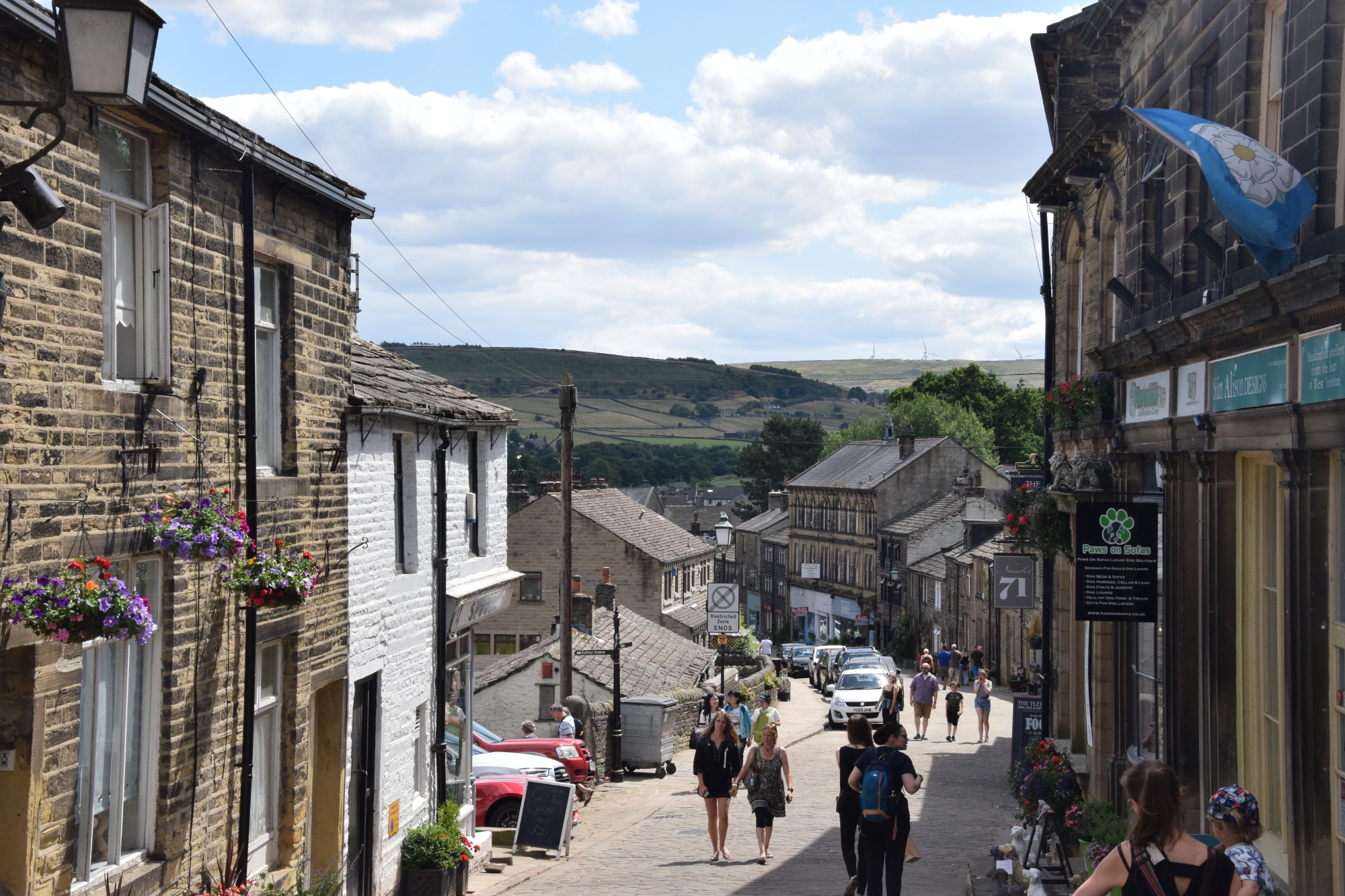
Whose cobbled Main Street (cobbled, yup!)
Can make a seasoned climber weep—
A challenge, then, to cycle up.
Four years ago, the Tour de France
Ignoring Franco-British scorn
Flew off to Yorkshire en vacances.
The Côte de Haworth thus was born.
The Main Street hosts the cafés, pubs
And little shops for souvenirs.
But hungry shopper—warning! Grub’s
Not up until the huddle clears
Of tourists, for despite the fact
That we’re in Bradford, still beware—
This part of Bradford can attract
The visitors from everywhere.
The Brontë sisters, as I’ve said,
Lived in the parsonage. Their dad
Was parson: like a vicar, head
Of Haworth’s church, and on the sad-
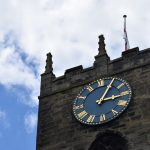
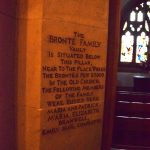
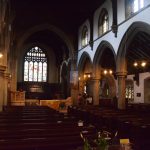
-der side of things, his church is gone,
But in the newer one remains
A plaque for him, his daughters on
It too, to mark their last remains.
(Is that a rhyme? And what about
The word I split from verse to verse?
I’m not a poet, there’s no doubt:
This poem would make a poet curse.)
The churchyard hosts the dead of years,
Each name upon a chest-like tomb.
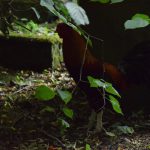
But silent, still? Not half! For here’s
A cockerel, crowing though the gloom.
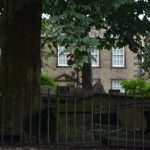
The parsonage stands proud and wide
Above the graveyard; for a fee
A tourist can look round inside—
It’s cheap for students; bring ID.
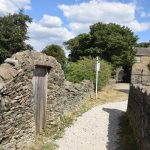
We didn’t, so we passed it by
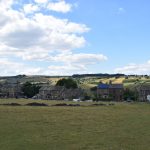
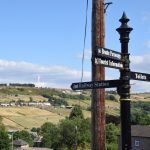
And walked towards the windy moor.
Two ladies on a bench said, “Hi,”
And told us they’d seen England score.
And here, then, looking over sheep
In fields, my poem comes to an end.
I’m back next week (so do not weep!)
With more from Yorkshire with my friend.
Leave a Reply