
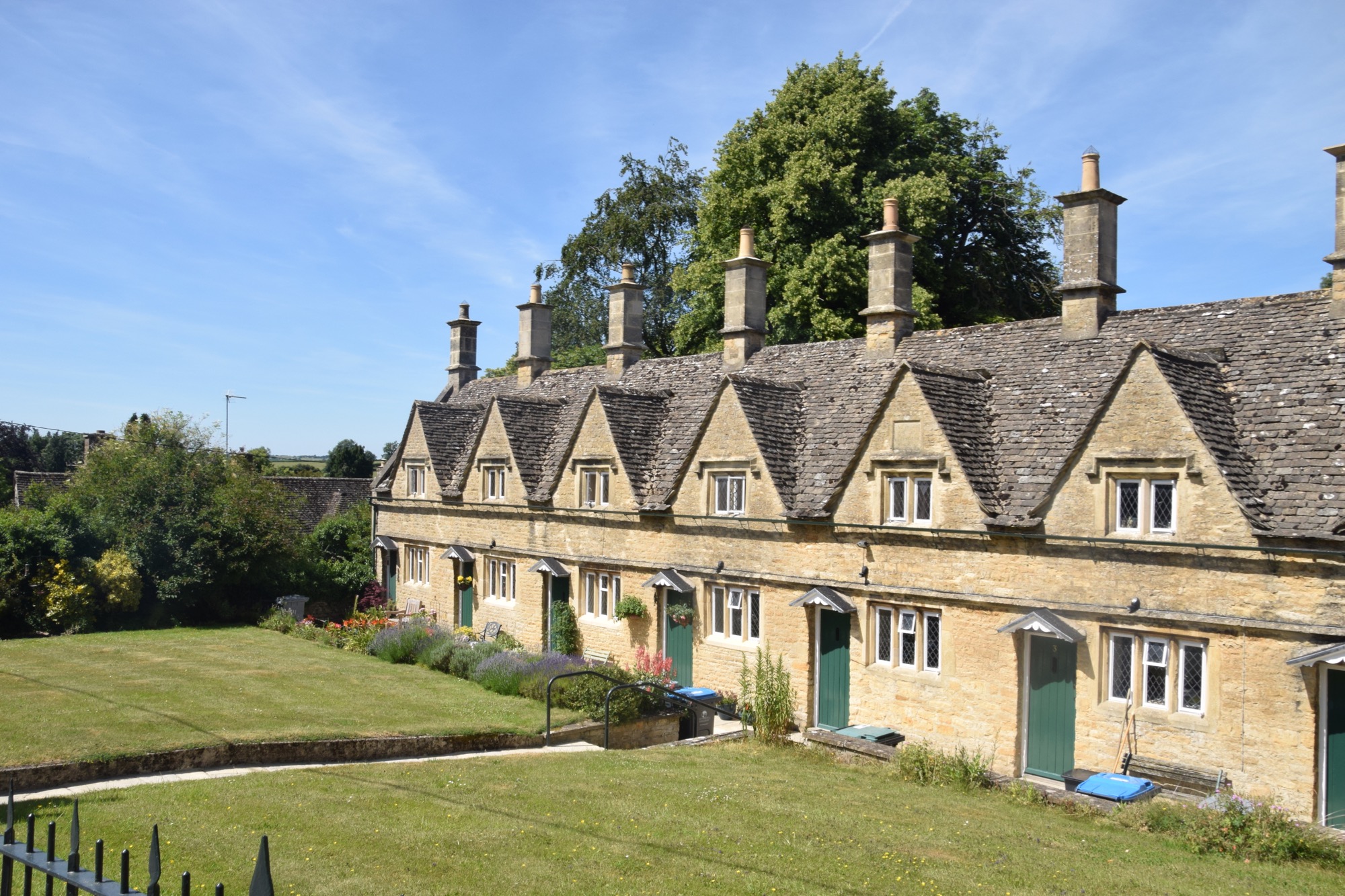
I promised this week I wouldn’t write about London, and so here I am not writing about London. (Although I have still managed to use the word “London” two—er, three—times in the first two sentences. Anyway.) As part of keeping this promise, I’m having to cheat slightly; this was, in fact, a trip in the car, though it is possible by public transport, apparently. I probably wouldn’t do it by public transport, because I wouldn’t want to spend an hour on a bus. But you might.
Date of trip: Sunday 24th June 2018
Journey time: approx. 1hr (S3 bus from Gloucester Green)
Fare: £6.70 (return)
And maybe you should. So far in this blog I’ve focused on the large towns and cities that are vaguely near Oxford, most of which you can get to by train. I think that’s why I’ve tended to ignore the wide range of places within the county, small towns and country villages, that are picturesque and quaint and exactly the sort of place stereotypical Americans think England is like as soon as you leave London¹—but you can only get there by bloody bus, and I hate riding on buses.² I think because you’re on one, and you think it’s running smoothly, and then twenty people all turn up at the same bus stop, and then the bus behind overtakes you so you’d have been quicker if you’d waited, and it’s all very stressful. Ugh.
But I digress. Chipping Norton is indeed one of those quaint Oxfordshire market towns. And I’m not going to be able to talk a lot about the range of tourist attractions you can go to in Chipping Norton, because there aren’t really any. There is a museum, apparently, but it’s closed on Sundays, and it joins the increasing list of places I didn’t know had an outdoor swimming pool, which to me (as someone who’s never been to one) still feels vaguely exotic. Instead it’s just a nice place to wander around, so let me tell you where we wandered.
Firstly, to a pub called the Chequers, which it turned out had just reopened after refurbishment two days earlier; according to Professor Google, it dates from the late 16th Century. I ordered the Sunday roast. I was somewhat overwhelmed. It was large. It was delicious, but it was huge. I don’t know why I decided to order an Eton mess afterwards, but it was also good.
The Chequers was probably the right pub to pick for other reasons, because if there are any sports fans in the room (hello to both of you), you might recognise the date of this trip as the date of England’s 6–1 victory over Panama in some sporting event that I hear is quite popular at the moment. Like basically every other pub in England,³ this pub was showing the match, but apparently the landlords (we chatted to them; they were very friendly) had deliberately decided to leave certain sections of the interconnected rooms big-screen-free. With the timbered panels and low ceilings, it was a cosy setting for lunch, even with the slightly-creepy stuffed duck on the wall peering down at us.

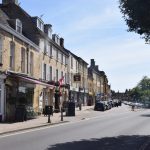

What else? A cute little bookshop, Jaffé and Neale, mostly selling new stuff but with a small second-hand selection too. They also had a café, but we ended up going into the shop twice in succession, and left after the second time, which meant we felt too embarrassed to go back in a third time when we realised we could actually fancy a cup of tea. Instead we went to the the Old Mill Café: a bit more of a traditional caff, although it’s hard to rate it when a pot of tea is basically the same everywhere.
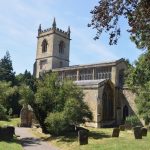
The prominent historic building in the town is the Guildhall in the market square, which you don’t seem to be able to go in, largely because it’s still used for meetings of the Town Council. The prominent accessible building is the church, St Mary’s. This is quite beautiful, with a 15th-Century nave with near-continuous clerestory (the row of upper windows; literally, a “clear storey”). It was also where I told one of the best jokes I’ve ever told, but it requires a sufficient amount of distracting context that I wouldn’t be able to say much more about the town itself, so I’m not going to repeat it. (Also I don’t want to risk the inevitable disappointment when you don’t find it funny.)
Beyond that, Chippy (yes, apparently that is the short form) is just very pleasant to walk around, really, full of Cotswold-stone buildings lining narrow lanes. We took a walk down one street which seemed to be leading, from the topography, down to a river. It did lead out of the town proper, and into the surrounding countryside. At the bottom was something that looked like a bridge, but that didn’t bridge anything; the walls were there, but the road was on solid ground. To one side was what looked like a river, but couldn’t be because it didn’t flow anywhere.
We eventually guessed what it was, and, in fact, it’s part of the reason I’ve never been here before. This, as old maps confirm, was the route of the Banbury and Cheltenham Direct Railway. The old station is now a builders’ yard. And alright, probably the reason the railway closed was that it wasn’t profitable, and never would have been, but I still think they should have kept it open. I really hate buses.⁴
But my disliking of buses is irrational, I know, and so I think you should visit Chipping Norton. And I think I should get over it and start visiting some more of Oxfordshire’s small towns and villages as day trips. Because if you want to escape the big (ish) city, somewhere where the countryside is a five-minute walk away is not a bad place to go.




¹ I know from my WordPress stats that I have at least one regular American reader, to whom I apologise; please don’t leave.
² Let’s pretend last week’s post, in which I advocated bus travel, didn’t happen.
³ This originally said “Britain”, and then I realised that, having already alienated my American readers, I’d better not alienate any Scottish, Welsh or Northern Irish ones I have as well.
⁴ See ².
Leave a Reply