
Last time: I completed my first day of looking for London borough signs with five boroughs, bringing my total to 11. I was now going to spend the weekend doing actual tourist things, so the game was over for the moment. Or was it?
One of the things I find strange about London is how big it is. Yeah, alright, I know that’s obvious, but hear me out. I’ve mostly spent time in inner London, which more-or-less feels like just a scaled-up version of any other British city—even places like Greenwich, which are major centres, still just feel like big versions of the suburbs of other large urban areas, like Headington in Oxford, Portobello in Edinburgh, or Moortown in Leeds.1
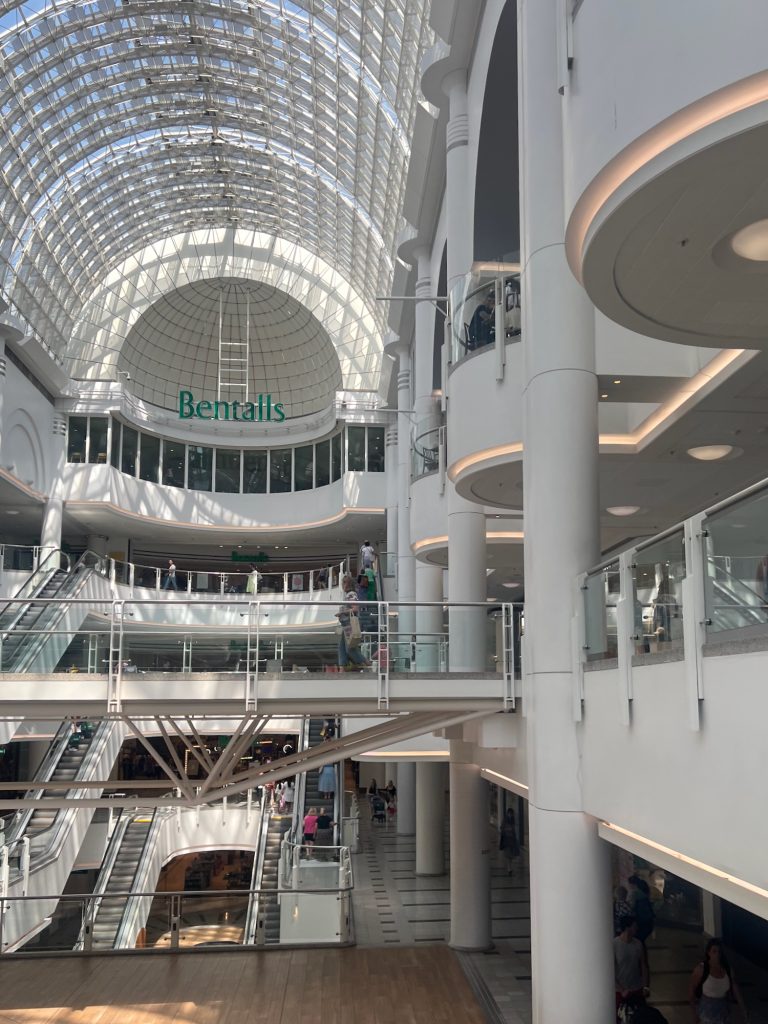
London, though, is so big that, by the time you get to the outer boroughs, its suburbs feel like major settlements in their own right. I already said a few weeks ago that the centre of Croydon, as seen from the tram, reminded me of Bradford; Kingston, the place we travelled to the day after my south London odyssey, felt more like a Reading or a Basingstoke,2 with a mid-to-upmarket shopping street, a shopping centre with heavy Crystal Palace vibes, and two large department stores anchoring the whole thing. (John Lewis and Fenwick, no less.) It also felt more car-focused than I’m used otherwise in London, such as the sign as you drove across the bridge into the borough telling you which lane to use to park where:
![A selfie of the blog's author, looking down at the camera. Behind him is a white rectangular sign with a blue border. At the top of the sign is a coat of arms, then the black text: "Welcome to the ROYAL BOROUGH of KINGSTON upon THAMES". The lower-right strokes of the R in "Royal" and the K in "Kingston" are extended pretentiously below the baseline of the text. Below this is says "Linked with DELFT", with Delft's own coat of arms shown to the left of its name; then, below a blue line, it says "KINGSTON". Beneath this sign is another, a yellow rectangle with a black border. It shows the white-on-blue P road sign for car parks, and below this is black text: "Use inside lane for John Lewis and Bentals [sic] car parks. Use outside lane for other town centre parking". In the background of the photo, behind both, some trees can be seen. The sky is, of course, a cloudless blue.](https://escapingoxford.blog/wp-content/uploads/2026/03/IMG_0056-768x1024.jpeg)
Oh, yes, and of course sign number 12. Although it’s really sign number 13, because I had to cross the road for that one. I got number 12 as we left Kingston and entered Richmond, on our way to Hampton Court.
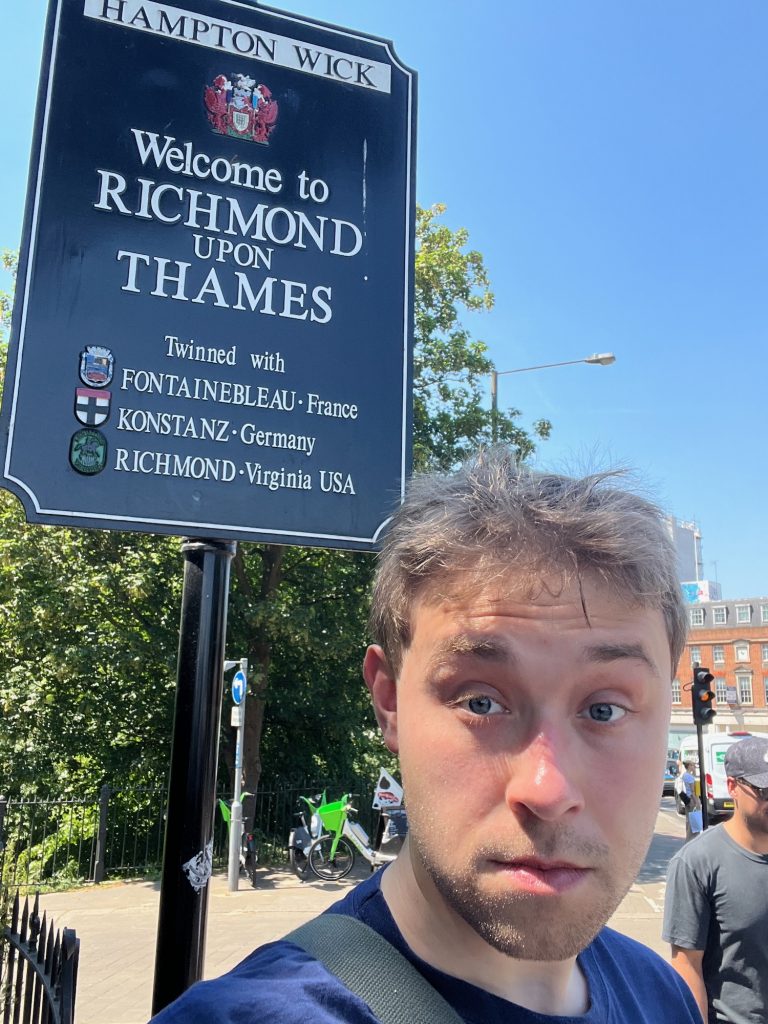
You may remember that the previous day had been uncomfortably hot. Today, alas, it was more of the same. This made the journey through Bushy Park, along a path with precious little shade, something of a trial of endurance. It certainly wasn’t a walk in the… well, you get the idea.
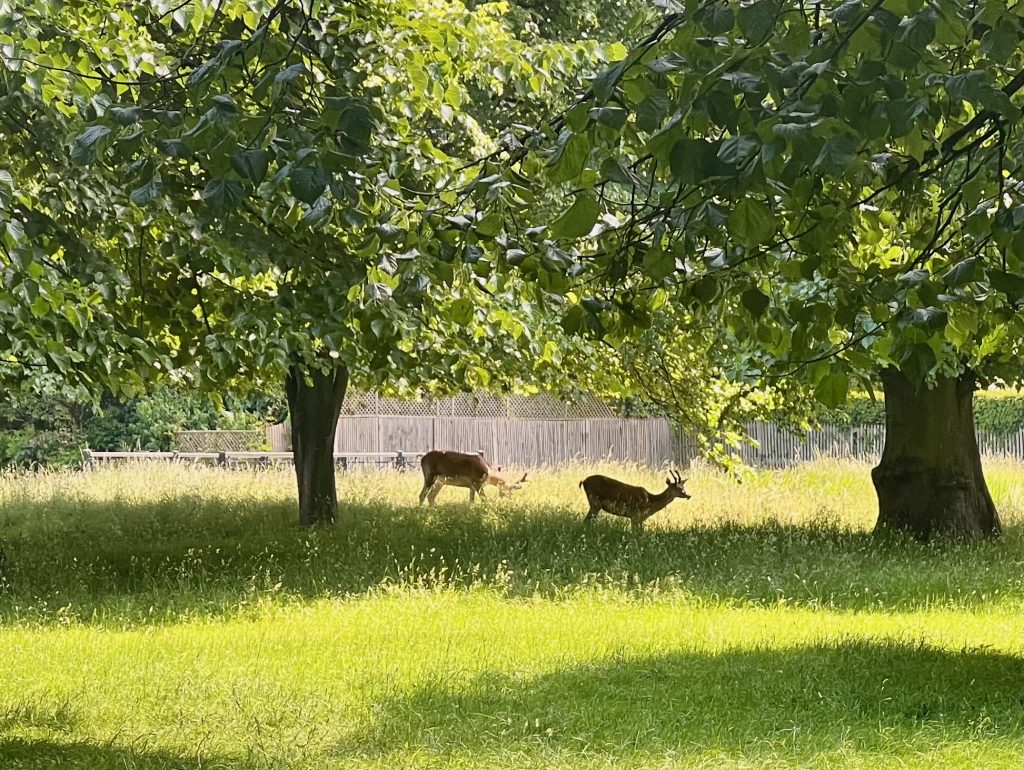
We did at least get to see the famed Diana Fountain, one of two fountains in London’s Royal Parks that could be so named. Unlike the one in Hyde Park, this one is not dedicated to the late Princess of Wales, but to the Roman goddess with whom she shared her name.3 We also saw some deer: I knew before I wrote this that they roamed freely in the park, but assumed we hadn’t seen any until I found the picture I took of them. What I do remember is (and I hate to ram this point home, but) the scorching heat, as well as the fact that I was wearing some new shoes that seemed determined to make me pay for them in blood, quite literally.
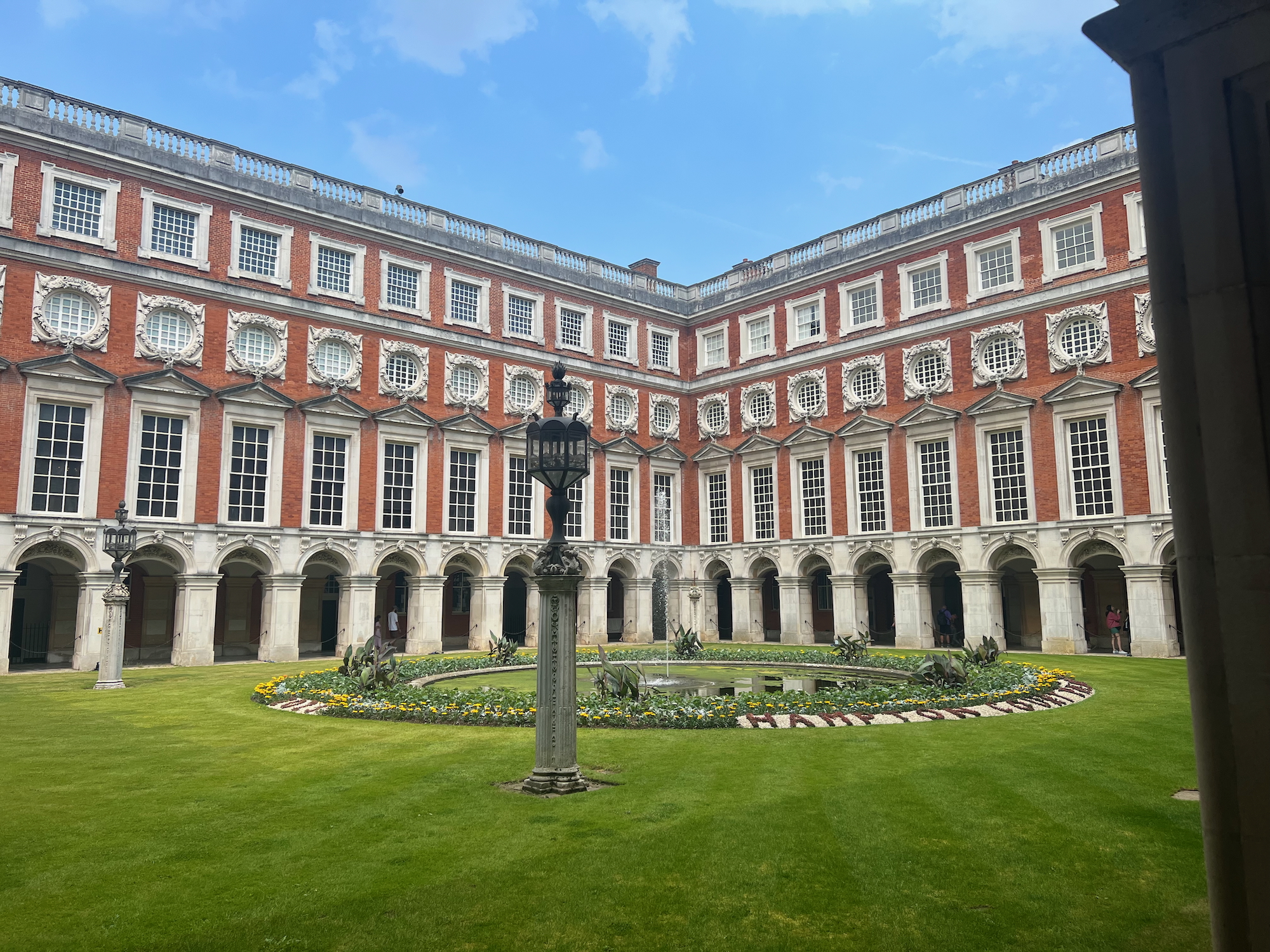
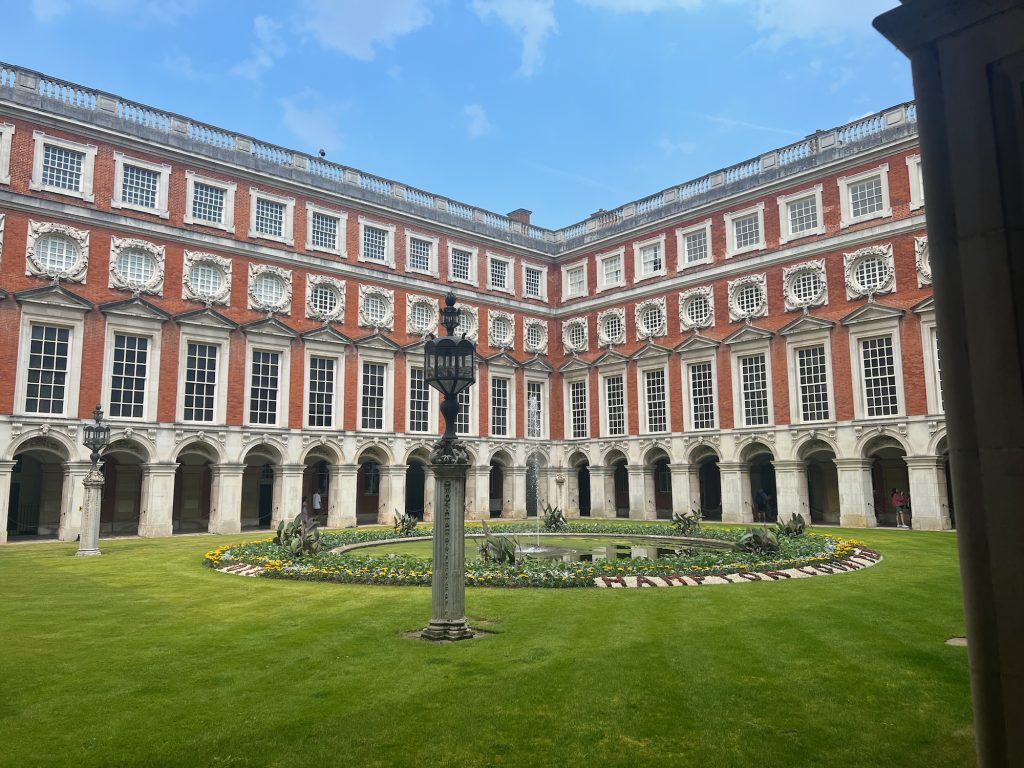
Eventually, and with only a mild case of sunstroke, we reached the destination of our infernal journey: Hampton Court Palace, playground of Henry VIII. I suppose I should tell you about it, but there’s not really anything I can tell you that isn’t on Wikipedia and/or in your Key Stage 3 history syllabus.4 So here are some observations from our visit:
- There’s a lot to see. I mean a lot. I don’t think we saw everything, even though we tried.
- Trying was a bad idea. It meant that, until I realised the task was impossible, I was focused more on optimising our afternoon than on experiencing the place itself. This interacted badly with trying to listen to all of the audio guide tracks for everything.
- This was the first time I had been to Hampton Court since being eight years old. One thing I remember from that childhood visit was the audio guide: as I recall, this was some sort of minidisc-based thing that was both futuristic and overcomplicated. In particular, it stopped working for me, prompting a massive tantrum.
- The audio guide worked fine on this visit more than 20 years later, being essentially an iPod touch with a lanyard attached. Unfortunately, they did not disclose that, once you had an audio guide, certain parts of the estate were off-limits, even if described on the audio guide. And, once handed in at the boundary, the audio guide was lost to you, the only way to get it back being to trudge back through the palace to the pick-up point. Because I was an adult now, I didn’t have a tantrum. Instead, I did the next best thing, and complained to the manager.5
- Complaining to the manager involved trudging back through the palace to approximately the point where you could pick up an audio guide again. It also used up still more time, when, as previously discussed, that commodity was in short supply. The irony of this was not lost on me.6
- One of my other memories from my trip when I was eight was the maze, which I remember as extraordinarily difficult. Indeed, that’s become part of the family lore—my mum, who would not have enjoyed the sensation of feeling lost, stayed outside, and recalls anxiously waiting for my aunt and me to re-emerge. As two adults in 2023, we finished the whole thing in about five minutes. 🤷
- Talking of the grounds, the best day to visit a palace is not the day that parts of one of its courtyards are blocked off for that evening’s Kaiser Chiefs concert. It certainly doesn’t help with the historical immersion, unless you have a vivid enough imagination that you can pretend the whole setup is for some sort of jousting tournament.
I’m aware that that all sounds rather negative. Honestly, that’s because it makes a better story. All of that is true, but what is also true is that we (overall) had a lovely time: it is, after all, hard not to be awed by the cavernous old kitchen or the tapestry-adorned Great Hall.
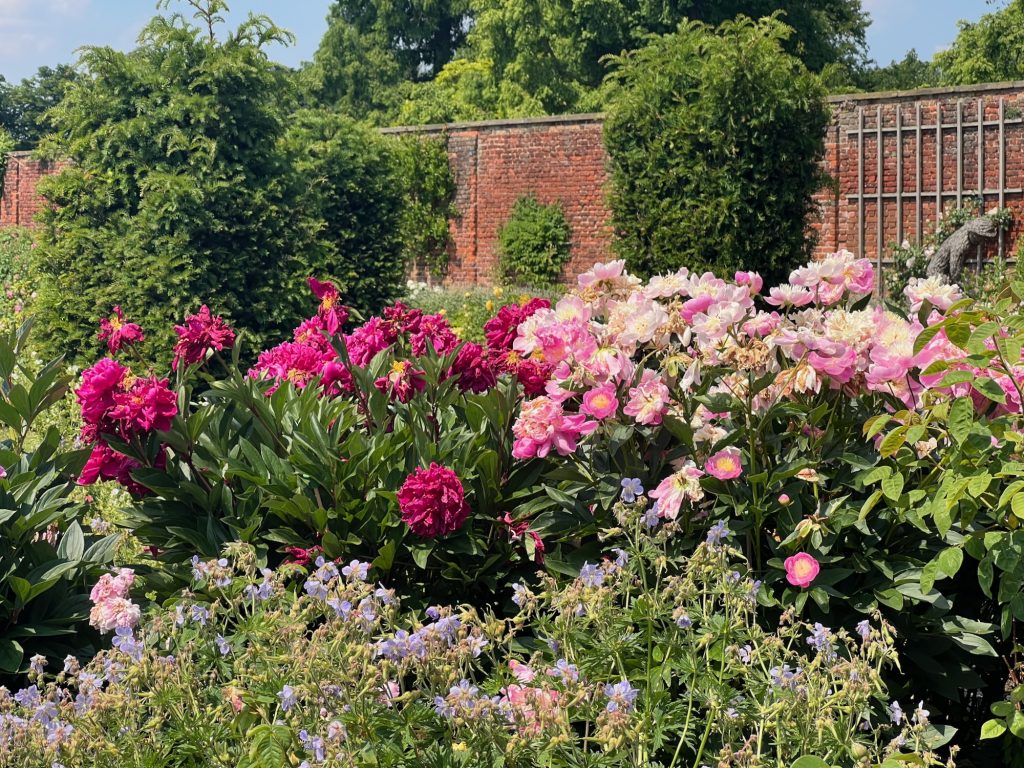
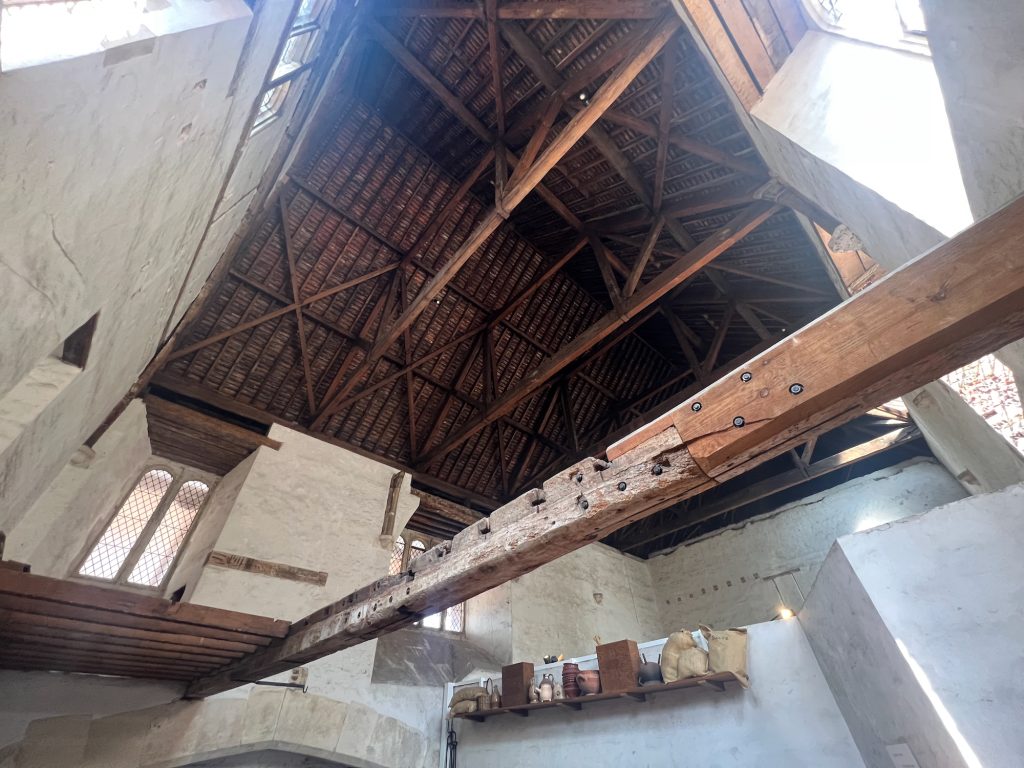
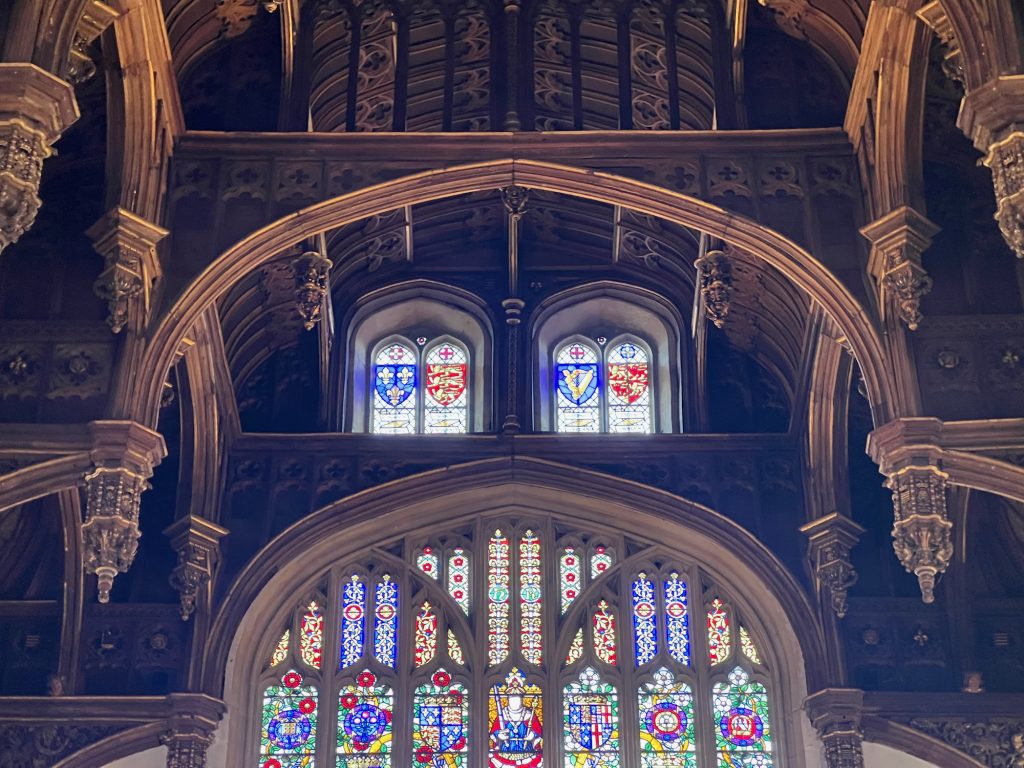
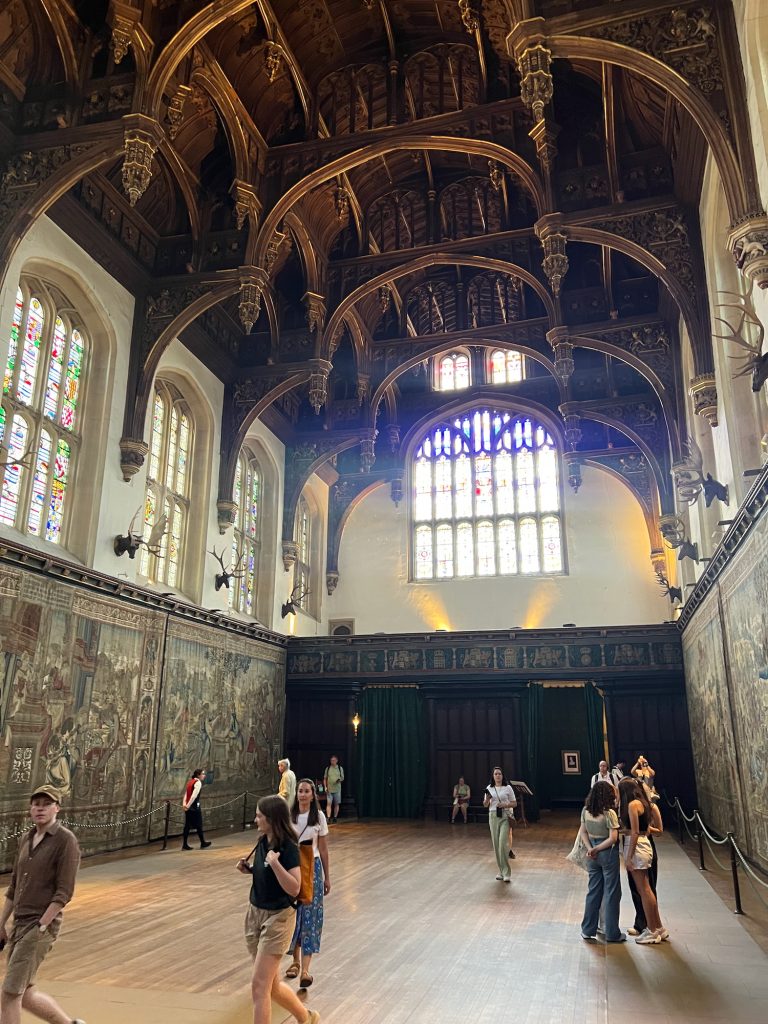
I digress.7 We did other stuff later that weekend, but I’m going to cut straight to the bit you’re here for:8 sign number 14. I say “sign”—this one is for the City of London,9 and the City doesn’t do things by halves…
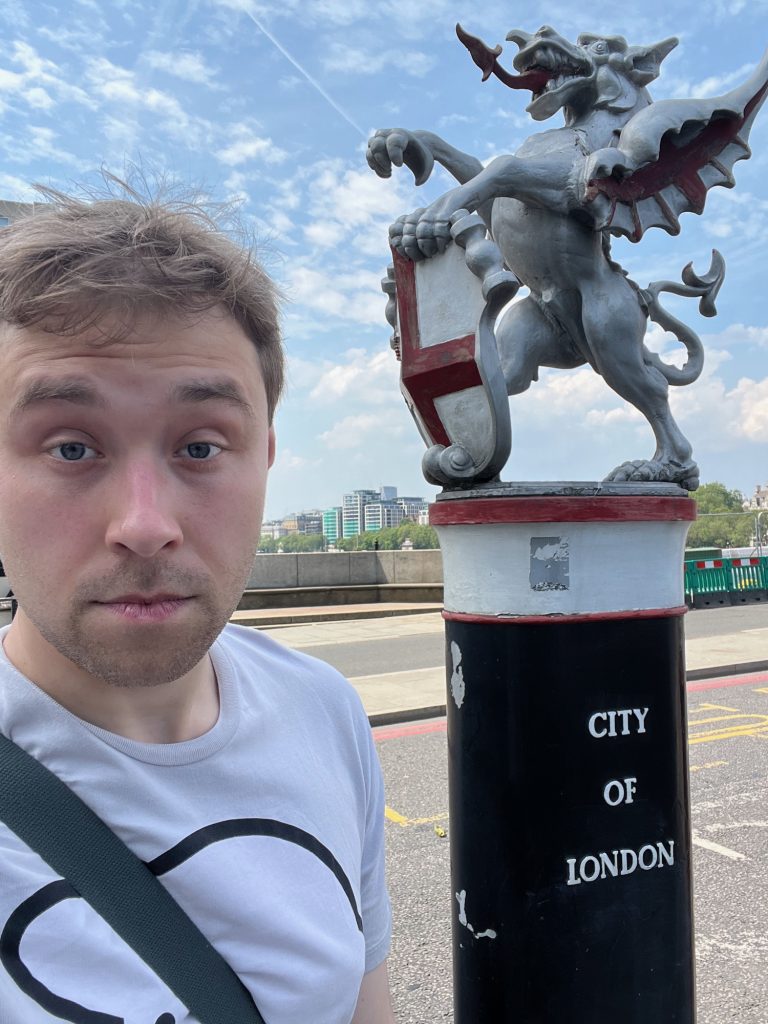
And thus I reached the end of the trip, not having managed all the boroughs but still hitting a respectable 42%. (“Respectable”, that is, to the extent that any of this deserves respect.) But I knew I would be back in London a few months later, and so I used the train journey back to Scotland to do what I should have done right at the start—I decided to try and map out which borough borders were signed, so that I could properly plan an optimal route to bag the remaining 19.
Unfortunately, I was about to discover something earth-shattering. Something that would put the whole project in jeopardy.
To be continued…
London borough count: 14/33
- If you think “Moortown” is a bit unimaginative as a name for somewhere Yorkshire, wait ’til I tell you abut one of the main roads through it, Street Lane. ↩︎
- Not that I’ve ever been to Basingstoke. Kingston certainly felt like my idea of Basingstoke. ↩︎
- I’d like to make it clear that I knew all along that that was what this was, and didn’t for a moment think that they’d installed two separate fountains for Diana, Princess of Wales. And I definitely didn’t think it was rather odd that there would be two of them—given that the human Diana didn’t have any particular connection in life to water features—and yet persist in believing that there were indeed two until I read explicitly that this fountain was for the divine one. That would have been silly. ↩︎
- For English readers, that is. If the Scottish treatment of the pre–Union of the Crowns history of England is as detailed as my schooling was on the corresponding Scottish history, you won’t have a clue who Henry VIII was. Somehow, though, I suspect that that isn’t how that works… ↩︎
- “What? TANTRUM is evolving!” ↩︎
- And I would like to thank, and apologise to, the extraordinarily patient Historic Royal Palaces staff who spoke—or, more accurately, listened—to me. I was not my best self that day. ↩︎
- Potential tagline for the blog? ↩︎
- And if you’re not, why not let me know what you would like to see? ↩︎
- Yes, pedants, I know that the City isn’t technically a London borough. Indeed, I made that distinction in the very first post of this series. ↩︎
Leave a Reply