
A couple of weeks ago, I woke up to an unexpectedly empty day, my previous plans having been rearranged. I awoke from a dream, in which I’d dreamt that I was continuing my random journey around the Tube, and had finally managed to get out of northwest London and off the sodding Bakerloo line. Upon waking, I was disappointed when I realised that this was indeed only a dream. So I decided to head to London, and try to make that dream a reality.
Date of trip: Friday 14th December 2018
Journey time: 1hr-ish from Oxford to Paddington
Fare: £20.55 (Off-Peak, with 16–25 Railcard, including Zones 1–6 Travelcard)
As before, I’m not going to bore you with the long sequences of die rolls that led me to each destination, but I will put them in a comment on the off chance someone’s doing statistical tests on the randomness of my random number generating app.
Harrow & Wealdstone
I resume my journey at Harrow & Wealdstone. Harrow itself is a pretty suburb, formerly its own separate town. Unfortunately, it’s also much nearer to Harrow-on-the-Hill, on the Metropolitan line, and that’s not where I was. So I decided to investigate the other part of the name.
The station is actually right next to the suburb of Wealdstone, which is yet another place that only really exists because the railway is here. The place itself is unremarkable—a fairly down-at-heel high street, with buses ploughing their way down—but its name is rather interesting. See, because Wealdstone only exists because of the railway, it didn’t have a name until then either, and when you’re picking a name for a new place, you tend to name it after what’s nearby.¹ And what was nearby was the Weald Stone.
The Weald Stone was a boundary marker between two parishes: those of Harrow and of Harrow Weald. (A “weald” is an area of woodland.) And it turns out it’s still there, though it’s not in Wealdstone itself; I had to get a bus up there if I didn’t want to spend the whole day walking up and down the A409. It’s set into the ground, at the edge of a forecourt of the Bombay Central curry restaurant, just in front of the little wooden fence. It’s not the sort of thing you’d notice if you weren’t looking for it, even with the heritage plaque on the restaurant wall.
I was now in Harrow Weald itself, and it was about an unremarkable as Wealdstone, if slightly more upscale. Indeed, the most remarkable thing was probably the collection of decorative rickshaws outside Bombay Central. So I popped into Waitrose to get a sandwich, and got the bus back to the Tube station, reassured that I would never have to come this far out again.

Bakerloo, (aggregate) eleven stops southbound, to
Maida Vale
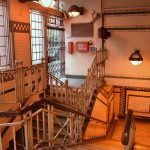
A long ride later, I found myself at Maida Vale, a rather squat little Tube station with cool crossing staircases leading down to the ticket hall. (A lot of Tube stations can be described as “rather squat”; they were built with the intention of putting offices or flats on top, which didn’t always come along.)
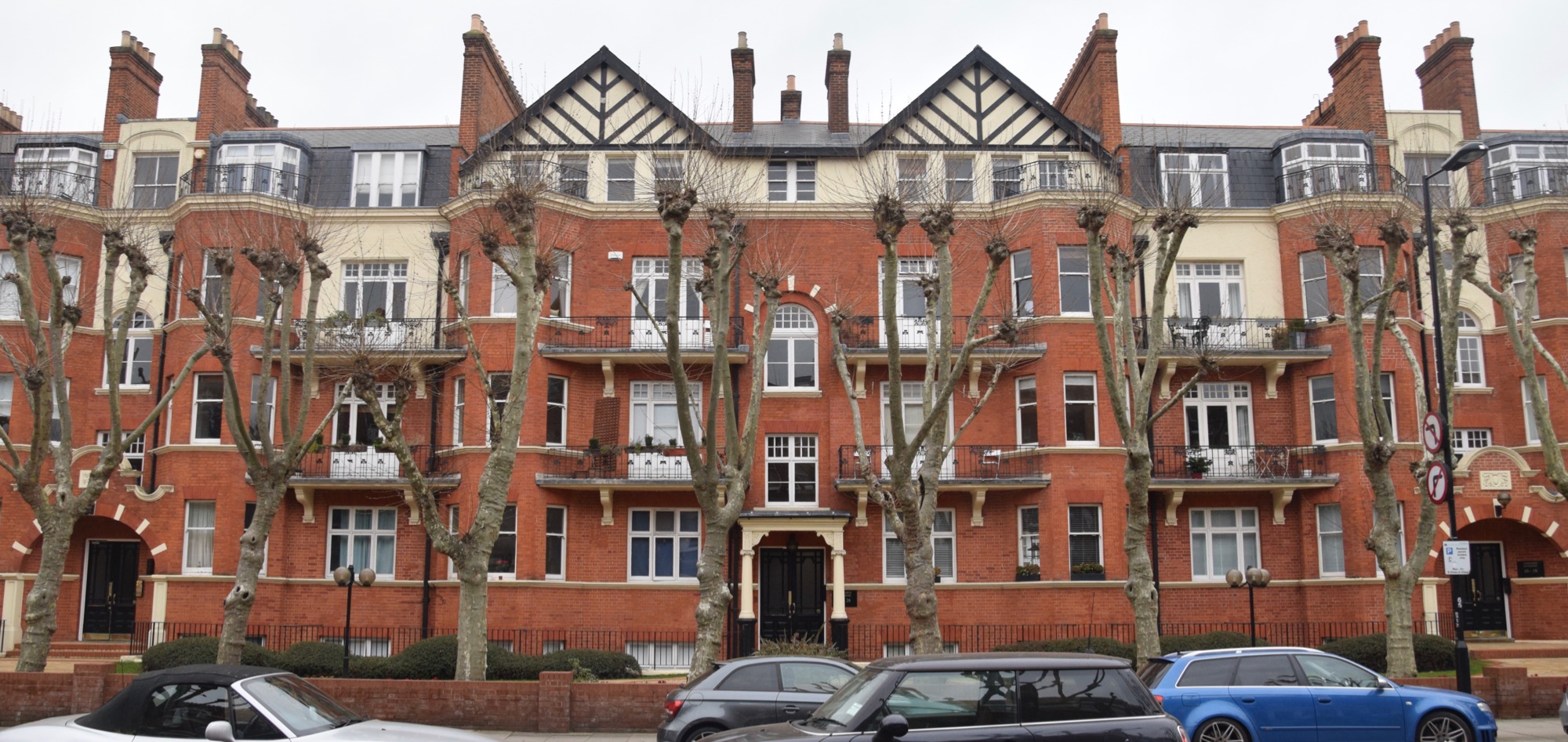
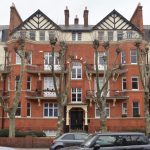
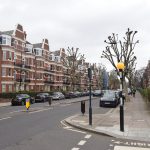
Maida Vale is set in one of the most affluent parts of London I’ve been to, if the apartments along the tree-lined² Elgin Avenue are anything to go by, or indeed the little cafés, the boutiques and the champagne nail bar on the adjacent roads. But what I wanted to see was Maida Vale Studios.
The studios at Maida Vale are much less famous than the ones at nearby Abbey Road, which predate them by three years. But Maida Vale has still had a recording studio since 1934, previously being the Maida Vale Roller Skating Palace and Club, Europe’s largest roller rink. And it’s been home to BBC radio ever since, as it will be until 2022. It’s been home to many iconic musical moments, including the John Peel sessions (bespoke performances for the BBC, originally devised to circumvent regulations on broadcasting commercial music). It’s also where the BBC Radiophonic Workshop was based; one member of it was Delia Derbyshire, who, having worked at Maida Vale to transform Ron Grainer’s minimal score into haunting music, is now posthumously credited as a co-composer of the Doctor Who theme.
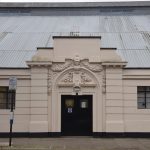
The studios are allegedly not fit for purpose any more, and so the BBC plans to move to modern studios in East London. And the building does look to be fading somewhat; the preserved arched entryways to the roller rink look sad, somehow. With Television Centre’s closure in 2013, and the London Studios having shut their doors last year, we’re losing our broadcasting history in the name of modernity and money-saving, and that’s a real shame.
Bakerloo, (aggregate) ten stops northbound, to
Kenton
Yikes, back out we go to the suburbs. Kenton is, er, not interesting. It has a Sainsbury’s, which was useful, as I needed the loo. I also passed the Travellers Rest pub, opened in 1933 for day trippers from London to what was then the countryside; it was once the largest pub in Middlesex, and is now a Beefeater.
The only other thing I can remark on was a masonic lodge in the middle of a perfectly circular road in a housing estate. I’m sure it has an interesting history, especially as the estate seems to have been built with it as a centrepiece. But the trouble with the Freemasons is that they’re a bit secretive—who knew?—so I can’t find out much about it.
Bakerloo, (aggregate) one stop southbound, to
South Kenton
I was running out of time to get my train back to Oxford, but I found out my next destination was South Kenton, one stop back down the line towards London, and in visiting there I’d have completed an unbroken twelve-station chain from Maida Vale to the end of the line, and I’d never have to go further north than Warwick Avenue again on this branch. So decided to jump out of my train, go to explore, and get on the next train to continue my journey into central London. That gave me about five minutes.
What did I see? There’s the Windermere pub, right next to the station, which is apparently Grade II listed, and is included on CAMRA’s list of historic pub interiors—not that I had time to go in. The pub has an advert for Courage bitter on the side, which was named after a Mr John Courage, but later got into trouble for suggesting their products could help you with the more common meaning of the word. I bought an out-of-date Coke from a nearby newsagent’s. That’s about it. And thus I rode back into central London, passing the McVitie’s factory and the Ace Café, Kensal Green Cemetery and the Wembley Arch, relieved that the next time I came up here, it would be for a much better reason than riding randomly around the Tube.
Bakerloo, (aggregate) eleven stops southbound, to
Paddington
Conveniently, my next stop was to Paddington, from where I was about to get my train home. What’s more exciting, though, is that Paddington is the first station since I started at Charing Cross that is on a line other than the Bakerloo, so I finally have a chance to get off it—and thus I have (hopefully) realised my dream. Let’s hope my attempts to realise my dream of opening for Troye Sivan are equally successful.
¹ Well, either that or Thomas Telford.
² I’m aware that this is a tautology.

Leave a Reply