
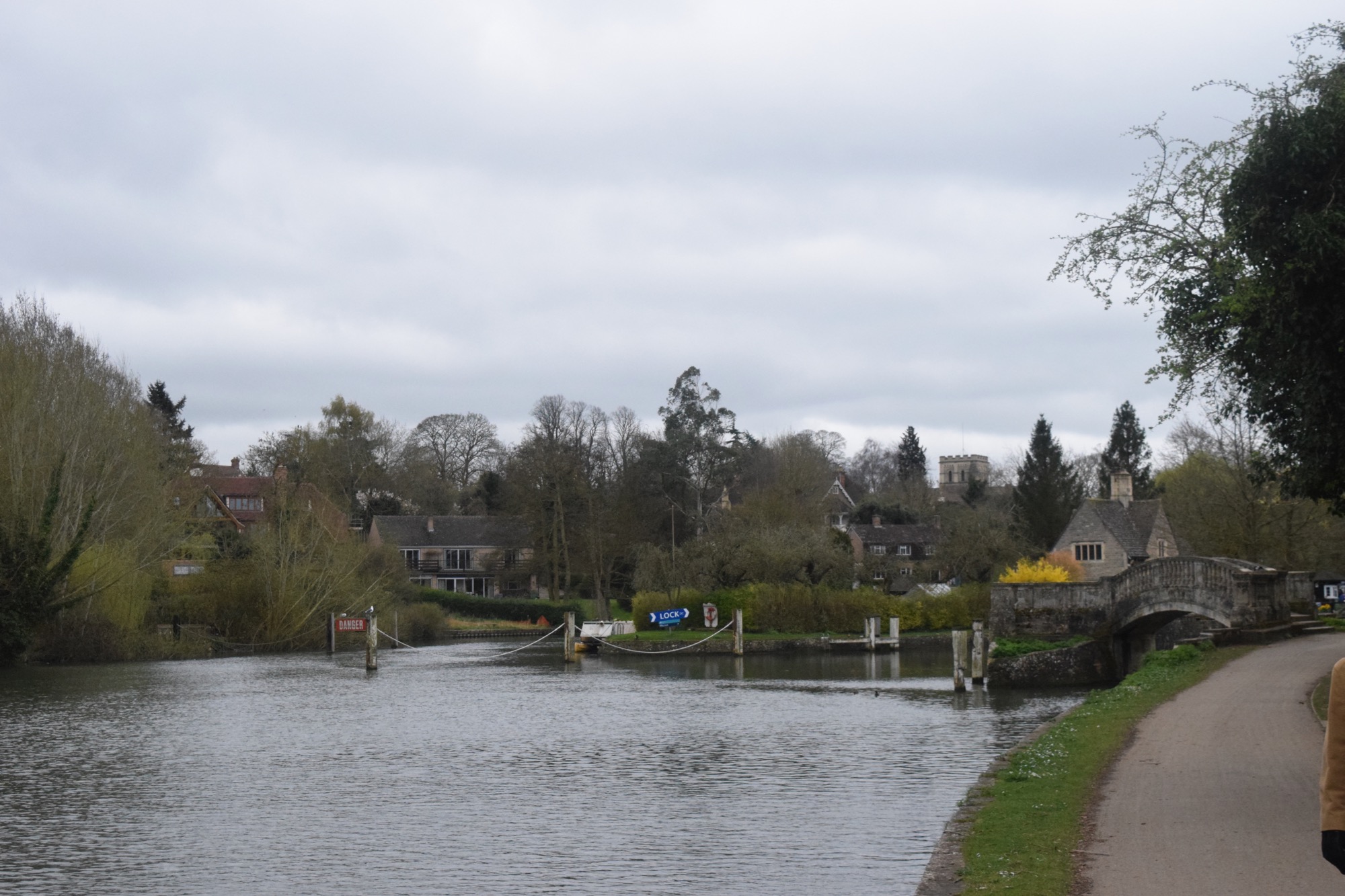
Yes, don’t worry, you’re still reading Escaping Oxford. And yes, I know Iffley is in Oxford. However, until 1972 Oxford didn’t include Cowley and Iffley, so just pretend that you’re back in the sixties and you’ll get through this. Put Sgt. Pepper on your turntable, wear some flowers around your neck and smoke some herbal cigarettes and I’m sure the effect will be quite convincing.
Date of trip: Wednesday 29th March 2017
Journey time: Approx. 45 minutes’ walk from Carfax
Fare: If you really want to get the bus it’s £3.70 return but the walk is part of the fun
Anyway, there’s a reason I’m writing up this one. I went for this walk to Iffley about a year ago, on a day when I was really not feeling great, but it was a weekday so I didn’t want to go very far. And Iffley isn’t very far, but because of its history as a separate settlement (that wasn’t, unlike Cowley, a centre of the British motor industry), it still has a fairly quaint village-y feel that you don’t really get anywhere else in Oxford. Just getting out of the centre of town, away from the spires whose dreams can feel like nightmares, was enough to lift my spirits. Hopefully it might lift yours too.
The way to Iffley is along Iffley Road (I am proud to have imparted this precious knowledge; use it well). In case you’ve never crossed the Cherwell, that’s the rightmost of the three roads leading out of Oxford from the Plain, the roundabout at the opposite end of the High Street from Carfax. Iffley Road is in fact probably the least interesting of those three roads, but there are a couple of things to look out for. Firstly, the university sports centre, which I guess you’ve probably been to more than me, but it’s worth pointing out that that’s where Roger Bannister ran the first sub-four-minute mile, especially as he died earlier this week. The second is Greyfriars, which until 2008 was a PPH of the university; it remains as a friary, but its students and student records were in that year transferred to Regent’s Park. Fun fact: Greyfriars bops were known as “the Monastery of Sound”.
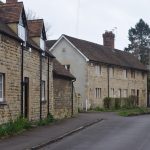
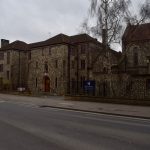
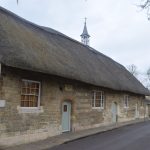
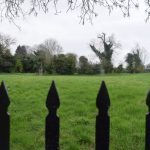
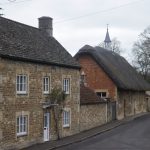
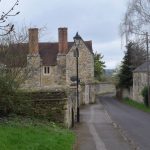
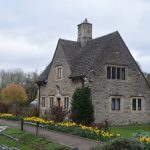
Moving on, once you get past Donington Bridge Road, it’s not far to a fork on the right called Iffley Turn. Follow it up to the painted mini roundabout, and turn right, along Church Way. This is where Iffley really begins, as the suburban uniformity gives way to neat little stone cottages and prominent pubs (which one day I will actually go back to). And then you get to the first star attraction: the church hall, with its thatched roof.
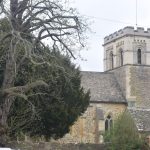
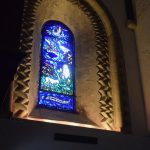
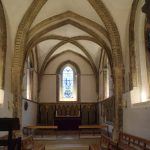
A little further along is the church of St Mary the Virgin. (Incidentally, I’m aware that I’ve now pretty much every week written about a church or a cathedral. This is partly because I’ve been writing about non-traditional tourist destinations, and the one historic building you can pretty much guarantee in any town is a church. Next week will probably be somewhat more pagan.) The Church is open most days; they have guides to the history on sale, with money taken via a donation box, and I’d definitely recommend getting one of these because there’s a lot to see that’s not particularly obvious at first glance (and that I’m not going to describe here: firstly, because I want you to visit, and, secondly, because it’s already on the internet).
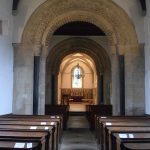
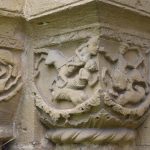
The reason the church is significant is that it’s one of very few remaining Norman churches that have been kept relatively untouched. The reason for the preservation is curious: it seems the family that built it and were supposed to maintain it rather neglected it, and so didn’t give it the improvements other churches received. Thus it retains its simple plan and its Norman arches (as opposed to Gothic; rounded, not pointed). Outside, the church has some detailed carvings, as well as the site of the cell of a woman called Annora, who was in Iffley from 1231 to 1242 (link). Annora was an anchoress; this is the feminine form of “anchorite”, someone who had withdrawn from society in order to lead a life focused on religion, and who would have remained within a small cell attached to a church for years on end. Anchorites tended to be female, possibly because of the limited range of religious vocations open to women at the time (another link).
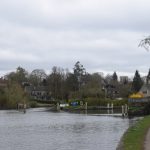
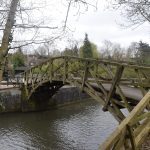
Leaving the church, you can turn left down Mill Lane, and then follow a footpath, to reach Iffley Lock on the Thames. This is a rather idyllic spot, with a variety of waterfowl walking on the banks and bobbing around in the water; the water is spanned by a mathematical bridge (a replica of the one at Queens’ College in the Other Place, but don’t tell them we stole one of their ideas). From here you can walk back to Oxford along the Thames, past the boathouses and Christ Church Meadow, but if you’ve ever been to watch or compete in Torpids or Eights you’ll have been here before.
This blog is here to help you escape Oxford, and despite my bullshit at the start (hope you’re enjoying “Lucy in the Sky with Diamonds”, by the way), this isn’t really the sort of thing I’ll normally blog about. But if you ever want to almost escape Oxford for a couple of hours on a stressful day, Iffley’s a good place to start.

Leave a Reply